About this place
Horní Vlčice is a little-known ruin of a small medieval stronghold hidden in the woods above the village of Vlčice, a few kilometers west of Trutnov in the Hradec Králové Region of the Czech Republic. Unlike the well-documented castles of the Krkonoše foothills, this site does not even have a preserved original name — today's label simply borrows the name of the nearby village. For visitors interested in early medieval fortifications and off-the-beaten-path exploration, it remains one of the region's more intriguing, if demanding, destinations.
Where is the Horní Vlčice ruin located?
The site sits on a forested slope, on a hard-to-reach spur of terrain near the village of Vlčice in the Trutnov district. The area lies on the eastern edge of the Krkonoše (Giant) Mountains, close to the Rýchory ridge, in a region that historically formed part of the borderland between Bohemia and Silesia. The village of Vlčice itself lies along the Vlčický stream, surrounded by forests and hills, well away from the main tourist routes.
What did the Horní Vlčice stronghold look like?
The fortification was built on two conglomerate rock outcrops, with a small platform of roughly 40 square meters stretching between them. On the eastern side, where the terrain was most accessible and therefore most vulnerable, the platform was cut off by a ditch carved into the rock. This arrangement — two rock masses linked by a narrow space protected with a moat — was a common solution for small watch-fortifications built in rugged terrain, where the natural rock formations substituted for a large part of the defensive walls.
What is the history behind the ruin?
The site went unnoticed until 1974, when it was discovered during a natural-history survey of the surrounding forest; before that, it did not appear in any known written records. An archaeological survey in 1977 dated the structure to the second half of the 13th century. Historians link it to a network of watch-posts that protected the Švábenice colonization effort in the area, meaning it served a defensive and observational role rather than functioning as a noble residence. The fortification most likely fell out of use before the end of the 13th century, making it one of the shorter-lived strongholds of its kind near Trutnov. Its original name has not survived even in local oral tradition.
What can visitors see on site?
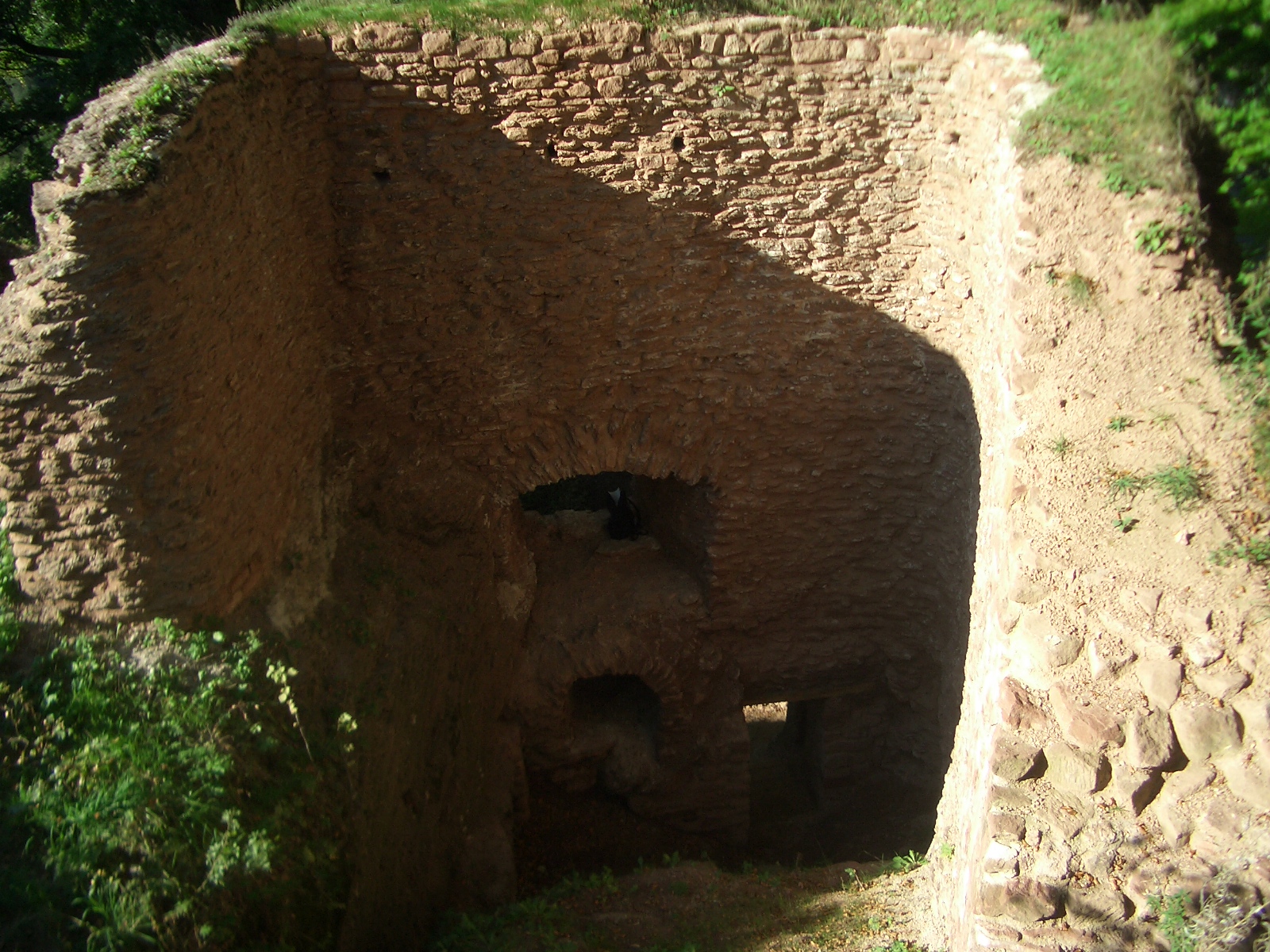
In the western part of the platform, a depression carved into the rock marks the spot where a timber tower once stood — the wooden structure is long gone, but its footprint remains visible in the stone. In the access corridor, a rock-carved relief of a male face survives, showing a furrowed brow, a moustache, and prominent ears. Several spots on the rock surfaces still show sockets left by wooden beams that once supported timber structures built directly against the stone. These details — the carved face and the traces of timber construction — make Horní Vlčice one of the more picturesque, if obscure, ruins in eastern Bohemia.
How do you get to the ruin?
No marked hiking trail leads to the stronghold, so reaching it requires solid orientation skills, a map and compass, or a reliable GPS app. The approach crosses a steep, forested slope near Vlčice, away from any main roads. This is a destination for visitors prepared to navigate through the woods on their own rather than follow a signposted path.
Frequently asked questions
Is Horní Vlčice a castle or a watch-fortification? It was a small stronghold with a guarding function rather than a residential castle — its purpose was to control and defend the surrounding terrain, not to house nobility.
When was the stronghold built? Archaeological research from 1977 dated its period of use to the second half of the 13th century.
Is there a marked trail to the site? No — there is no signposted trail to the ruin, and visitors need their own navigation skills to find it.
What has survived from the original structure? Visible remains include the rock-cut ditch, a depression left by a timber tower, a carved male face in the rock corridor, and beam sockets left by wooden constructions once built against the rock.
Nearby places

Earn badges for the places you visit
Download NextOnTrip, discover new places and check off your trails.