About this place
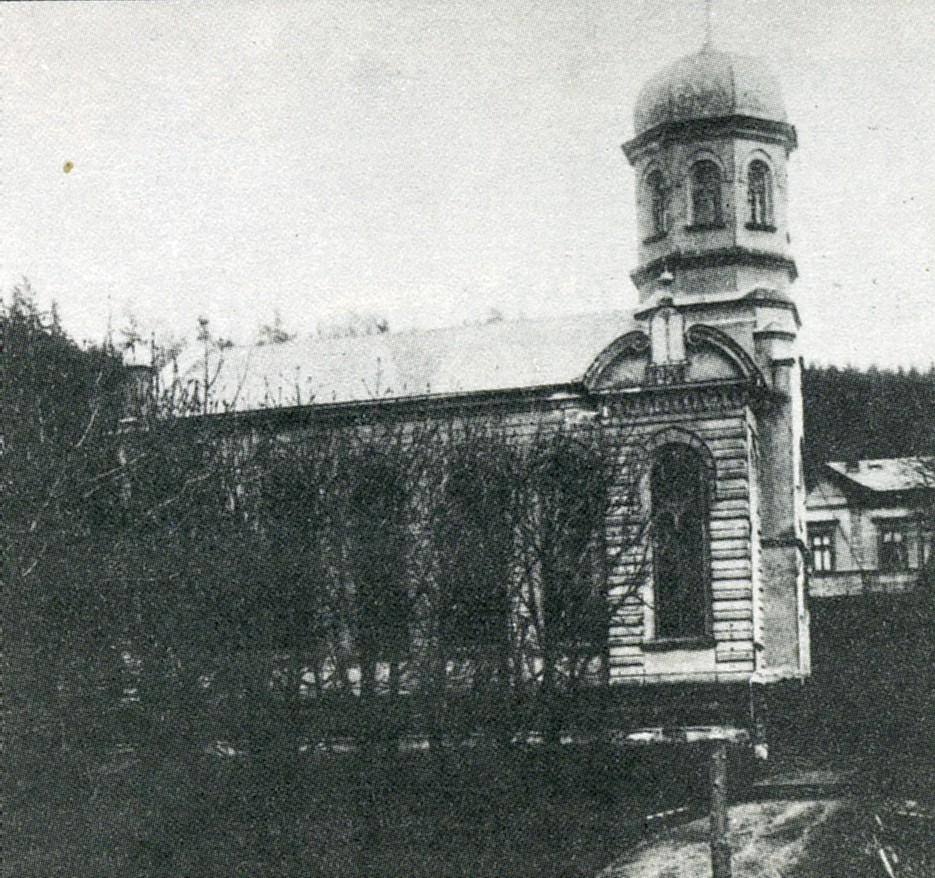
The Trutnov Synagogue no longer stands, but for more than fifty years it was the center of religious life for the local Jewish community in this town at the foot of the Krkonoše (Giant) Mountains in the Czech Republic. The building once stood on Na Struze street, at the foot of Janský vrch hill, just south of Trutnov's main square — the exact spot now marked by a modest memorial. It's a place worth visiting not for its architecture, which no longer exists, but for the history it represents.
When was the synagogue built?
Construction was completed in 1885, and the building was formally consecrated on September 3 of that year. The design and construction were entrusted to Konrad Kühn, a local builder, who created a freestanding, single-nave structure in the Neo-Renaissance style popular at the time. Its location close to the town center made it easy for Trutnov's Jewish residents to reach for daily worship and community life.
How long did the synagogue serve the community?
The synagogue functioned as a place of worship for fifty-three years, from its consecration in 1885 until the tragic events of the autumn of 1938. During that time it hosted prayers, holidays, and gatherings of the local Jewish congregation, forming a lasting part of the town's landscape.
What happened to the synagogue during World War II?
The building's fate changed abruptly following the Munich Agreement. On October 8, 1938, Trutnov was occupied by the German Wehrmacht as part of the annexation of the Sudetenland. Barely a month later, during the night of November 9 to 10, 1938 — the nationwide Nazi pogrom known as Kristallnacht ("the Night of Broken Glass") — the synagogue was looted and set on fire. The building burned to the ground. Its destruction was not an isolated event: that same night, several dozen synagogues were destroyed across Czechoslovakia, and the pogrom is remembered today as one of the most significant turning points in the escalation of violence against Jewish communities on the eve of the Holocaust.
What can visitors see at the site today?
No trace of the original structure remains — the fire consumed the building entirely. The location where the synagogue once stood is now marked by a modest memorial commemorating both the building itself and the Jewish community that was once an integral part of Trutnov's life. The site today serves primarily as a place of remembrance: visitors come not to see a historic building, but to pause and reflect on the fate of the local Jewish community and the consequences of Nazi violence.
Why is this site worth visiting?
The former synagogue site is an important point on the map of historical memory in the Krkonoše region. For anyone interested in 20th-century history, and particularly in the fate of Jewish communities in the Sudetenland, it's a stop that adds a frequently overlooked dimension to a visit to the town. Its proximity to Trutnov's town center makes it easy to combine with a visit to the area's other attractions.
Frequently asked questions
Does the Trutnov synagogue still exist? No — the building was destroyed in 1938 and was never rebuilt. Today only a memorial marks the site.
When was the synagogue built? It was completed and consecrated in 1885, built by local master builder Konrad Kühn.
What led to the synagogue's destruction? It was looted and burned during the night of November 9 to 10, 1938, during the Nazi pogrom known as Kristallnacht, shortly after Trutnov was occupied by the Wehrmacht.
Where exactly was the synagogue located? It stood on Na Struze street, at the foot of Janský vrch hill, south of Trutnov's main square.
How many years did the synagogue serve the local community? It served the community for fifty-three years, from 1885 until its destruction in 1938.
Nearby places

Earn badges for the places you visit
Download NextOnTrip, discover new places and check off your trails.