About this place
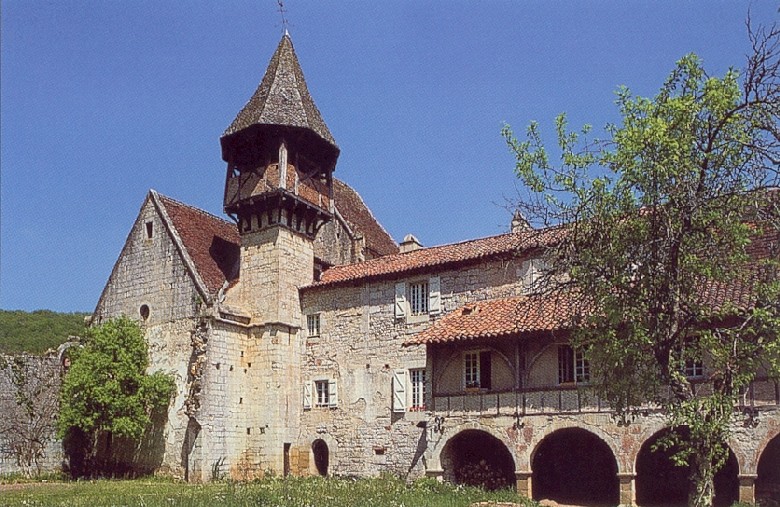
Beaulieu-en-Rouergue Abbey (also called Belloc Abbey) is a former Cistercian monastery in the commune of Ginals, in the northeastern part of the Tarn-et-Garonne department, in the Occitanie region of southwestern France. Set in the valley of the Seye river, it was founded in the mid-12th century and today serves a double purpose: a landmark of medieval religious architecture and one of France's leading museums of post-war art.
When was the abbey founded?
The monastery was established in 1144 by Cistercian monks, an order known across Europe for building in a spare, unadorned style meant to strip away distraction and focus the mind on prayer. The abbey church and surrounding buildings reflect this Cistercian Gothic approach: clean lines, tall windows letting in natural light, and an almost total absence of decorative carving. After the French Revolution the monastic community left for good, and the abbey sat abandoned, slowly deteriorating for more than a hundred years.
How did the abbey become an art museum?
Its revival began in the 1950s. In 1953, the art collectors Pierre Brache and Geneviève Bonnefoi came across the derelict buildings and were captivated by them; they purchased the property in 1960. Over the following years they carried out extensive restoration, working with the French heritage authority that later became the Centre des monuments nationaux. The renovation deliberately preserved the bare, luminous character of the Cistercian architecture, creating a setting where modern artworks could be shown without disrupting the building's original atmosphere.
Why is Beaulieu known for contemporary art?
In 1970, the restored abbey opened as a contemporary art center, displaying the collection Brache and Bonnefoi had been assembling since the late 1940s. Three years later, in 1973, the couple donated both the building and their art collection to the French state. In 1972 they had already founded the Association culturelle de l'abbaye de Beaulieu, an organization dedicated to promoting both established and lesser-known artists.
What does the collection include?
The Brache-Bonnefoi collection comprises more than a thousand works — paintings, drawings, prints, sculptures and textiles — by upwards of 150 different artists. Its core reflects the Parisian post-war avant-garde, particularly lyrical abstraction and Art Informel, with pieces by figures such as Hans Hartung, Jean Fautrier, Serge Poliakoff, Jean Dubuffet, Henri Michaux, Georges Mathieu, Victor Vasarely and Maria Helena Vieira da Silva. When selecting artists, Bonnefoi also gravitated toward those who carried forward something of the spirit of the original 1924 Surrealist Manifesto, including Simon Hantaï, Judit Reigl and Claude Viseux. Following Bonnefoi's death in 2018, her entire estate passed to the Centre des monuments nationaux, allowing the collection on view at the abbey to grow further.
Frequently asked questions
Where exactly is Beaulieu-en-Rouergue Abbey located? It stands in the commune of Ginals, in the northeastern part of the Tarn-et-Garonne department, in the valley of the Seye river.
Is the abbey still an active monastery? No. It has not functioned as a working monastery since the French Revolution. Today it operates as a contemporary art center under the Centre des monuments nationaux.
What architectural style does the abbey represent? Cistercian Gothic — a plain, austere style with little ornamentation, typical of buildings raised by the Cistercian order throughout Europe.
Where did the art collection come from? It was assembled by collectors Pierre Brache and Geneviève Bonnefoi, who bought the abbey in 1960 and later donated both the building and their collection to the French state in 1973.
Which artists feature in the Beaulieu collection? Among others, Jean Dubuffet, Hans Hartung, Serge Poliakoff, Henri Michaux and Victor Vasarely, alongside artists linked to the late Surrealist movement.
Nearby places

Earn badges for the places you visit
Download NextOnTrip, discover new places and check off your trails.