About this place
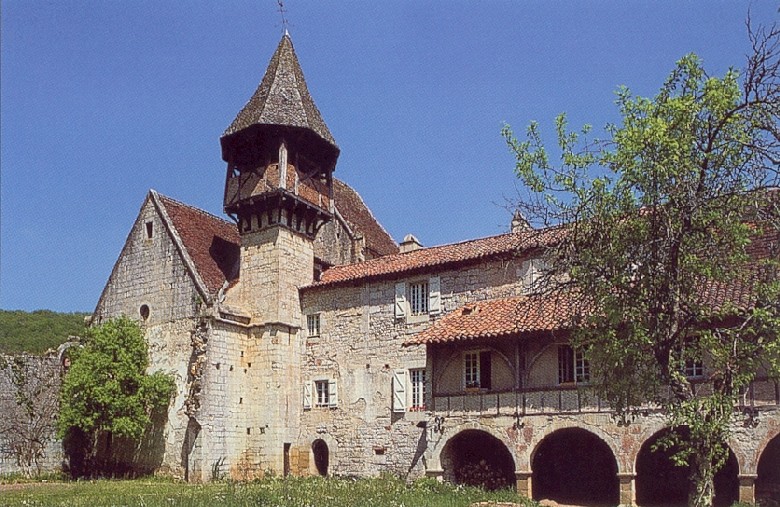
Abbaye de Lantouy is the ruin of a medieval monastery tucked into woodland near the small village of Saint-Jean-de-Laur, in the Lot department of southwestern France. Few visitors know its full story, yet the site combines documented history dating back over a thousand years with a persistent local legend, making it a quietly rewarding stop for anyone exploring the Quercy countryside.
How old is the site, and when is it first mentioned in writing?
The land and church of Lantouy appear in written records as early as 961, named in the will of Raimond, Count of Rouergue. That reference confirms a parish church already stood here in the mid-10th century, decades before any monastic community took shape. According to regional historians, a Benedictine priory was established on the spot during the 11th century, founded under the authority of the Bishop of Cahors.
Was Lantouy always a monastery?
Not for long. The monastic community itself proved short-lived and had effectively dissolved by the 12th century. The church, however, kept serving as a parish church for a further two centuries, sharing its congregation with the neighbouring parishes of Salvagnac and Sainte-Girbelle. It was finally abandoned for good in the first half of the 14th century. Interestingly, a 1679 inventory of benefices compiled by canon Dumas still listed Lantouy as a former Benedictine monastery — proof that its monastic identity outlived the community itself by centuries.
What remains to see today?
What survives is a heavily ruined but still legible 11th-century church, together with traces of five further buildings that once belonged to the monastic complex. The church's layout — a basilica-style nave, a transept, and a chancel closed by three apses — matches the pattern of the major monastic foundations built across Quercy from the third quarter of the 11th century onward. That scale suggests Lantouy was conceived from the outset as a substantial religious house rather than a modest chapel. Given their historical value, the remains are now protected as a listed historic monument.
What is the legend behind the abbey's fall?
Local tradition links the founding of the monastery to Saint Namphaise, said to have been a companion of Charlemagne — which is why the site is sometimes called the Abbey of Saint-Namphaise. The best-known legend explaining its destruction tells of a crime committed by the nuns against the child of a washerwoman who worked at the monastery, an act said to have brought ruin down upon the community. Whether or not the story reflects real events, it remains part of the identity of the place for anyone visiting today.
Why does this spot matter to visitors?
Lantouy appeals to travelers drawn to quiet, half-forgotten corners of history — a place where the past has to be pieced together from stones and old testaments rather than a manicured visitor centre. Surrounded by forest and rarely crowded, the ruins keep an atmosphere that busier, better-known monuments in the region have long since lost. It rewards those who prefer to explore at their own pace, away from crowds and information panels at every turn.
Frequently asked questions
Where exactly is Abbaye de Lantouy located? In the commune of Saint-Jean-de-Laur, in the Lot department, Occitanie region, southwestern France.
What religious order built the abbey? Historical sources point to a Benedictine priory, most likely founded in the 11th century.
Is the abbey still active today? No. The monastic community disappeared by the 12th century, and the church itself was abandoned for good in the first half of the 14th century.
Why is it also called the Abbey of Saint-Namphaise? The name comes from a legend crediting its foundation to Saint Namphaise, a companion of Charlemagne.
Are the ruins protected? Yes, the remains of the church and monastery are listed as a protected historic monument.
Nearby places

Earn badges for the places you visit
Download NextOnTrip, discover new places and check off your trails.