About this place
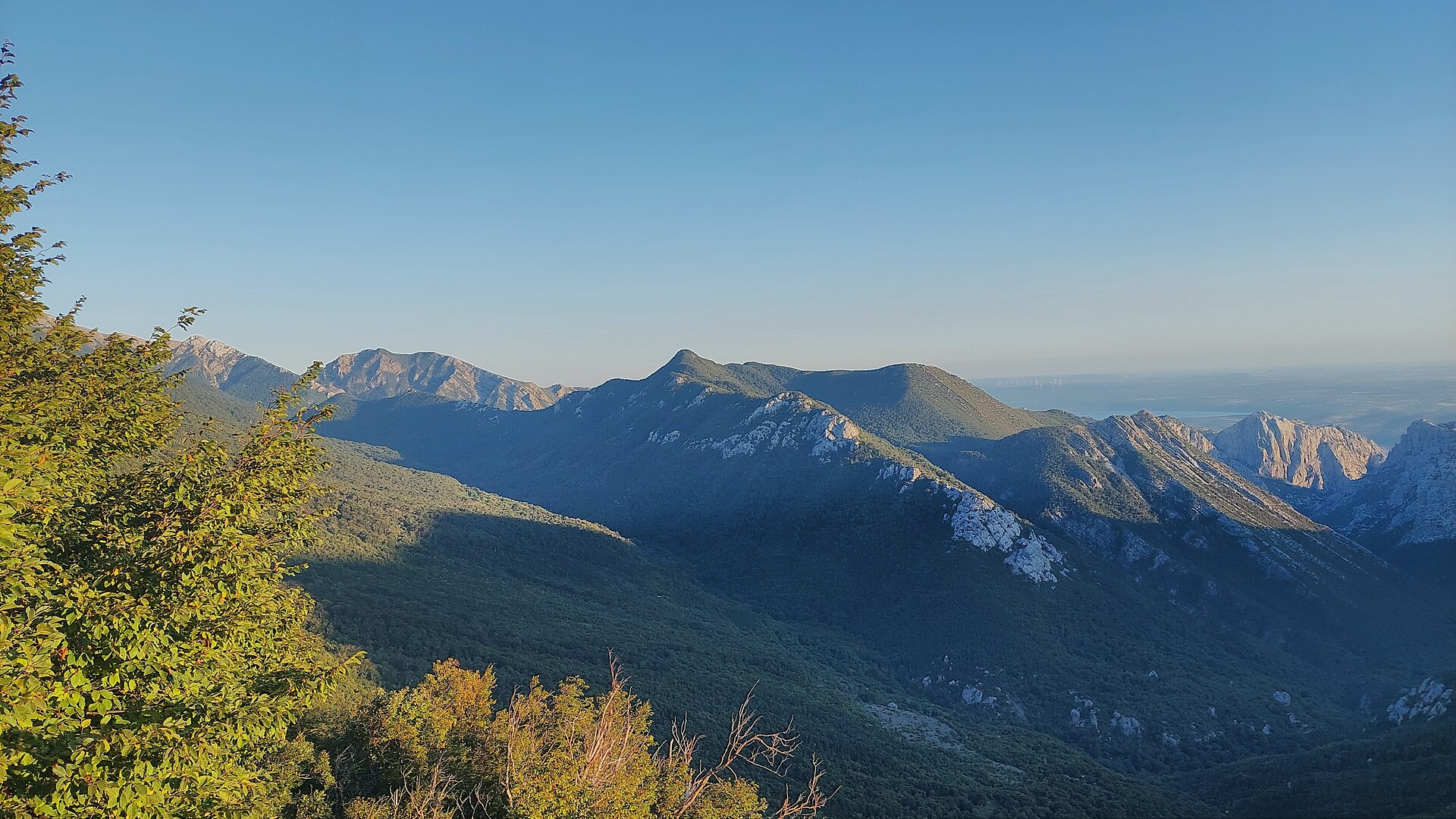
Anića kuk is the signature rock formation of the Velebit mountain range, towering right above Starigrad inside Paklenica National Park. This vertical limestone massif reaches 712 meters above sea level and is widely regarded as Croatia's most famous climbing wall — its tallest face exceeds 300 meters, an impressive sight even for visitors who have no intention of reaching the summit and simply want to admire it from the canyon floor below.
How do you get to Anića kuk?
The starting point is the entrance to Paklenica National Park, a short drive from the center of Starigrad. From the park gate, the trail follows the bed of the Velika Paklenica canyon, gently at first and then increasingly steeply over a scree slope leading up toward the base of the rock. At a junction, the path splits toward Anića kuk and toward the Paklenica-Jurline mountain hut. The full ascent from the park entrance to the summit typically takes around two hours one way, depending on fitness level and how much weight you're carrying. No climbing gear is needed for this hiking route, but the final stretch across loose scree can be tiring, so sturdy footwear is essential.
What will you see at the top and along the way?
From the summit of Anića kuk, the view opens onto the Podvelebit Channel and the point where the Velika Paklenica stream exits the narrow section of the canyon into the open landscape toward the sea. It's one of the most photogenic viewpoints in this part of Velebit — rugged canyon walls on one side, a sweeping panorama of islands and coastline on the other.
For climbers, Anića kuk is a destination in its own right. The wall is divided into three main sections: a steep north face marked by narrow chimneys and cracks, the tallest north-west face (further split into the Klin, Trapez, and Stup sectors), and a somewhat gentler west face. Several hundred climbing routes have been established here, ranging from classic long-standing lines to modern, demanding sport routes. This variety and scale make Paklenica, with Anića kuk at its heart, one of the most popular climbing destinations in Central Europe.
When is the best time to visit?
Spring and autumn are the best seasons for both hiking and climbing — in summer, the rock heats up considerably, and the heat makes both the scree ascent and climbing on sun-exposed faces much harder. The climbing season in Paklenica generally runs from spring through late autumn. Starting early in the morning is recommended to avoid the hottest hours and to have enough time to descend before dark.
Frequently asked questions
Do you need climbing experience to hike up to Anića kuk? No — reaching the base of the rock and the surrounding viewpoints follows a marked hiking trail suitable for anyone with average fitness. Climbing the wall itself is a separate activity requiring proper gear and experience.
How long does a trip to Anića kuk take from Starigrad? Counting from the park entrance, the ascent to the summit usually takes about two hours, and a full round trip takes half a day or more depending on pace and rest stops.
Is the trail well marked? Yes, the trails inside Paklenica National Park are clearly signposted, and the junction toward Anića kuk is easy to find.
Why is Anića kuk so popular among climbers? Its combination of a wall over 300 meters tall, a wide range of routes at different difficulty levels, and solid limestone rock has attracted climbers from across Europe for decades.
Nearby places

Earn badges for the places you visit
Download NextOnTrip, discover new places and check off your trails.