Science and education in Spain
A guide to 66 Science and education in Spain — with descriptions, photos and traveler visits from the NextOnTrip community. Locations spread across 51 cities and towns. Most visited by the community: Can Torró Public Library, Ekomuseoa, Museo de Astronomía y Geodesia.
-
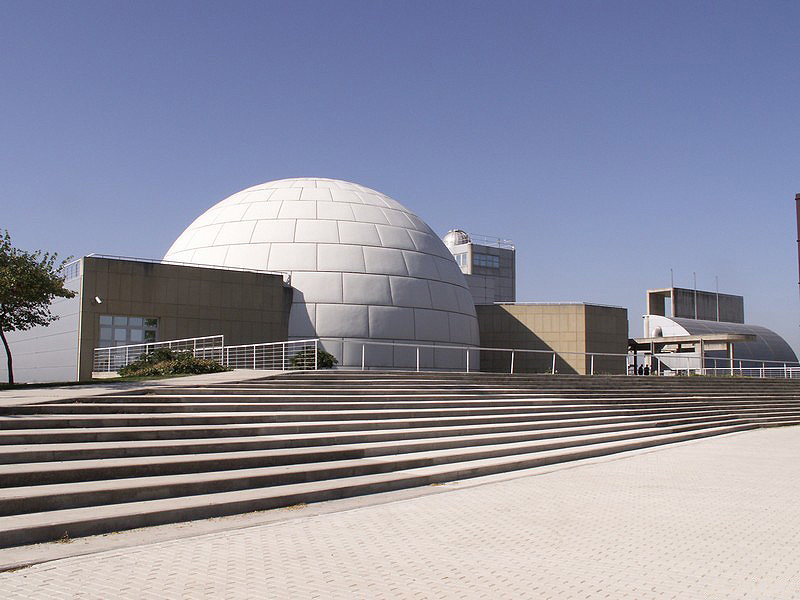
Madrid Planetarium
Madrid
Madrid Planetarium is a science and educational facility in Madrid that opened to the public in 1986 and has since become one of the city's regular stops for anyone curious about astronomy. It sits inside Tierno Galván Park, south of the historic centre, surrounded by greenery and other cultural venues in the Arganzuela district. How do you get there? The planetarium is located in an easily reachable part of Madrid, within Enrique Tierno Galván Park, which is served by several public transport lines, including both metro and bus routes. The most convenient option is usually to take the metro to the nearest station covering the southern part of the city and continue on foot through the park grounds. Drivers will find parking available nearby, though central Madrid does have traffic restrictions in places, so public transport tends to be the smoother choice. The park itself is a popular place for a walk, which makes it easy to combine a planetarium visit with some time exploring the surrounding green space. What will you see? At the heart of the venue is a domed projection theatre, where programmes dedicated to astronomy, cosmology and space exploration are screened — from star-filled night sky shows to simulations of planetary motion and features on space missions. Between 2016 and 2017 the facility's technical equipment was upgraded, modernising how images are projected onto the dome and improving the overall experience for visitors compared with the original setup from the 1980s. Beyond the main projection hall, the site includes exhibition spaces devoted to astronomical themes, covering subjects such as the Solar System, stars, and the wider universe. Venues like this typically blend entertainment with education, which is why the programme appeals both to travellers looking for something a little different to do in the city and to schools and families, for whom a visit is often a first hands-on, visual introduction to astronomy. It is also worth keeping in mind that planetariums of this kind regularly refresh their show schedules, so checking the current programme before visiting is a good idea — some sessions are tied to specific astronomical events and are only available for a limited time. When is the best time to visit? Because the attraction is entirely indoors, it can be visited year-round regardless of weather — a solid option on a hot summer afternoon or a cold, rainy winter day. As the venue is popular with school groups, expect busier mornings on weekdays, while afternoons and weekends tend to be quieter for individual visitors. Checking session times or booking ahead helps avoid queues, particularly during the high tourist season. Frequently asked questions When did Madrid Planetarium open? It opened to the public in 1986 and has operated as a permanent science and education institution in the city ever since. Is the equipment up to date? Yes — the projection equipment was modernised between 2016 and 2017, improving the image and sound quality of the dome shows. Where exactly is it located? The planetarium is inside Tierno Galván Park in Madrid, a quiet, green part of the city that is well connected to the centre. Who is this attraction suited for? It appeals to a broad audience — tourists looking for a different way to spend time in Madrid, as well as families with children and school groups interested in astronomy.
-
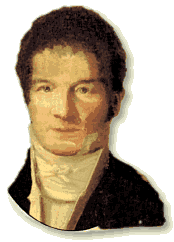
Louis Médard
Lunel
Musée Médard (Louis Médard Library) in Lunel is a compact but remarkable venue devoted to the history of the book and the craft of bookbinding. At its heart sits the fully preserved nineteenth-century study of Louis Médard, a merchant from Lunel who left his private book collection to his hometown. Who was Louis Médard? Louis Médard was born in Lunel in July 1768 into a family of Protestant merchants. He received a classical Protestant education, attending lessons given by pastor Rabaud Saint-Étienne of Nîmes. As a gifted student, he was given the works of Virgil as a prize — the first book of what would become his lifelong collection. In 1801 he founded the trading house Médard & Parlier in Montpellier, building his fortune through the wholesale trade of printed cotton fabrics (indiennes) and silks. His travels across Europe in search of the best textile producers doubled as opportunities to hunt for rare books. Where does the collection come from? Médard spent much of his life assembling a collection of rare and precious books, intending from the outset to bequeath it to his native city. His library grew to 4,871 works spanning history, belles-lettres, the sciences, art, and theology. He entrusted his volumes to some of the era's most celebrated bookbinders — Bauzonnet, Bozérian, Simier, and Thouvenin — to protect them from the ravages of time. In his 1834 will, he left the entire library to Lunel on condition that it be made accessible to the public. Médard died childless in 1841, and the collection was formally handed over to the city following the death of his wife in 1858. What will you see at the museum? The museum opened its doors to the public in December 2013. Across more than 600 square meters, it displays the Médard collection — around 5,000 volumes dating from the 12th to the 19th century, including both manuscripts and printed works. Alongside the books themselves, visitors can admire fine bindings crafted by leading Parisian and Montpellier artisans, tools once used for gilding bindings, engravings, illustrated albums, and objects tied to printing and bookbinding craftsmanship. At the center of it all is Médard's authentic library cabinet, preserved and displayed exactly as it stood in the 19th century. How to get there and when to visit? The museum sits in the center of Lunel, a small town in the Occitanie region, in the Hérault department, a short distance from Montpellier and the Mediterranean coast. It is open Wednesday to Friday from 2pm to 6pm, and Saturday from 10:30am to 12:30pm and 2pm to 6pm. During school holidays (Zone C) and from June through September, hours extend: the museum opens Wednesday through Saturday, from 10:30am to 12:30pm and 2pm to 6pm. Visits can be self-guided or led by a guide, depending on group needs. It's worth checking the region's cultural events calendar too — the museum occasionally hosts themed tours of its collection, including of unusual holdings such as its old bibliophile "Enfer" (restricted) section. Frequently asked questions Is admission to the museum paid? The museum offers both self-guided visits and guided tours — it's best to check current pricing directly with the museum or the Pays de Lunel tourist office, as rates can vary depending on the type of visit chosen. How much time should I set aside for a visit? Given its compact footprint (just over 600 square meters), a visit typically takes between 45 minutes and an hour and a half, depending on whether you opt for a guided tour. Is the collection original or reconstructed? The library cabinet on display is Louis Médard's authentic collection — the books, bindings, and furnishings come directly from his 19th-century holdings, preserved almost intact since they were handed over to the city. Who is this museum best suited for? Enthusiasts of book history, bookbinding, and artistic craftsmanship will get the most out of a visit, but the museum's intimate scale also makes it a worthwhile stop for anyone exploring the Lunel area alongside a trip to Montpellier or the coast.
-
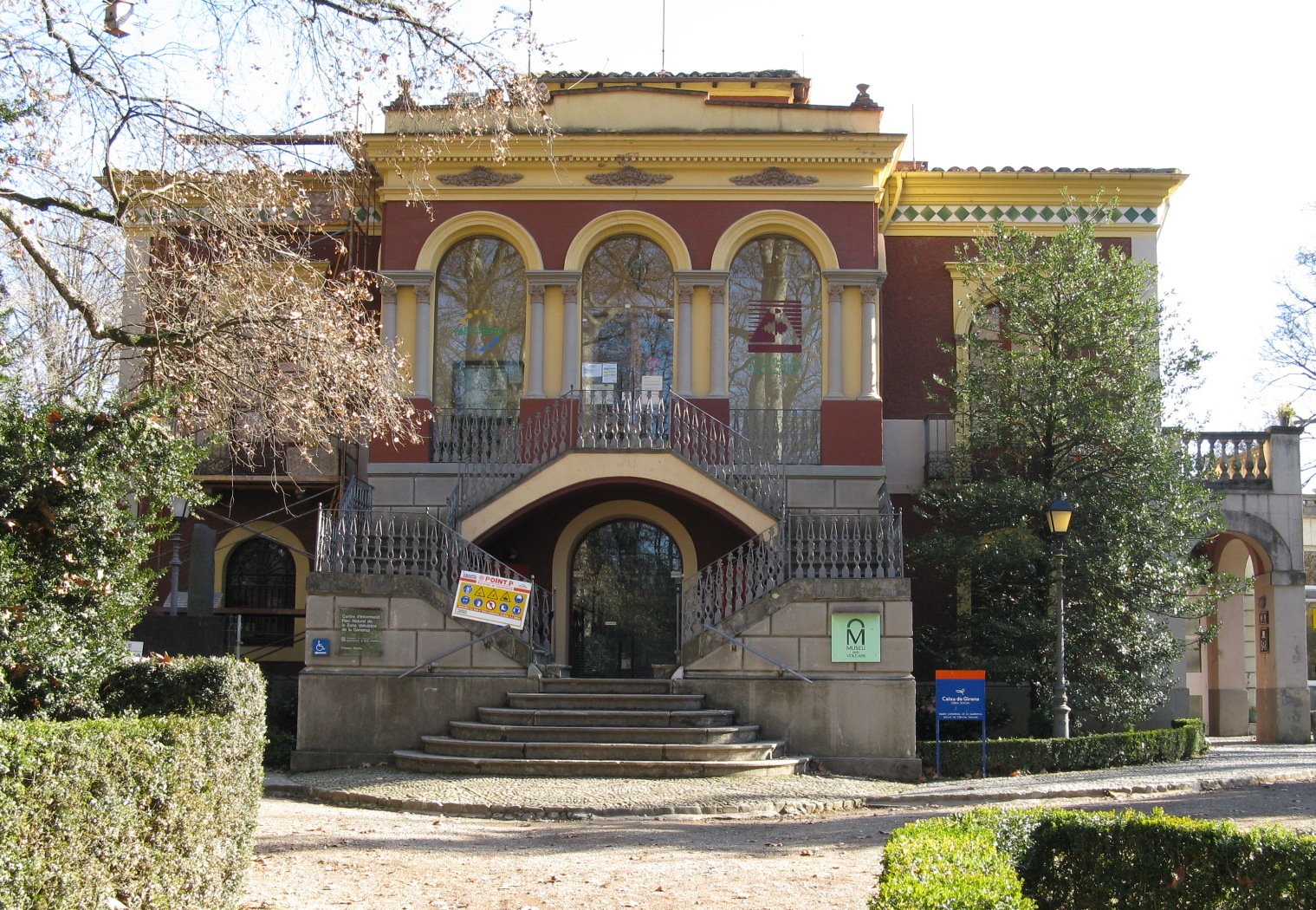
Museu dels Volcans
Olot
Museu dels Volcans is the former volcanology museum of Olot, a town sitting right inside the volcanic landscape of the Garrotxa region in Catalonia. For over three decades it occupied the Torre Castanys tower in the middle of the town's Parc Nou, explaining to visitors why the countryside around Olot is dotted with the cones of extinct volcanoes. What was the Museu dels Volcans? The museum opened in 1991 as the science wing of the Museu de la Garrotxa. Its exhibits focused on the region's volcanic and seismic activity: scale models, touch-screen displays and interactive modules walked visitors through how the local volcanoes formed and how they shaped the surrounding landscape and settlements. One standout feature was an earthquake simulator, the only one of its kind in Catalonia. The museum also covered Garrotxa's main plant and animal ecosystems, and the grounds around Torre Castanys included a botanical garden of native Olot vegetation alongside a dedicated medicinal plant garden. What replaced the museum? The Museu dels Volcans closed in 2022, and its role passed to a new facility, Espai Cràter, built literally inside the Puig del Roser volcano at Carrer Macarnau 55. That setup is unusual by any standard: visitors enter a partly underground structure and see the inside of a volcanic cone from within. Espai Cràter swaps traditional display cases for audiovisual exhibits, immersive experiences, augmented reality, gamified elements and video mapping — a more contemporary way of telling the same story of Garrotxa's volcanic past. How do you get there and when should you visit? Espai Cràter sits in Olot, an easily reachable town in Girona province, roughly an hour's drive from the Costa Brava coast and not much further from Girona or Barcelona. From October to May, opening hours run Monday to Friday 10:00–14:00 and 15:00–18:00, Saturday 10:00–14:00 and 15:00–19:00, and Sunday 10:00–14:00. From June to September the site keeps longer summer hours, open daily 10:00–14:00 and 16:00–20:00. It's worth timing a visit to the season, since winter days are shorter while summer allows for an evening slot as well. How much does admission cost? A general ticket costs €7.50, while the reduced rate (children aged 5–14, seniors 65+, students) is €5.50. Children under 5 and visitors with disabilities enter free of charge. Groups wanting more geological context can book a guided tour for €9.50. What else is worth seeing nearby? Olot itself makes a good base for exploring the Garrotxa Volcanic Zone Natural Park — further volcanic cones lie within a few kilometres, including the well-known La Fageda d'en Jordà, a beech forest growing on an old lava flow. The town also has its own historic centre with modernist architecture, so a visit to the volcanic area can easily be paired with a short walk through old Olot. Frequently asked questions Is the Museu dels Volcans still open? No — the museum in Torre Castanys closed in 2022. Its role was taken over by Espai Cràter, a new facility built inside the Puig del Roser volcano that covers the same subject through audiovisual and interactive exhibits. Where exactly is the new museum located? Espai Cràter is at Carrer Macarnau 55 in Olot, inside the cone of the Puig del Roser volcano. How long does a visit take? There's no fixed rule, but given the format of the exhibits — audiovisual displays, immersive scenes, video mapping — a typical visit takes about an hour. Is it worth combining with other Garrotxa attractions? Yes — Olot sits in the middle of the volcanic park, so a single day trip can easily combine Espai Cràter with a walk among the nearby volcanic cones and through the La Fageda d'en Jordà forest.
-
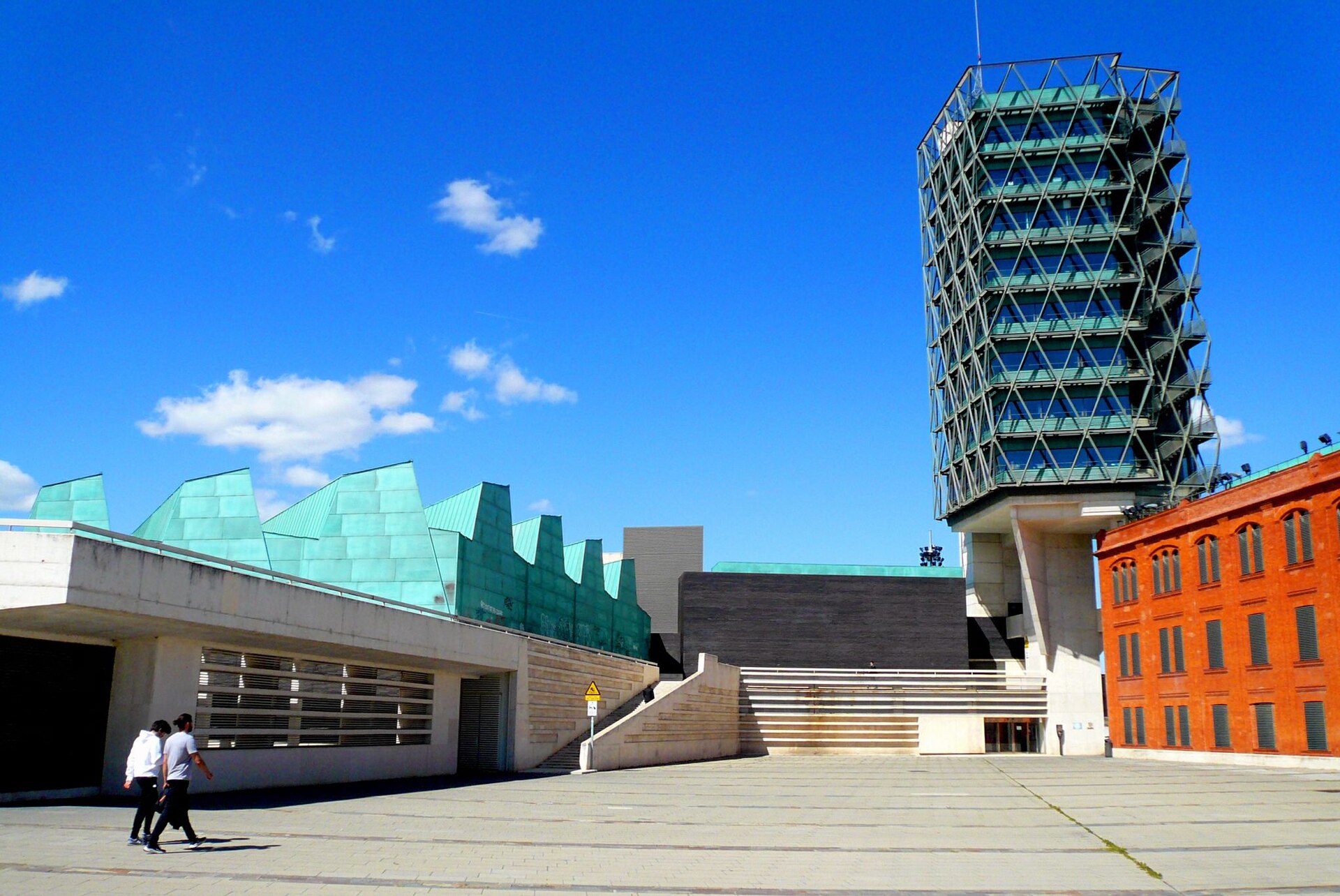
Valladolid Science Museum
Valladolid
Valladolid Science Museum stands as one of the city's most distinctive landmarks — a museum housed inside a former flour mill on the banks of the Pisuerga River. Opened in May 2003, it doubles as both a hands-on science institution and a striking example of industrial heritage turned into contemporary cultural space. How do you get to the museum? The building sits right along the Pisuerga riverbank, in an easily reachable part of Valladolid, making it a convenient stop whether you're exploring the city center on foot or getting around by public transport. The riverside location means a walk along the promenade fits naturally before or after a visit, with views extending toward other landmarks that also line the water. Valladolid's central position within the Castile and León region, well connected by train and road to Madrid and other major cities in northern Spain, makes reaching the city itself straightforward for visitors coming from further afield. What will you find inside? The building's architecture is as much a part of the experience as the exhibits themselves. Architects Rafael Moneo and Enrique de Teresa led the transformation of the old industrial complex into a museum, choosing to retain much of the original mill structure while weaving in contemporary elements. The result is a building that functions as an exhibit in its own right — physical evidence of the city's industrial past repurposed into a space dedicated to public science education. Inside, visitors find exhibitions covering natural sciences and technology, presented in a format accessible to a wide range of ages, which is why the museum is a popular destination for school trips and family weekends alike. Why does the building's history matter? Before its conversion, the structure operated as a flour mill — a typical feature of 19th- and 20th-century industrial infrastructure in cities built along navigable rivers. Turning this kind of building into a cultural venue reflects a broader trend across Spain, where former factories, warehouses, and mills have been given new life as museums, cultural centers, and galleries. That dual identity makes Valladolid Science Museum worth a visit not only for science enthusiasts but also for anyone interested in architecture and the region's industrial history. When is the best time to visit? Because it's a fully indoor attraction, the museum can be visited year-round regardless of weather, making it a solid option both in the cooler months and during the hot summers typical of the Iberian interior, when air-conditioned galleries offer a welcome break from the heat. Pairing a visit with a walk along Valladolid's riverside boulevards works especially well in spring and autumn, when conditions are ideal for longer strolls through the city. Frequently asked questions When did Valladolid Science Museum open? The museum opened in May 2003. What kind of building houses the museum? A former flour mill on the banks of the Pisuerga River, converted from an industrial complex into a modern exhibition space. Who designed the building's transformation? Architects Rafael Moneo and Enrique de Teresa led the conversion of the old industrial complex, preserving much of its original structure. Is the museum a good visit for families with children? Yes — the science exhibits are presented in an accessible, hands-on format, making the museum a popular choice for families and school groups.
-
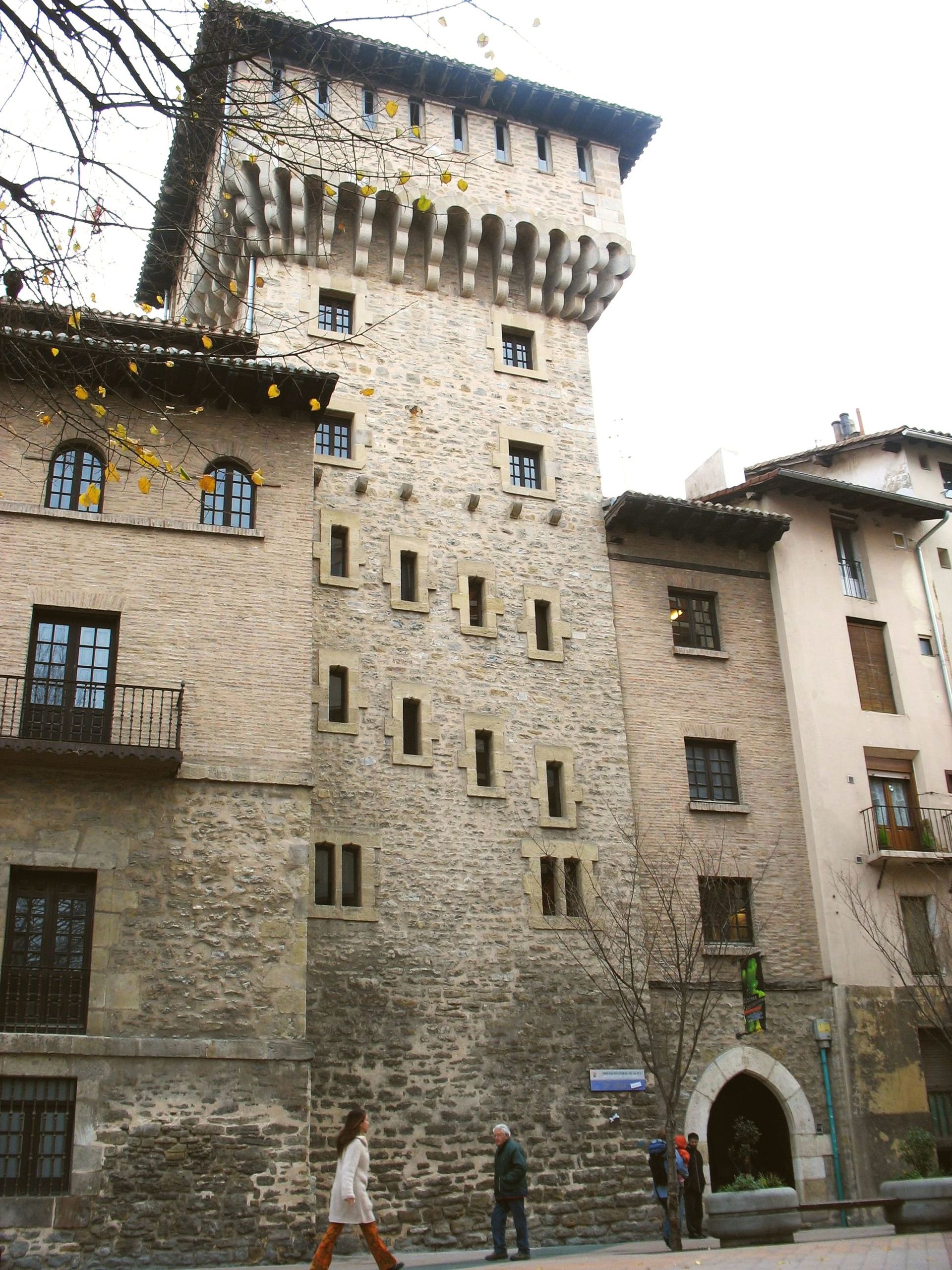
Museo de Ciencias Naturales de Álava
Vitoria-Gasteiz
Museo de Ciencias Naturales de Álava is a natural history museum in Vitoria-Gasteiz, housed inside a medieval tower right in the heart of the old town. Where is it and how do you get there? The museum occupies the Torre de Doña Ochanda (also known as Doña Otxanda), a fortified tower and adjoining palace in the historic centre of Vitoria-Gasteiz, capital of the Basque Country. The building dates back to the early 15th century, and in the 16th century it was rebuilt by Andrés Martínez de Iruña, who named it after his daughter, Doña Ochanda. The tower's current crenellated silhouette comes from a 1971 restoration, which raised and recreated the top of the structure. Because it sits within the old quarter, the museum is an easy stop on foot while wandering the historic streets — it fits naturally into a walking tour of Vitoria's medieval core. What will you see inside? The collection is spread across three floors and covers botany, palaeontology, mineralogy and zoology. That range gives visitors a compact overview of the natural sciences under one roof, which makes it a practical stop for families and school groups alike. The museum also holds a substantial library, with scientific periodicals alone numbering over a thousand titles, making it a genuine research resource for the region. The undisputed highlight is the collection of Lower Cretaceous amber from Peñacerrada, one of the most significant palaeontological deposits anywhere in the world. These specimens offer a window tens of millions of years into the past, revealing what life looked like in this part of Spain during the age of the dinosaurs — a find of a scale rarely matched even by larger institutions. The building itself is part of the attraction. It's worth pausing to take in the defensive architecture of the tower, its thick walls and battlements, which recall the fortified residence this once was. When should you visit, and how long does it take? The museum opens Tuesday to Saturday from 10:00 to 14:00 and 16:00 to 18:30, and on Sundays and public holidays from 11:00 to 14:00. It is closed on Mondays, unless a Monday falls on a public holiday. Allow roughly an hour to ninety minutes to see all three floors at a comfortable pace, depending on whether you want to linger over every section or focus mainly on the amber collection. Given the museum's compact, intimate scale, visiting in the morning — outside peak tourist hours, especially in summer when Vitoria-Gasteiz draws more visitors — tends to make for a calmer experience. Who is this museum for? Families travelling with children curious about nature and palaeontology will find plenty to enjoy, and so will anyone interested in historic architecture, since the tower itself is a monument worth seeing regardless of what's on display inside. The combination of a medieval building with a modern museum function is an unusual and rewarding pairing. Frequently Asked Questions Where exactly is the museum located? Inside the Torre de Doña Ochanda, in the historic centre of Vitoria-Gasteiz, in the Basque Country. What is the museum's biggest highlight? The collection of Lower Cretaceous amber from Peñacerrada, one of the world's key palaeontological deposits, alongside its botanical, mineralogical and zoological collections. What are the opening hours? Tuesday to Saturday 10:00–14:00 and 16:00–18:30, Sundays and holidays 11:00–14:00. Closed on Mondays, except when a Monday is a public holiday. How much time should I set aside? About an hour to ninety minutes is enough to see all three floors of the exhibition.
-

Biblioteca Infantil Errota
Tolosa
Biblioteca Infantil Errota is a children's library in Tolosa, a town in the Gipuzkoa province of the Basque Country. It forms part of Tolosa's municipal library network and is dedicated mainly to young readers and their families. Where is the library located? Errota operates at Plaza Andre Maria 5, right in the center of Tolosa, postal code 20400. It's easy to find, since the town has a compact, historic street layout, and Plaza Andre Maria is one of the recognizable landmarks downtown. The name "Errota" itself means "mill" in Basque, pointing to the local Basque roots behind the library's name. What are the opening hours? The library's schedule changes depending on the time of year: During the school term, it's open Monday to Friday from 5:00 pm to 8:00 pm. During school holidays, the hours shift to the morning: 10:00 am to 1:00 pm. This split schedule is typical for children's libraries tied to the school calendar — afternoons while classes are in session, mornings during holidays, when kids have more free time earlier in the day. Who is this library for? Errota is the branch dedicated to Tolosa's youngest residents and visitors. Unlike the town's main municipal library, this branch focuses specifically on children's needs, offering a collection and a space designed for younger readers. For families traveling with kids through the Basque Country, it's a practical stop for a break from sightseeing, a chance to sit somewhere sheltered, and an opportunity for children to browse books, including titles in the Basque language. How to get there and get in touch? The library sits in the heart of Tolosa, within walking distance of the town's main sights, including the old quarter and the riverside promenades along the Oria river. For practical matters — such as registration, children's activities, or questions about availability — you can reach the library by phone at 943 697461 or by email at liburutegia@tolosa.eus. Frequently Asked Questions Is Biblioteca Infantil Errota only for children? Yes, it's the children's branch of Tolosa's municipal library network, focused on younger readers and their families, as opposed to the main municipal library that serves the whole town. What are the opening hours during school holidays? During holidays the library opens in the morning, from 10:00 am to 1:00 pm, unlike the afternoon hours (5:00 pm to 8:00 pm) that apply during the school term. Where exactly is the library located? At Plaza Andre Maria 5, in the center of Tolosa (postal code 20400), within easy walking distance of the town's other attractions. How can I get in touch about a visit or activities? The easiest way is by phone at 943 697461 or by email at liburutegia@tolosa.eus, both of which reach the library staff directly.
-
Astronomical Observatory of Cantabria
Rocamundo
The Astronomical Observatory of Cantabria (OAC) is a research and outreach facility located in the municipality of Valderredible, near the village of Rocamundo, in the region of Cantabria in northern Spain. The site operates under the Ministry of the Environment of the Government of Cantabria, with day-to-day management handled by the Environment Research Center (CIMA). Its work is carried out in partnership with the University of Cantabria, the Institute of Physics of Cantabria, and the Astronomical Association of Cantabria. Where exactly is the observatory? The OAC sits well inland, away from the built-up coastal strip of Cantabria, within the municipality of Valderredible — an area known for its sparse population and open, dimly lit landscapes. That relative darkness is precisely what makes the surroundings of Rocamundo suited to night-sky observation. The site's coordinates place it at roughly 42.77°N, -3.95°W, in the southern, more rural interior of the region, at a clear remove from the urban corridor along the Bay of Biscay. How do you get there? Valderredible is a municipality made up of numerous small settlements spread across a wide area, and Rocamundo is one of them. The region lies in the inland south of Cantabria, off the main routes that draw most visitors to the coast. Because the OAC is a scientific facility rather than a conventional tourist attraction, it's worth checking current road access and any posted directions before setting out — this isn't a stop you'll stumble onto without planning the route in advance. What will you find there? The observatory functions as a research and educational hub run jointly by regional scientific institutions. Its activity combines ongoing astronomical monitoring with efforts to bring knowledge of the night sky to residents and visitors alike. The involvement of the Institute of Physics of Cantabria and the Astronomical Association of Cantabria in its programs shows how the site bridges academic research and local science outreach. For anyone drawn to the night sky, the location itself — far from urban light — is a draw in its own right, offering views rarely available closer to the coast. When is the best time to visit? As with any astronomical site, clear, moonless nights offer the best viewing conditions. Cantabria's Atlantic climate brings frequent cloud cover, so checking the forecast for the Valderredible area before heading out is a sensible precaution. Given the OAC's scientific and institutional character, public access may be tied to specific events or programs run by CIMA and its partner institutions, so it's worth confirming current visiting arrangements directly with the organizing body before you travel. Frequently Asked Questions What is the Astronomical Observatory of Cantabria? It is a research and outreach center under the Ministry of the Environment of the Government of Cantabria, managed by the Environment Research Center (CIMA), working alongside the University of Cantabria, the Institute of Physics of Cantabria, and the Astronomical Association of Cantabria. Where is it located? In the municipality of Valderredible, near the village of Rocamundo, in the inland southern part of Cantabria, well away from the region's coastal towns. Why does this site matter to stargazers? Its distance from major urban centers means significantly less light pollution, which makes for markedly better conditions for observing the night sky. Can you visit without advance planning? As a scientific and institutional facility, access can depend on specific programs or events organized by the managing institutions, so it's best to check current visiting conditions beforehand.
-
Monestir de Sant Miquel dels Reis
Monasterio de San Miguel de los Reyes is a Renaissance-era monastery in Valencia, Spain, now home to the Biblioteca Valenciana, the region's central library. Standing near the former bed of the Turia river on the edge of the historic city center, it ranks among the most significant Renaissance buildings in the Valencia region. Where did the monastery come from? The building was commissioned in 1545 by Ferdinand of Aragon, Duke of Calabria, who intended it as a family pantheon for the Hieronymite order. It rose on the grounds of an older Cistercian monastery known as Sant Bernat de Rascanya. Construction began in 1546 with the southern cloister, following designs by Juan de Vidaña and Alonso de Covarrubias, architects working in the Spanish Renaissance tradition. The duke's death in 1550 slowed the project considerably, and work dragged on until 1607 before the complex was finished. What will you see on site? The highlight is a pair of monastic cloisters, widely regarded as among the finest examples of Renaissance architecture in Valencia — the arcade proportions, stonework, and spatial layout impress visitors regardless of their interest in architectural history. The building's later history was turbulent: it fell into ruin during the 19th century and subsequently served as a shelter, a psychiatric hospital, a school, and, under the Franco regime, a prison. Traces of these different periods are still visible throughout the complex. Since 1999 the monastery has housed the Biblioteca Valenciana, the central library of the Valencian Community, tasked with preserving and promoting the region's bibliographic heritage. The building underwent restoration for this purpose between 1995 and 1999, and the library formally moved in as its permanent seat in 2000. Visitors can therefore combine a look at a historic monument with a visit to a working cultural institution, including reading rooms, temporary exhibitions, and collections tied to regional history. How do you get there? The monastery sits northeast of Valencia's historic center, close to the old Turia riverbed, now converted into a long urban park. The easiest way to reach it is by tram or city bus, with stops right beside the building. The surrounding area is quiet and well connected to the center and to other attractions strung along the Turia park. When should you visit? As a working library, the site operates during standard public-institution hours on weekdays. A morning or early-afternoon visit is worthwhile, when light falls best on the cloisters and the building sees less of the daily traffic tied to library operations. The location pairs naturally with a walk through the Turia park or a visit to Valencia's other Renaissance and Baroque landmarks nearby. Frequently asked questions Can you visit the Monasterio de San Miguel de los Reyes? Yes, the building functions as an active public library, so the cloisters and exhibition areas are accessible during its opening hours. Who founded the monastery? Ferdinand of Aragon, Duke of Calabria, in 1545, intending it for the Hieronymite order and as his family's pantheon. Why did construction take so long? The founder's death in 1550 halted the project, which only resumed and continued through to 1607, explaining the more than six-decade building period. What does the building house today? Since 1999 it has been home to the Biblioteca Valenciana, the region's central library responsible for Valencian bibliographic heritage.
-
Palacio de los Condes de Benavente, Valladolid
Valladolid
Palacio de los Condes de Benavente is one of Valladolid's most significant historic palaces, today home to the Library of Castilla y León. The building's story ties together Spanish nobility, two kings, and the public institutions that reshaped its purpose over the centuries. How did the palace come to be built? The story begins in 1475, when Rodrigo Alfonso Pimentel, IV Count and I Duke of Benavente, purchased a large plot of land northwest of what was then the centre of Valladolid, intending to build his family's residence there. Construction itself did not start until 1516, and it immediately unsettled the local population, who feared the noble family was raising not a palace but a fortress that could threaten their interests. The building was completed in 1520, and the result exceeded expectations: its scale and the richness of its apartments matched those of a royal residence. Why did the palace matter to the Spanish crown? The building's importance quickly went beyond the Pimentel family. It hosted members of the royal family — Philip II stayed there in 1559, and Philip III in 1601. Within its walls, two infantas were born: Ana Mauricia, later Queen of France, and María (1603), daughter of Philip III and Margaret of Austria. The palace also served political functions, hosting sessions of the General Courts (Cortes) and royal councils, making it one of the region's centres of power. What happened to the palace after its golden age? The building reached its greatest splendour in the mid-17th century under Juan Alfonso Pimentel, Viceroy of Naples and Count-Duke of Benavente. The following decades brought serious setbacks: the palace suffered two major fires, in 1667 and 1716, which diminished its former grandeur. A turning point came in 1801, when the Provincial Council (Diputación) of Valladolid took over the building and converted it into a hospice, a role it kept until the 1970s. What can visitors see today? Since 1990, the former palace has housed the Library of Castilla y León, one of the region's leading cultural institutions. Visitors can admire Renaissance architecture typical of early 16th-century aristocratic residences — a solid, imposing structure and representative interiors whose layout has been adapted over centuries to serve different functions. It is a rare chance to see a building that was, in turn, a noble residence, the birthplace of infantas, a seat of government, and a charitable institution, and now serves readers and researchers. How do you get to the palace? The palace stands right in the centre of Valladolid, making it an easy walk from other historic sites in the city. Because the building now functions as a library, it is worth checking opening hours before visiting, especially if the goal is to see the interior rather than just the façade. Frequently asked questions When was Palacio de los Condes de Benavente built? Construction started in 1516 and finished in 1520, commissioned by Rodrigo Alfonso Pimentel, IV Count and I Duke of Benavente. Who lived in the palace? The palace hosted King Philip II (1559) and Philip III (1601), and was the birthplace of infantas Ana Mauricia and María. What is the palace used for today? Since 1990 the building has housed the Library of Castilla y León. Did the palace suffer any damage over the centuries? Yes, it was hit by two major fires, in 1667 and 1716, and between 1801 and the 1970s it served as a city hospice.
-
House of Reading-Municipal Library of Segovia
Segowia
Casa de la Lectura – Municipal Library of Segovia is a public library housed in one of the most architecturally interesting buildings of Segovia's old town, on Calle Juan Bravo. What makes this building so unusual? The site's story goes back to the 11th century, when a Cistercian convent was founded here shortly after Segovia was resettled following the Christian reconquest. The now-vanished church of San Briz also once stood on the plot. Between the 16th and 18th centuries, the Renaissance-style structure was converted into the city's Royal Prison. Only in 1948 did the building take on a cultural role, when the library moved in — for years it shared the space with the Provincial Museum (until 1955) and the Provincial Archive (until 1996). Today the building is fully dedicated to the library. How do you get there? The library sits right in Segovia's historic core, within easy walking distance of Plaza Mayor and the city's famous Roman aqueduct. Calle Juan Bravo is one of the old town's main streets, so no public transport is needed — a stroll through the historic quarter, which is best explored on foot anyway, will take you straight there. What will you see, inside and out? The building covers about 600 square meters across three floors, topped with a distinctive bell gable. The façade is deliberately austere: the structure follows a square floor plan, with rooms arranged around a small interior courtyard. A 17th-century stone façade with a cornice survives at the front, along with the coat of arms of the House of Habsburg — a reminder of the building's former role as a royal prison. The contrast between this sober, fortress-like exterior and its current life as a public library is one of the first things visitors notice. What services does the library offer? Casa de la Lectura operates as a full public library: visitors can borrow books, use reading and consultation areas, connect to internet and Wi-Fi, and settle into dedicated study spaces. The library also runs reading-promotion activities, and the building includes an exhibition hall and a multipurpose auditorium used for talks, presentations and cultural events open to both locals and visitors. When is the best time to visit? This spot works well as a stop while exploring the old town, fitting naturally into a route between the Aqueduct and Plaza Mayor — especially useful on cooler or rainy days, when stepping into a building with this kind of architecture is a welcome break. If you're hoping to catch a temporary exhibition or an event in the auditorium, check the library's current schedule beforehand, since the cultural program changes seasonally. As a municipal library, it operates on regular business days, so it's worth planning a visit outside public holidays. Frequently Asked Questions Can you visit the building just to see the architecture, without using the library itself? Yes, the interior is accessible during opening hours — you can see the courtyard, staircase and common areas without being a registered library user. What was this building used for before it became a library? Over the centuries the site held a Cistercian convent, the church of San Briz, and, from the 16th to the 18th century, Segovia's Royal Prison. It has only served as a library since 1948. Are there exhibitions or events for visitors inside the building? Yes, the building has an exhibition hall and a multipurpose auditorium hosting temporary exhibitions, talks and cultural events open to the public. How far is it from the Roman aqueduct of Segovia? Very close — just a few minutes' walk through the historic center, so both landmarks are easy to combine in a single visit.
-
Royal Observatory of Madrid
Madryt
The Royal Observatory of Madrid sits on a small hill right next to Buen Retiro Park, in the heart of the Spanish capital. It is one of the oldest scientific institutions in Madrid still in operation today, blending more than two centuries of history with research work that continues into the present. Where exactly is the observatory located? The building stands on a hill bordering Buen Retiro, one of Madrid's most important city parks. That siting was deliberate: back in the late 18th century, the elevated ground was chosen specifically because it offered better conditions for observing the sky than the denser parts of the city. Today the park next door keeps the surroundings quiet and green, even though the location is close to the city center. What is the history behind it? The observatory was founded in 1790 and has been in continuous scientific activity ever since — a rare feat for an institution of this kind, since comparable observatories elsewhere in Europe were often closed, relocated, or substantially rebuilt over the same period. More than two hundred years of unbroken operation make it one of the more durable symbols of Spanish science in Madrid. What does the observatory do today? It is far more than a historic monument: the site currently serves as the seat of the Spanish National Observatory. It also hosts an active research group working in geophysics, which forms part of the National Geographic Institute. In other words, despite its historic architecture and age, the work carried out here is fully contemporary and feeds directly into Spain's national geographic and geophysical research. What is worth seeing nearby? The direct proximity to Buen Retiro Park is a real advantage for anyone planning a visit. The park is one of Madrid's signature attractions, with tree-lined paths, a lake, and several pavilions, so walking up toward the observatory works naturally as an extension of exploring that part of the city. The hill the building sits on also offers a different vantage point over the surrounding greenery than the views from the paths down in the park itself. When is the best time to go? Because the observatory combines the role of a historic landmark with that of an active research facility, public access can be limited and can change over time, which is worth factoring in when planning a visit around a specific date. The surrounding area, thanks to the neighboring park, is pleasant year-round — spring and autumn are the most comfortable seasons for walking, while summer in Madrid brings high temperatures during the middle of the day. Frequently asked questions Where is the Royal Observatory of Madrid located? On a hill adjoining Buen Retiro Park, in the central part of Madrid. When was the observatory founded? In 1790, and it has operated continuously as a scientific institution ever since. Is the observatory still used for scientific research? Yes — it serves as the seat of the Spanish National Observatory, and an active geophysics research group linked to the National Geographic Institute works there. Is it worth combining a visit with a walk through Buen Retiro Park? Yes — the proximity of the park means the observatory fits naturally into a route through one of Madrid's best-known green spaces.
-
Museu de les Ciències Príncipe Felipe
Walencja
Museo de las Ciencias Príncipe Felipe is one of the defining landmarks of Valencia, a Spanish science museum that forms the centerpiece of the futuristic City of Arts and Sciences complex. Recognizable for its bold, skeletal architecture, the building stands at the end of Luis García Berlanga Street, named after the celebrated Spanish film director. What is the Museo de las Ciencias Príncipe Felipe? It is a science museum dedicated to new technologies, natural sciences, and the environment. Rather than following the classic model of glass cases and "do not touch" signs, the museum is built around hands-on learning, letting visitors interact directly with the exhibits. That approach makes it a particularly popular stop for families and school groups. Together with other landmarks such as the Oceanogràfic and the Palau de les Arts, the museum is one of the pillars of the City of Arts and Sciences, the architectural ensemble that has become synonymous with modern Valencia. When did the museum open? The Museo de las Ciencias Príncipe Felipe opened its doors on November 13, 2000. Since then it has become a signature attraction of the city, regularly featured on lists of Valencia's top sights and drawing visitors interested in both science and contemporary architecture. Who is behind the museum's program? The museum's director is Manuel Toharia, a Spanish science writer and television personality known for his work bringing science to general audiences. His role at the head of the institution reflects the museum's educational mission — it functions not only as a tourist attraction but also as a hub for promoting scientific literacy among local residents. Why is it worth visiting in Valencia? The Museo de las Ciencias Príncipe Felipe brings together three things that rarely coincide in one place: internationally recognized architecture, science content suited to a wide range of ages, and a location inside one of the most photographed complexes in Spain. For anyone planning time in Valencia, it is a natural stop on the itinerary, both for the building itself and for what is inside it. Its proximity to the rest of the City of Arts and Sciences makes it easy to combine a visit to the museum with the surrounding complex in a single day of sightseeing. Frequently Asked Questions Is the Museo de las Ciencias Príncipe Felipe located in central Valencia? The museum sits within the City of Arts and Sciences complex, built along the former riverbed of the Turia — one of the city's most distinctive districts and a favorite among visitors for its modern architecture. How is this museum different from a traditional science museum? Its concept is built around interactivity: visitors engage directly with the exhibits rather than simply viewing them behind glass, which makes a visit more engaging, especially for children and teenagers. When did the museum open? The Museo de las Ciencias Príncipe Felipe opened on November 13, 2000, and has functioned ever since as a permanent part of the City of Arts and Sciences. Who directs the museum? The institution is led by Manuel Toharia, a Spanish science writer and television personality dedicated to popularizing science.
-
Museo de la Fauna Salvaje
Boñar
Museo de la Fauna Salvaje is an unusual natural history museum located in the municipality of Boñar, in the mountainous part of the province of León, in the Spanish region of Castilla y León. It sits between the small villages of Valdehuesa and Rucayo, right next to the Porma Reservoir, making the surrounding area appealing on its own for anyone who enjoys nature before or after the visit. What is inside the museum? The museum spreads across 25 exhibition rooms holding more than 8,000 taxidermied animal specimens representing wild fauna from all five continents. The collection includes large mammals, big cats, primates, reptiles, birds, and insects. Each animal is displayed within a reconstructed scene meant to evoke its natural habitat — background paintings, native plants, and other staging elements were used to recreate the look of different ecosystems, from savannah landscapes to colder climates. Who is behind the collection? The museum was founded thanks to Dr. Romero Nieto, and the foundation that carries his name still runs the site today. It opened its doors in 2004 in cooperation with regional institutions from Castilla y León. Since then, more than 600,000 visitors have come through, including over 200,000 children — reflecting the museum's role as an educational stop that introduces younger visitors to global biodiversity. What facilities does it offer? Besides the exhibition halls, the site includes an audiovisual room, a library and classroom space, a gift shop, and an art gallery. Visitors who want to stay longer can use the on-site cafeteria-restaurant, which offers panoramic views over the surrounding landscape, including the Porma Reservoir and the hills around it. When is a good time to visit? The museum is open Tuesday through Sunday, from 11:00 to 19:00. This schedule makes it easy to fit into a day trip around Boñar or into a longer stay in this part of León, combining the visit with outdoor time by the Porma Reservoir. Who is this museum for? Given the size of the collection and the way the animals are presented, the museum tends to appeal to families with children, nature enthusiasts, and anyone interested in taxidermy or natural history displays. The high number of child visitors suggests it has also long been a popular destination for school trips from the region. Frequently Asked Questions Where exactly is Museo de la Fauna Salvaje located? The museum is in the municipality of Boñar, in the province of León (Castilla y León), between the villages of Valdehuesa and Rucayo, right beside the Porma Reservoir. How many specimens are on display? The collection includes more than 8,000 taxidermied animal specimens from five continents, spread across 25 themed rooms. What are the opening hours? The museum is open from Tuesday to Sunday, between 11:00 and 19:00. Who created the museum? It was founded by Dr. Romero Nieto, and since 2004 it has been run by the foundation that bears his name, in cooperation with regional institutions.
-
National Museum of Natural Sciences
Madrid
The National Museum of Natural Sciences (Museo Nacional de Ciencias Naturales) in Madrid is one of Europe's leading institutions dedicated to biodiversity, geology, and the history of life on Earth. Located at Calle José Gutiérrez Abascal 2, near the Paseo de la Castellana, it has spent more than two centuries building one of the country's most significant scientific collections. How did the museum come to be? The institution's roots go back to 1771, when King Charles III founded the Real Gabinete de Historia Natural (Royal Cabinet of Natural History). Its founding collection came from a donation by the Spanish merchant Pedro Franco Dávila. In 1815 the cabinet was reorganized as the Real Museo de Historia Natural, and the museum has carried its current name, Museo Nacional de Ciencias Naturales, since 1913. Today it operates under Spain's National Research Council (CSIC). What is on display inside? The museum holds close to 8 million specimens, spanning fossils, mammals, invertebrates, birds, fish, insects, tissue and DNA samples, palaeobotanical material, and reptiles. One unusual holding is the Zoological Sound Library, a collection of animal recordings used in biological research. The exhibition route moves through galleries on paleontology, mineralogy, Mediterranean ecosystems, and present-day fauna. Dinosaur skeletons and other fossils trace more than 4.5 billion years of Earth's history across successive geological eras. A separate section is devoted to the history of science itself, displaying antique magnifying glasses, one of the oldest surviving compound microscopes, old scientific balances, barometers, laboratory equipment, and electroscopes. When can visitors go? The museum opens Tuesday to Friday from 10:00 to 17:00, and on Saturdays, Sundays, and holidays from 10:00 to 20:00. It is closed on Mondays, except when a Monday falls on a public holiday. It also closes on January 1 and 6, May 1, and December 25. During August, hours are shortened to 10:00–15:00. Is admission free? Free entry applies to certain groups, including visitors aged 65 and over, children under 4, and people with a certified disability, among other cases. Because the exact conditions and current ticket prices can change, it is worth checking the museum's official website before a visit. Frequently Asked Questions Where exactly is the museum located? At Calle José Gutiérrez Abascal 2, close to the Paseo de la Castellana in Madrid, inside a building that belongs to the CSIC scientific research campus. How old is the museum? Its history spans more than 250 years, tracing back to the Royal Cabinet of Natural History founded by Charles III in 1771, though it has held its current name only since 1913. What is the biggest draw for visitors? The dinosaur and fossil gallery, which traces Earth's evolution across billions of years, alongside the collection of historic scientific instruments. Can the museum be visited on a Monday? Generally no — it is closed on Mondays, except when the day falls on a public holiday.
-
General Archive of the Spanish Civil War
Salamanka
The General Archive of the Spanish Civil War, located in Salamanca, is a specialist archive dedicated to material related to the Spanish Civil War (1936–1939). It forms part of Spain's National Historical Archive (Archivo Histórico Nacional), making it one of the country's most significant repositories for anyone researching this period of Spanish history. What exactly is this place? It's not a museum in the conventional sense — it's an archival institution, built around collecting, preserving, and providing access to documents rather than curated displays. Its holdings relate directly to the Civil War, bringing together material produced or seized during that period. Because it operates as part of the National Historical Archive, it sits within Spain's wider state archive system rather than functioning as an independent, private collection. Why is the archive based in Salamanca? Salamanca played a distinctive role during the Civil War: on the Nationalist side of the conflict, documents seized from areas controlled by political opponents were gathered and catalogued here. Over time, the city — better known today for its historic university and old town — became the natural, permanent home for these collections. Who is this archive really for? This is primarily a resource for historians, academic researchers, genealogists, and people tracing what happened to relatives during the Civil War. It's a specialist source of primary documents rather than a mass-market tourist attraction, which is worth keeping in mind before visiting. Accessing the archival material typically involves the kind of procedures common to research institutions of this type, so it's worth checking the specific access rules in advance if your visit is research-focused. What should you know before visiting? The archive sits right in the heart of Salamanca, close to other major historical and cultural sites, which makes it easy to combine with the rest of a city visit. Given its nature — an archive rather than a museum exhibition — the building itself and its setting can be just as interesting to anyone curious about the city's history as the contents of the collection are to researchers. Frequently Asked Questions Is this a museum you can just walk through like any other attraction? Not quite. It's an archival institution built around preserving historical documents rather than a museum with a visitor-facing exhibition. Given the nature of its holdings, it's mainly used by researchers and people looking for specific information rather than casual sightseers. What kind of documents are kept here? The collection relates to the Spanish Civil War and includes material from that period, gathered and catalogued as part of Spain's broader national archive system. Why does this place matter for Spanish history? The Civil War (1936–1939) was one of the most defining periods in modern Spanish history, and this archive is one of the key sources documenting it, operating as part of the National Historical Archive. Is it worth combining with other sightseeing in Salamanca? Yes — the archive is centrally located, so it's easy to fold into a route covering the city's other historic sites, though given the institution's specialist nature, a visit here leans more toward research than typical tourism.
-
Centro de Interpretación da Lagoa de Antela
Sandiás
Centro de Interpretación da Lagoa de Antela is a small educational center in Sandiás, in the province of Ourense, dedicated to the story of one of the largest wetlands that ever existed on the Iberian Peninsula. The center occupies a traditional building on Praza da Carreira in the middle of the town, and locals often call it "Casa da Lagoa" (House of the Lagoon). What was the Lagoa de Antela? The Antela lagoon once covered an estimated area of around 42 square kilometers, stretching across several municipalities in the A Limia region — Xinzo de Limia, Sandiás, Vilar de Barrio and Xunqueira de Ambía. It was one of the largest and most significant lagoons on the Iberian Peninsula, holding major natural, archaeological and historical value. Its waters and surrounding wetlands were home to thousands of waterbirds, making the area a genuine haven for birdlife. Why did the lagoon disappear? Antela's fate was sealed by decisions taken in the mid-20th century. In 1959, the Instituto Nacional de Colonización launched a large-scale drainage project, completed around 1966. The goal was to turn the flooded land into farmland for agriculture. In practice, this meant destroying a unique ecosystem and triggered one of the largest known single-habitat species extinctions recorded in Galicia. The landscape of A Limia changed irreversibly, from a vast wetland into a patchwork of cultivated fields. What can visitors see at the interpretation center? The center exists precisely so this history isn't forgotten. Its permanent display, together with rotating temporary exhibitions, walks visitors through the transformation of the landscape — from the old lagoon, through its drainage, up to the present day, including the recovery of former sand pits (areeiras) for nature. Visitors will find scale models and reconstructions, audiovisual presentations, interactive elements, and information panels covering the geography, history and significance of the region. The center also runs workshops and educational activities, often aimed at school groups, along with study visits, including university students researching landscape change in the Limia basin. Is it worth combining the visit with the surrounding area? Yes — right next to the center are the former sand pits (areeiras) of Sandiás, which after years of extraction have been partly rehabilitated and now form wetlands visited by waterbirds. It is a kind of echo of the old lagoon, letting visitors see firsthand how nature is reclaiming part of the lost habitat. The Sandiás town council also organizes guided visits combining the interpretation center with this area. Frequently Asked Questions Where exactly is the center located? The center is located at Praza da Carreira 1, in the center of the town of Sandiás, in the province of Ourense, in the A Limia region. How is this different from a typical nature museum? This is an interpretation center focused on a single, specific subject — the history and disappearance of the Antela lagoon — combining historical narrative with ecological education and showing the real impact of administrative decisions on the region's landscape. Can you see any remains of the old lagoon nearby? The lagoon itself no longer exists, but close to the center there are former sand pits, partly rehabilitated as wetlands, which echo the old landscape and attract waterbirds. Who visits this place? The center draws both tourists interested in the history of the A Limia region and school and university groups, for whom workshops and educational visits are organized.
-
Environmental History Museum of Almería
Alcudia de Monteagud
The Environmental History Museum of Almería in Alcudia de Monteagud is the first institution in Spain devoted entirely to environmental history — the long-term relationship between people and the landscape they inhabit. Where is the museum located? Alcudia de Monteagud is a small mountain village in the Sierra de Filabres range, in the province of Almería, Andalucia. It sits away from the coastal tourist routes, surrounded by the dry hills and terraced farmland typical of Almería's interior. Where did the idea come from? The museum is the brainchild of Dr Juan García, a historian connected to the University of Granada, whose family has lived in Alcudia de Monteagud for five hundred years. That long personal connection to the village and its land became the driving idea behind a museum that looks at regional history not through political events but through how communities have related to their natural surroundings. The project was carried out by the local town council together with the Diputación de Almería (the provincial government). What does the exhibition cover? The museum takes visitors through the successive stages of human settlement in the province, showing how shifting climate and demographics shaped social and economic organisation at each stage. The narrative opens with the earliest human settlements in the area, moves through the Los Millares and El Argar cultures and their environmental impact, continues into Roman-era mining, and closes with the economic growth of the Al-Andalus period, built on silk, trade and agriculture. Rather than simply listing events, the museum asks how people coped with and shaped their environment in each era. What else is there to see nearby? The Environmental History Museum is one of three main attractions in Alcudia de Monteagud. Alongside it, the village has an Ethnographic Museum showing traditional tools and rural ways of life, and a Dry Stone Theme Park — an open-air space dedicated to the traditional technique of building mortarless stone walls, a craft characteristic of the whole Sierra de Filabres region. Local authorities have announced further development of this outdoor area as a complement to the museum offering. Who is this visit for? This is a destination for visitors interested in regional history, archaeology and the relationship between people and their environment, rather than a mass-tourism stop. It works well combined with a wider trip through the Sierra de Filabres villages and with a visit to the other two sites in the same village. Frequently Asked Questions Is this the first museum of its kind in Spain? Yes, local sources describe it as the first museum in the country dedicated to environmental/ecological history. Who created the museum? The concept came from Dr Juan García, a historian from the University of Granada whose family has lived in Alcudia de Monteagud for generations. It was developed with the local town council and the Diputación de Almería. What historical periods does the exhibition cover? From the earliest human settlements in the region, through the Los Millares and El Argar cultures, Roman mining, and up to the Al-Andalus period. What else can visitors see in Alcudia de Monteagud? The Ethnographic Museum and the outdoor Dry Stone Theme Park, which showcases the traditional mortarless stone-wall building technique.
-
Church of San Pedro, Becerril de Campos
Becerril de Campos
Church of San Pedro in Becerril de Campos is one of the more surprising landmarks of the Palencia province — a former Romanesque church that, after decades as a ruin, was reborn as a center dedicated to the sky and the stars, now known as San Pedro Cultural. How to get there? Becerril de Campos sits in the Tierra de Campos region, a short drive north of Palencia, along the road toward Carrión de los Condes and a stretch of the Camino de Santiago. The easiest way to reach it is by car from Palencia, a trip of roughly fifteen to twenty minutes. The church stands in the heart of the village and is easy to spot from a distance, thanks to its unusual silhouette without a bell tower — it was dismantled in the 1970s. What will you see? The building's story begins in the 12th century, when the original Romanesque church was constructed. Successive centuries, from the 15th to the 17th, brought extensions and rebuilding that gave the church the layered architectural form visible today. Its most valuable surviving feature is a late-Romanesque portal from the 13th century, decorated with seven archivolts — an unusually high number for such a modest rural parish, hinting at its importance in medieval times. The building's fortunes after the parish closed in the 1940s were turbulent. It served in turn as a school, a lodging house for travelers, and a grain store. That last use proved the most damaging: the weight of the stored grain weakened the structure so severely that in the 1970s the bell tower had to be demolished to stop it collapsing onto neighboring houses. After nearly eight centuries of continuous use, the building was left to decay into ruin. The turning point came in 2010, when architects from Palencia designed a restoration that fused the surviving Romanesque walls with an entirely new purpose: interpreting the sun, the stars, and the night sky. The San Pedro Cultural center opened its doors on 19 March 2015. Inside the former nave, visitors now find an exhibition on astronomy together with installations that track the movement of the sun and constellations, while the open roof symbolically links the old stone structure to the sky that has become the site's central theme. A visit therefore combines two experiences at once: walking among medieval walls and the archivolt-carved portal, and exploring a modern, interactive story about the cosmos that gave this ruin a second life. When to visit? Spring and early autumn are the best seasons, when temperatures across Tierra de Campos are mild and longer daylight hours make it easy to combine the visit with exploring nearby towns. In summer, aim for late morning or late afternoon to avoid the midday heat typical of the Castilian plateau. It is worth checking the cultural center's opening hours in advance, since as a small institution it may run a reduced schedule outside peak tourist season. Frequently asked questions Is the Church of San Pedro still used for religious services? No. The parish closed in the 1940s, and since 2015 the building has operated as a cultural center focused on astronomy, known as San Pedro Cultural. What is worth seeing inside? The main highlights are the surviving Romanesque architectural elements, especially the 13th-century portal with its seven archivolts, and the modern astronomy exhibition set up inside the former nave. Why does the church have no bell tower? The tower was demolished in the 1970s, when the building was being used as a grain store — the weight of the stored grain had weakened the structure to the point of collapse risk. How long does a visit take? Given the building's modest size, a visit usually takes thirty to forty-five minutes, making it easy to combine with a broader walk around Becerril de Campos.
-
Museu Valencia d’Historia Natural
Alginet
Museu Valencià d'Història Natural (MVHN) is a natural history museum in Alginet, a town south of Valencia in the Valencian Community, Spain. It forms part of a wider network of natural history and paleontological centres spread across the region. What is on display at the museum? The MVHN holds ten separate collections totaling around one million specimens. The core of the museum rests on its paleontological and mineralogical holdings, supplemented by material donated over the years by researchers and amateur naturalists — most notably malacological collections (mollusks) and entomological collections (insects). Visitors can see hundreds of species of insects and arachnids, terrestrial, freshwater and marine mollusks, crustaceans, fish, and slugs, alongside worms endemic to the Valencia region, plus butterflies, moths and beetles. The museum also displays fossils and a range of unusual geological and mineral samples, giving visitors a chance to trace the diversity of the natural world from the smallest invertebrates to traces of past geological eras preserved in rock. Who is the museum aimed at? MVHN runs an educational programme for students of different ages, pairing learning with hands-on discovery. It works well as a destination for a school trip, but also as a family day out — the sheer size of the collections means a visit can be tailored as a quick overview or a deeper dive into a particular group of organisms. How do you get to Alginet from Valencia? Alginet sits on a route that is easy to reach from the city of Valencia: the town has its own metro stop, and it is also well connected by road. That makes it straightforward to combine a museum visit with a day exploring Valencia itself, without needing a car. Why is MVHN worth a visit? The scale of the collection — close to a million specimens spread across ten distinct sets — makes this museum one of the more significant natural history sites in the Valencia region. Bringing together paleontological and mineralogical material with substantial entomological and malacological collections in a single venue is unusual for a museum of this size, giving visitors a cross-section of several natural science disciplines in one stop. For anyone with an interest in geology, entomology or malacology, it is a chance to see research material that is usually kept out of public view. Frequently Asked Questions Which town is the Museu Valencià d'Història Natural located in? The museum is located in Alginet, a town south of Valencia in the Valencian Community. How many specimens does the museum's collection include? The collections total around one million specimens across ten separate collections, including paleontological and mineralogical holdings. How can I reach the museum from Valencia? Alginet has a metro connection to Valencia as well as good road links, making it easy to visit without a car. Is the museum suitable for children and school groups? Yes, the museum runs an educational programme for students of various ages, combining learning with an enjoyable family experience.
-
Arxiu Comarcal del Montsià
Amposta
Arxiu Comarcal del Montsià is the regional archive of Amposta, responsible for preserving and sharing the documentary heritage of the entire Montsià county in southern Catalonia. What is this place? The Arxiu Comarcal del Montsià, commonly abbreviated as ACMO, belongs to the Xarxa d'Arxius Comarcals (XAC), Catalonia's network of county archives overseen by the regional Department of Culture. The archive was created through a co-management agreement signed by the Generalitat de Catalunya, the Ajuntament d'Amposta (Amposta town council) and the Consell Comarcal del Montsià (county council). This arrangement was a first for Catalonia: ACMO was the first county archive in the XAC network to operate under a co-management model from the moment it opened, rather than adopting it years later. The building was inaugurated on 30 October 2010. Its core mission is the preservation, conservation and dissemination of the county's documentary heritage, giving residents, researchers and other interested visitors genuine access to it. The holdings include records from the Generalitat de Catalunya's administration, local municipal governments, and institutions, associations and foundations active across the Montsià county. Where is it located and what does the building look like? The archive sits at Avinguda Generalitat 70-80 in Amposta, in one of the town's newer development areas. The building covers roughly 1,374 square metres of usable space across three floors. The ground floor is the public zone, housing a consultation room (reading room) for document research and a multipurpose room used for exhibitions and events. What can visitors actually do here? This is not a conventional tourist sight, but it does run regular activities open to the public: consulting documents on-site in the reading room, reprography services (copying and scanning of archival materials), access to a reference library and archival information services for researchers, exhibitions drawing on the archive's own collections, guided visits of the facility, training workshops on document management and archival practice, occasional open-house days (jornades de portes obertes), when the archive presents its work more broadly to the public. What are the opening hours? The schedule changes seasonally. In winter, the archive is open Monday to Friday in the morning (9:00 to 14:00), with additional afternoon hours on selected days. From 1 June to 30 September, a single summer schedule applies: mornings only, 8:00 to 15:00. Because afternoon slots and extra days can vary, it's worth calling ahead to confirm the current timetable before a visit. How can you contact the archive? The archive can be reached by phone at 977 707 923 (with an additional line at 677 183 259). Email contact is available at acmontsia@gencat.cat and acompany@amposta.cat — the first address is handled by the Generalitat, the second by the Ajuntament d'Amposta, reflecting the facility's shared management structure. Frequently Asked Questions Is the archive open to casual visitors, or only to researchers? Both. Researchers can use the reading room to consult documents, while the general public can tour the building, view temporary exhibitions, and take part in open-house days. What makes this archive different from other county archives in Catalonia? ACMO was the first archive in the XAC network to be run under a co-management agreement from day one — the deal between the Generalitat, the town of Amposta and the county council was already in place at the 2010 inauguration, rather than added later. What kind of documents are held here? The collections cover records from the Generalitat de Catalunya's administration, documentation from Montsià's local municipal governments, and materials from institutions, associations and foundations based in the county. Do you need to book ahead to visit? For consulting specific documents in the reading room, it's advisable to contact the archive by phone or email in advance. Guided building tours and open-house days are usually run as separate scheduled events.
-
Museo Paleontológico de La Ballena
Viator
The Museo Paleontológico de La Ballena is a small but remarkable museum in Viator, a town right next to the city of Almería. Run by the local town hall, the whole institution grew around a single extraordinary find: an almost complete skeleton of a prehistoric whale, considered one of the best-preserved specimens of its kind found anywhere in Spain. Why is there a fossil whale in Almería? Millions of years ago, the area around present-day Almería was covered by sea, home to large baleen whales. The remains of one of them came to light during excavation works carried out locally between 2004 and 2007. The find was significant enough that the Viator town council decided to build an interpretation centre around it, which opened its doors in 2011 and welcomed its first visitors the following year. What will you actually see inside? The centrepiece of the exhibition is the skeleton of a large baleen whale, estimated to be several million years old. Its most striking feature is a massive jawbone roughly three metres long, along with proportionally large fins. According to researchers, the whale's right fin shows signs of having been scavenged by sharks after its death — a cluster of fossilised shark teeth found beside the skeleton allowed experts to reconstruct this dramatic episode from millions of years ago. Beyond the whale itself, the museum's four exhibition rooms display additional fossils recovered in the region together with explanatory material on what the ancient marine environment of this part of Andalusia looked like, and on the fieldwork that led to the discovery. How do you get there and what does a visit involve? The museum sits on Calle Pintor Velázquez in Viator, just a few kilometres from central Almería, and is most easily reached by car. Visits take the form of a guided tour lasting around an hour, starting with a short introduction to the story of the find before moving through all four exhibition rooms. Because opening hours are limited and can vary, it is worth calling ahead to book through the Viator town hall (tel. 950 304 302) or checking the council's current visitor information before setting off, so as not to arrive to a closed door. When is the best time to visit? The museum can be visited year-round, but given its small scale and restricted local opening hours, it works best as part of a broader trip through Almería province — for instance combined with a visit to the provincial capital itself or nearby natural attractions. For anyone with an interest in palaeontology or natural history, it is a genuinely worthwhile stop. Frequently Asked Questions What is on display at the Museo Paleontológico de La Ballena? The main attraction is an almost complete skeleton of a prehistoric baleen whale found near Viator, shown alongside other fossils and educational material across four exhibition rooms. Are visits guided? Yes, visits are guided and last around an hour, including a historical introduction followed by a walk through all the exhibition rooms. Do I need to book in advance? Given the museum's limited opening schedule, it is advisable to contact the Viator town hall by phone beforehand to arrange a visiting time. How far is the museum from Almería? Viator is very close to the provincial capital, so the museum can easily be combined with a day trip to the city of Almería.
-
Astrophysical Observatory of Javalambre
Arcos de las Salinas
The Astrophysical Observatory of Javalambre sits in the municipality of Arcos de las Salinas, in the province of Teruel, in Spain's Aragon region. It's not a place that draws crowds, but it leaves an impression on anyone curious about astronomy, mountain scenery, or simply the kind of silence you only find far from city lights. Where exactly is the observatory located? The facilities stand atop Pico del Buitre, at an elevation of 1957 meters, within the Sierra de Javalambre mountain range. It's one of the higher points in the area, and that's no coincidence — high altitude and distance from populated areas are exactly what astronomers look for when siting telescopes. The site's coordinates are roughly 40.0414°N, 1.0164°W, near the border between the provinces of Teruel and Valencia. Who runs the observatory? The facility is operated by CEFCA, the Aragon Center for Physics of the Cosmos (Centro de Estudios de Física del Cosmos de Aragón). CEFCA falls under the Department of Science, University and Knowledge Society of the Government of Aragon, which means the observatory is a public institution, funded and overseen by regional authorities rather than a private venture. Why was this particular spot chosen? The Sierra de Javalambre is a mountain range in southern Teruel province known for its sparse population and low light pollution — two factors that matter enormously for sky observation quality. Sitting above 1900 meters also means less atmosphere for incoming light to pass through, which translates into sharper, more stable images compared to lowland sites. These combined conditions are what made Pico del Buitre the chosen location for the scientific installations. What should visitors to the area know? The observatory is first and foremost a research facility, not a tourist attraction in the conventional sense — its primary purpose is carrying out astronomical observations for scientific work, not hosting public tours. That said, the wider Sierra de Javalambre region and the area around Arcos de las Salinas have been drawing growing interest from astrotourism, travel motivated by the chance to see a night sky untouched by artificial lighting. The high-altitude landscape, the quiet, and sweeping views over the surrounding mountain ranges add extra appeal for anyone visiting this corner of Aragon, whether or not astronomy is the main draw. It's worth keeping in mind that access to the observatory grounds may be subject to the restrictions typical of active scientific installations — this is a facility whose priority is research, not visitor reception. Anyone planning to visit the immediate vicinity should check current access rules directly with CEFCA, the managing body. Frequently Asked Questions Where is the Astrophysical Observatory of Javalambre located? It sits in the municipality of Arcos de las Salinas, in Teruel province, atop Pico del Buitre (1957 m) in the Sierra de Javalambre range. Who manages the observatory? It's run by CEFCA, the Aragon Center for Physics of the Cosmos, which falls under the Department of Science, University and Knowledge Society of the Government of Aragon. Can the observatory be visited? It's an active research facility, so public access may be limited. The surrounding region is nonetheless appealing for stargazing and mountain hiking. Why was the observatory built in the Sierra de Javalambre? The choice came down to high elevation, low population density, and minimal light pollution — all conditions that matter for the quality of astronomical observations.
-
Aquarium Finisterrae
A Coruña
Aquarium Finisterrae is an interactive science centre dedicated to marine biology and oceanography, located in A Coruña, on Spain's Galician coast. The site sits right where the city meets the open Atlantic, which explains the entire premise of the place: everything inside revolves around marine life and humanity's relationship with the sea. What exactly is Aquarium Finisterrae? Rather than a simple row of tanks behind glass, this is an interactive centre built around the sciences of marine biology and oceanography. Visitors are guided through content designed to build understanding of ocean ecosystems — the creatures that live in them, the processes that shape marine environments, and the pressures human activity places on sea life. Why is it worth visiting? The defining feature of Aquarium Finisterrae is its mission: the centre actively advocates for wildlife preservation, with particular focus on the sea ecosystem and marine life. That framing turns a visit into something more than watching fish swim past — it becomes an encounter with the reasoning behind ocean conservation and the fragile balance that keeps marine ecosystems functioning. For families, that means learning happens through direct engagement with the subject rather than through static placards alone. Where is it located? The centre is in A Coruña, a port city on Spain's northwestern coast, in the region of Galicia. Its position right on the Atlantic shoreline means the walk there is already part of the experience — an approach along the coast, with the ocean in view, sets up the themes visitors encounter once inside. Who is this attraction suited for? Its interactive format makes Aquarium Finisterrae work equally well as a family outing and as a stop for anyone with a genuine interest in the natural sciences. Travelers exploring Galicia looking for an itinerary stop that blends education with a good day out will find something pitched across age groups, from young children to adults drawn to oceanography specifically. Practical information Current opening hours, ticket prices, and any details on temporary exhibitions are best checked directly through up-to-date tourist information sources for A Coruña shortly before a visit, since this kind of practical detail shifts seasonally. Frequently Asked Questions How is Aquarium Finisterrae different from a typical aquarium? It functions as an interactive science centre that pairs the display of marine life with education in oceanography and marine biology, putting clear emphasis on wildlife preservation rather than species display alone. Which city is this attraction located in? Aquarium Finisterrae is located in A Coruña, a port city in Galicia, in northwestern Spain, directly on the Atlantic coastline. Is it suitable for children? Yes, the interactive nature of the exhibits makes it a good fit for family visits, though the oceanographic focus also appeals to adults. What is the centre's mission? The institution's stated aim is to advocate for wildlife preservation, with particular attention to the sea ecosystem and marine life, combining that mission with an educational and touristic role.
-
Museo Xeolóxico
Quiroga
Museo Xeolóxico is a geological museum in Quiroga, a small town in the province of Lugo, Galicia, dedicated entirely to the geological history of the Courel Mountains region. Where exactly is the museum located? The museum sits at Rúa do Caurel 21, right in the center of Quiroga. The town lies in the Sil river valley, within the Montañas do Courel Geopark, an area recognized by UNESCO for its exceptional variety of rock formations and landscapes. The museum is one of the main sites in the geopark's interpretation network and serves as a natural starting point for exploring the surrounding geological trails. What is the history behind the museum? The museum first opened in December 2011, initially occupying around 120 square meters of exhibition space. In September 2020 it underwent a major expansion and renovation, growing to roughly 250 square meters. That expansion made Museo Xeolóxico the first museum in all of Galicia devoted exclusively to interpreting and promoting geological heritage. What can visitors see inside? The exhibition is spread across five rooms, arranged in chronological order from the oldest geological processes to the present day. Visitors learn how the rocks of Galicia were formed, including the distinctive Sierra de O Courel syncline, and the range of rock types found within the geopark. A separate section covers the Ice Age, the Pleistocene, and the traces left by glaciers across the Serra do Caurel. The museum also displays remains of Quaternary mammals found in Galicia, among them cave bears, bison, mammoths, woolly rhinoceroses, and Ice Age deer. Another section covers the earliest human presence in the region: stone tools crafted by the first inhabitants of the Sil river valley, who settled there roughly 9,500 years ago. The final part of the exhibition traces the area's mining history, covering the extraction of slate, gold, iron, limestone, and antimonite. How should visitors plan their trip? The museum is open Monday to Friday from 11:30 AM to 1:00 PM, and on Saturdays, Sundays, and public holidays from 11:00 AM to 12:00 PM. Groups of 10 or more people can arrange a guided visit on any day and at any time by calling ahead on 982 435 125. Given the compact size of the exhibition, a visit typically takes between 45 minutes and an hour, depending on whether it is self-guided or led by a guide. Frequently Asked Questions How long does a visit to Museo Xeolóxico take? Touring the five exhibition rooms on your own usually takes about 45 to 60 minutes. Can visitors book a guided tour? Yes, groups of 10 or more can arrange a guided visit on any day and time by calling ahead to reserve a slot. What sets this museum apart from others in the region? It is the first institution in Galicia dedicated exclusively to interpreting geological heritage, and it is closely tied to the Montañas do Courel Geopark. What is the exhibition's main highlight? The remains of Quaternary mammals — including cave bears, mammoths, and woolly rhinoceroses — alongside stone tools left by the earliest inhabitants of the Sil valley nearly 9,500 years ago.
Earn badges for the places you visit
Download NextOnTrip, discover new places and check off your trails.