About this place
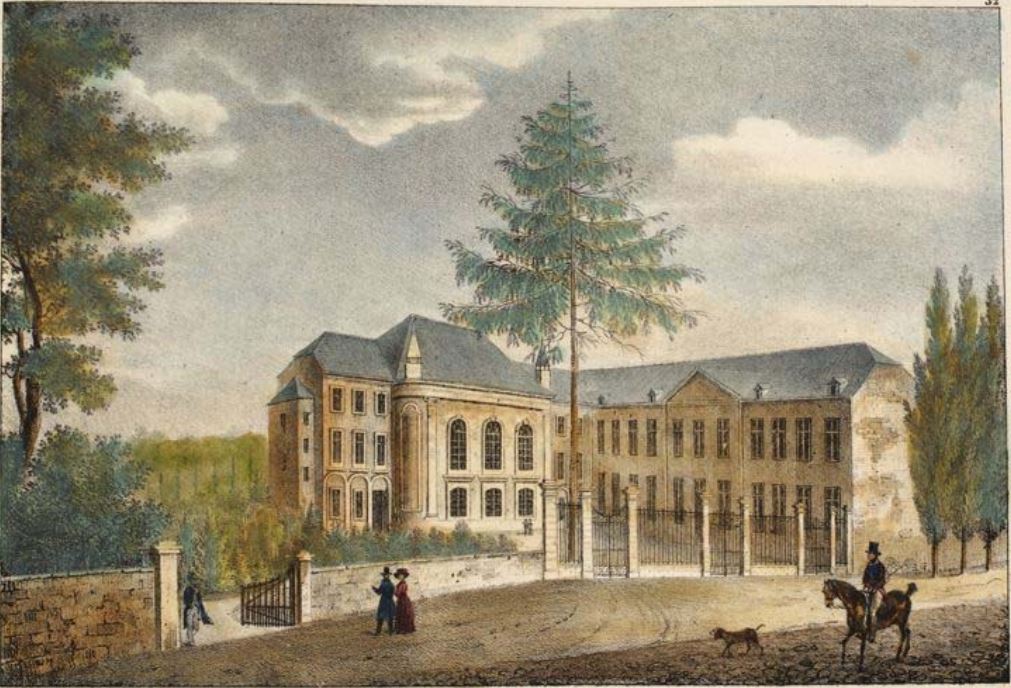
Waterburcht Pietersheim is a medieval water fortress in the municipality of Lanaken, in the Belgian province of Limburg, set within the historic Pietersheim estate close to the Meuse river, which forms the national border at this point.
How old is this stronghold?
The earliest archaeological traces of fortified settlement on this site date back to the last quarter of the 11th century and the first quarter of the 12th century. The actual water castle, however, was only built around 1180, replacing an earlier earthwork stronghold. The surrounding area has an even older pedigree — Lanaken, recorded in the 9th century under the name Ludinacum, is said to have been where Charlemagne's cattle were kept while he resided in Aachen.
What role did it play in the Middle Ages?
From early on, the fortress's history was closely tied to the County of Loon, and later to the Prince-Bishopric of Liège once Pietersheim became a separate lordship. Its heyday came to an abrupt end in 1378, when troops of the Prince-Bishopric, together with a militia from Tongeren, partially demolished the stronghold. The garrison tower and the chapel outbuilding were burned and left half-ruined; traces of that fire are reportedly still visible today.
How did the castle pass to the House of Merode?
A turning point in Pietersheim's history came with the marriage of Richard II van Merode to Beatrix van Pietersheim in 1410, through which the lordship ultimately passed into the hands of the House of Merode. The previously ruined fortress was then rebuilt as a castle in high-Gothic style, giving it a new, residential character, even though the water-based defensive layout remained visible in the overall footprint of the site.
What happened to Pietersheim in the modern era?
The estate stayed in the hands of successive generations of the Merode family well into the 20th century. In 1971 the municipality of Lanaken purchased the entire Pietersheim estate from Xavier de Merode, a former mayor of Lanaken, paying 32 million Belgian francs at the time. From then on, the site began serving a public role, becoming part of the region's cultural and natural landscape. In 2017 the municipality sold the castle building itself to Gelderburg Estates, though the grounds around the water fortress and the wider estate remain open to visitors.
Why is Waterburcht Pietersheim worth a visit?
The site layers several chapters of history — from an early medieval earthwork, through a Gothic residence of the Merode family, to municipal ownership in the modern era. Its picturesque setting by the water, close to the Meuse and on the edge of Hoge Kempen National Park, lets visitors combine a walk through a historic estate with the surrounding nature of the Belgian-Dutch border region.
Frequently asked questions
Is Waterburcht Pietersheim a ruin or an intact castle? The original 12th-century stronghold was partially destroyed in 1378 and later rebuilt in the 15th century as a high-Gothic castle — today's structure reflects that rebuilding.
Who owned the castle the longest? The House of Merode, which took over the lordship in 1410 and held it until the estate was sold to the municipality of Lanaken in 1971.
Can the castle be visited today? The grounds of the Pietersheim estate and the area around the water fortress are open to the public, although the castle building itself has belonged to the private company Gelderburg Estates since 2017.
Nearby places

Earn badges for the places you visit
Download NextOnTrip, discover new places and check off your trails.