About this place
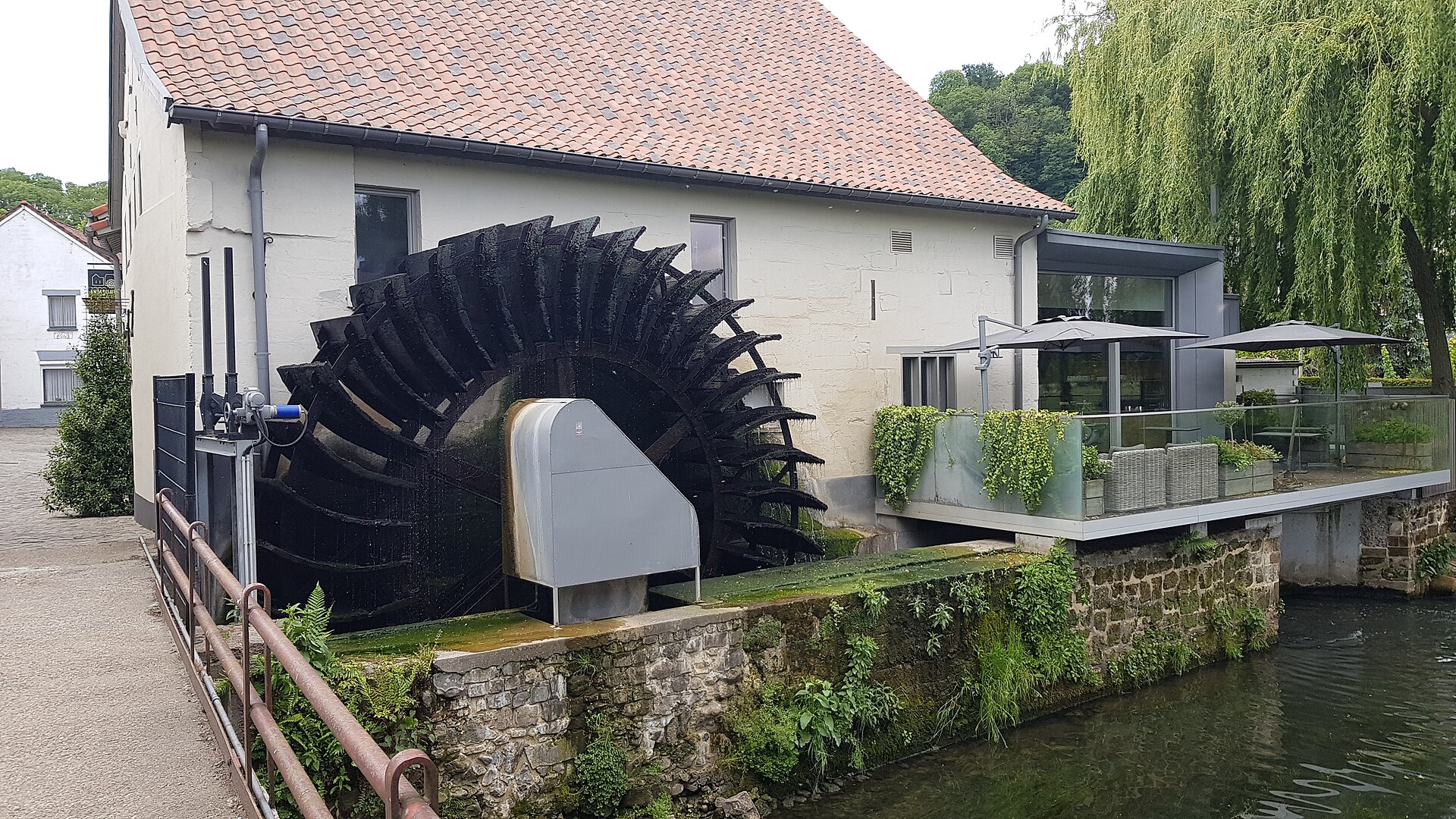
Smokkelmolen is a historic watermill on the Jeker river, tucked away in the hamlet of Neerkanne, part of Kanne within the municipality of Riemst, in the Belgian province of Limburg. Its name — literally "smuggler's mill" — points to the location's border history: this stretch of countryside sits right next to the Dutch border, an area once known for illegal trade carried out under cover of the turning water wheel.
Where does the name come from and what is the mill's history?
A mill already stood on this spot before 1640, but the building visitors see today dates from a reconstruction completed in 1650. It was built from the pale limestone (marl) typical of the region, giving the façade a chalky, almost white tone that stands out against the green of the Jeker valley. For centuries the building operated as a grain mill, harnessing the flow of the river to turn its millstones.
How did the mill work?
Smokkelmolen is fitted with an undershot wheel — a design in which the current strikes the paddles from below rather than falling onto them from above. This setup suited the gentle gradient of the Jeker at this point in its course, typical of lowland river stretches. Despite decades of standstill, the milling mechanism survived in good enough condition that it could later be fully restored to working order.
What happened to it in the 20th century?
The mill ceased production in 1960. Recognition of its historical value came gradually over the following decades: in 1981 the building was granted protected monument status, and the surrounding hamlet of Neerkanne was designated a protected village landscape. Protection therefore extended beyond the mill building itself to the whole distinctive settlement pattern and landscape around it.
What does it look like today?
Between 2013 and 2016 the mill underwent a comprehensive restoration. The work covered both the structure of the building and its internal milling mechanism, which was brought back to a condition allowing it to actually grind grain again. Following the restoration, Smokkelmolen took on a new role as a holiday home, pairing the historic fabric of the monument with the comfort of contemporary accommodation. It is an unusual combination: guests can stay overnight in a building that still houses a functioning milling mechanism nearly four centuries old.
Why is it worth a visit?
The area around Kanne and Neerkanne forms a scenic stretch of the Jeker valley straddling the Belgian-Dutch border, known for its limestone hills, vineyards, and network of walking and cycling routes. Thanks to its white stone façade and position right on the water, the mill itself is a frequently photographed landmark along regional walking routes. It also makes a worthwhile stop for anyone interested in the history of milling, or in the local cross-border smuggling past that gave this place its unusual name.
Frequently asked questions
Can Smokkelmolen be visited? The building currently serves as a holiday home, so interior access is mainly reserved for overnight guests — the grounds and exterior architecture, however, are clearly visible from the surrounding roads and paths.
Where does the mill's name come from? The name refers to the site's location right on the border and to the history of illegal smuggling once carried out in this part of the Jeker valley.
How old is the current building? The present structure dates from a reconstruction completed in 1650, though a mill had already existed on this site before 1640.
Does the milling mechanism still work? Yes — after the 2013–2016 restoration, the mechanism was returned to full working order.
Nearby places

Earn badges for the places you visit
Download NextOnTrip, discover new places and check off your trails.