About this place
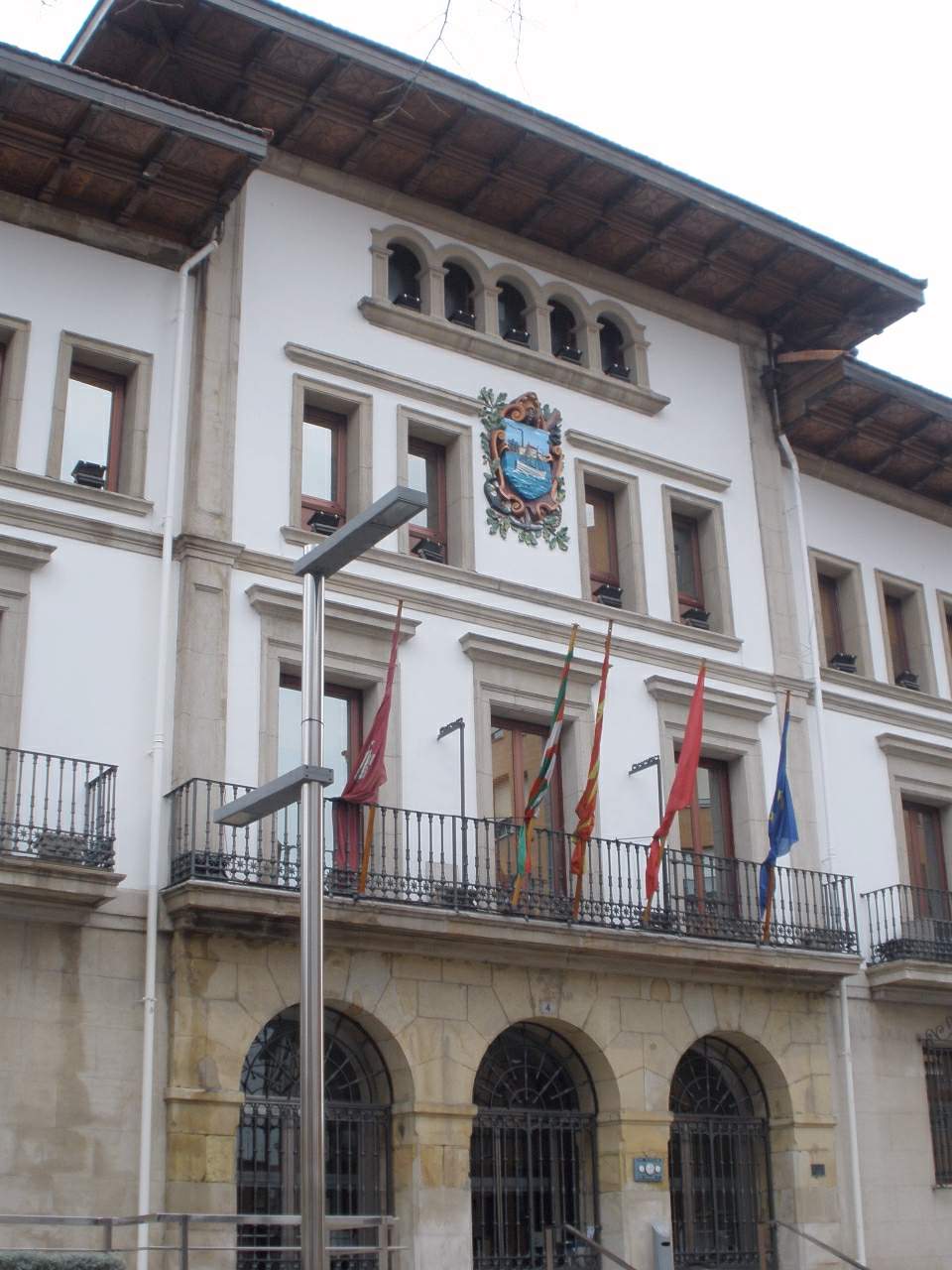
Valle de Trápaga-Trapagaran Town Hall is the neoclassical seat of local government in this Basque municipality, set in a valley whose entire identity was shaped by iron mining. The town sits in the province of Biscay, right next to Muskiz and close to Portugalete, near where the Nervión river meets the Bay of Biscay.
Why is this valley so closely tied to mining?
Iron ore was extracted here from Roman times right through to the mid-20th century, when the deposits were finally exhausted. The real turning point came at the end of the 19th century with the opening of the Triano Railway, which allowed ore mined in the upper valley to be shipped out efficiently. That single development triggered a sharp population surge, as mining settlements sprang up in the higher ground of the municipality to house the incoming workforce.
How is the town laid out?
Valle de Trápaga-Trapagaran splits into two distinct halves. The upper zone grew around the old mining neighborhoods, historically home to most of the working-class population employed in the pits. The lower zone kept a more rural feel for longer, gradually shifting toward industry and services as the town modernized. Walking through today, that split is still visible in how the streets and building styles change from one end of town to the other.
What else stands near the town hall in Trapagaran's center?
The town hall itself, built in a neoclassical style during the first decade of the 20th century, shares its neighborhood with several other landmarks from the mining boom years. Nearby you'll find the parish church of the Transfiguración del Señor, dating to 1930, along with the churches of San José Obrero and San Juan Bautista, and the Palacio Olaso, a grand residence that hints at the wealth once generated in the valley. Another distinctive feature is the La Reineta funicular, opened in 1926, which was built to connect the upper and lower parts of the municipality across the steep terrain.
How easy is it to reach from other Biscay towns?
Because the municipality borders Muskiz and lies a short distance from Portugalete, it works well as a stop while exploring western Biscay. Its position near the Nervión estuary also means straightforward access to the coast and to routes linking the old mining district with seaside towns further along this part of the Basque Country.
Is it worth pairing a visit with neighboring towns?
Yes — the valley's mining heritage makes much more sense when seen alongside the wider mining basin that stretches along the Nervión, including the towns around it. The story of the mining railways, the workers' settlements, and the transport infrastructure built to move ore forms one continuous narrative about the industry that defined this corner of Biscay for decades.
Frequently Asked Questions
Where is the Valle de Trápaga-Trapagaran Town Hall located? It stands in the center of the municipality of Valle de Trápaga-Trapagaran, in the province of Biscay, bordering Muskiz and close to Portugalete.
In what architectural style was the town hall built? It was built in a neoclassical style during the first decade of the 20th century, during the height of the local iron mining industry.
What other sights are near the town hall? Close by are the 1930 parish church of the Transfiguración del Señor, the churches of San José Obrero and San Juan Bautista, the Palacio Olaso, and the 1926 La Reineta funicular.
Why is mining so important to this town's history? Iron ore was mined in the valley from Roman times until the mid-20th century, and the late-19th-century Triano Railway drove a rapid population and industrial boom in the area.
Nearby places

Earn badges for the places you visit
Download NextOnTrip, discover new places and check off your trails.