About this place
The Monument to Evaristo de Churruca stands at the mouth of the Nervión River in Getxo, honoring the engineer whose work reshaped the region's economy. It's one of the town's most recognizable landmarks, blending Art Deco architecture with a dramatic bronze sculptural group.
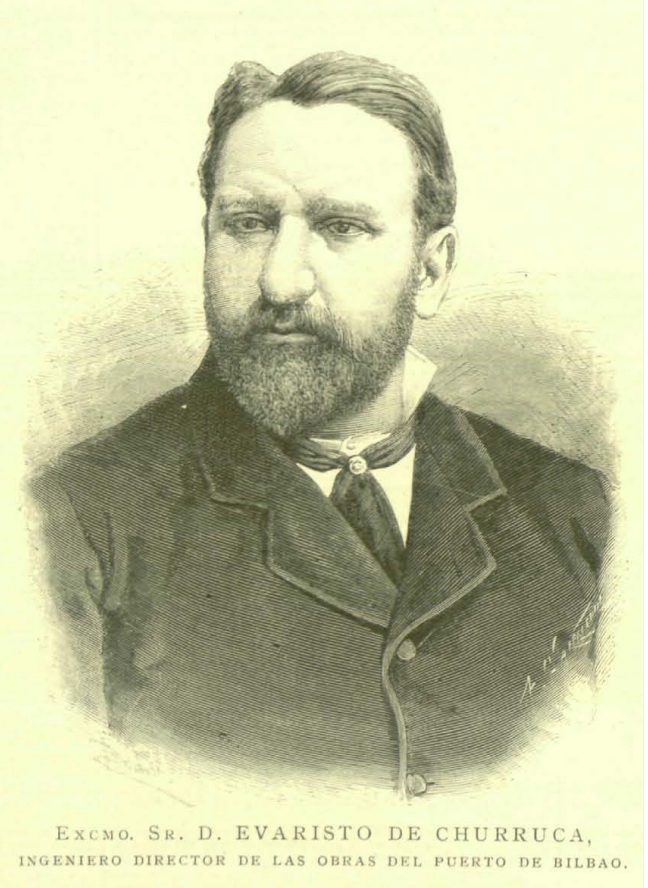
Who was Evaristo de Churruca?
Churruca directed construction works in Murcia and Biscay before being transferred to Puerto Rico, where he oversaw the installation of the island's telegraphic network and produced a study for improving the port of San Juan. Back in Spain, he took charge of the works on the exterior Port of Bilbao and the canalization of the Nervión River — a project that transformed the river mouth into the engine behind the region's iron and shipbuilding industries.
What does the monument look like?
The monument was designed in 1919 by sculptor Miguel García de Salazar, though it wasn't formally inaugurated until 1939. Its centerpiece is a slender, lighthouse-like tower in Art Deco style, designed by architect Ignacio M. Smith. Around it unfolds a powerful bronze sculptural group symbolizing humanity's struggle against the sea.
The main statue depicts a seated Evaristo de Churruca, standing 2.75 meters tall and dominating the composition. Two flanking bronze figures personify "Industry" and "Navigation" — the two forces that, thanks to the river's canalization, turned the Nervión estuary into an economic engine. The scene is completed by a striking detail: a figure straining to push a massive stone block, barely propped up by the leg of Neptune, the mythological god of the waters — a visual metaphor for the constant struggle between people and the sea.
Where is it and how do you get there?
The monument sits in a landscaped, tree-lined enclosure right on the Getxo waterfront (muelle de Getxo), close to where the Nervión meets the sea. It's a natural stop along the waterfront promenade, easily combined with a walk toward the historic Puerto Viejo quarter or Ereaga beach. Getxo connects to Bilbao via metro line 1, making the monument an easy addition to a day trip around the area.
What else is worth seeing nearby?
The surrounding stretch is one of Getxo's most scenic areas. Walking along the waterfront in one direction leads to Puerto Viejo, the old fishing quarter with its colorful houses; in the other direction lies Las Arenas, known for its grand Belle Époque mansions. Watching ships pass at the river mouth makes it easy to understand why the port and its engineers hold such an important place in local history.
When is the best time to visit?
The monument is an open-air public site, so it can be visited year-round. Spring and summer are especially pleasant, when longer days make it easy to pair a visit with a walk along the promenade and time at Ereaga beach. Late afternoon light tends to bring out the texture of the bronze figures and the Art Deco tower particularly well.
Frequently asked questions
Who designed the monument? The 1919 design is the work of sculptor Miguel García de Salazar, with the Art Deco tower designed by architect Ignacio M. Smith. It was formally inaugurated in 1939.
Why does the monument feature Neptune? Neptune, the mythological god of the waters, represents the sea itself — his leg props up a stone block pushed by the central figure, symbolizing the ongoing struggle between humans and the ocean.
What do the side figures represent? They personify "Industry" and "Navigation," the two sectors that grew rapidly once the Nervión estuary was canalized and the Port of Bilbao expanded.
Can I combine this with other sights? Yes — the monument sits directly on the walking route between Puerto Viejo and Ereaga beach, so it fits naturally into a longer stroll along the Getxo waterfront.
Nearby places

Earn badges for the places you visit
Download NextOnTrip, discover new places and check off your trails.