About this place
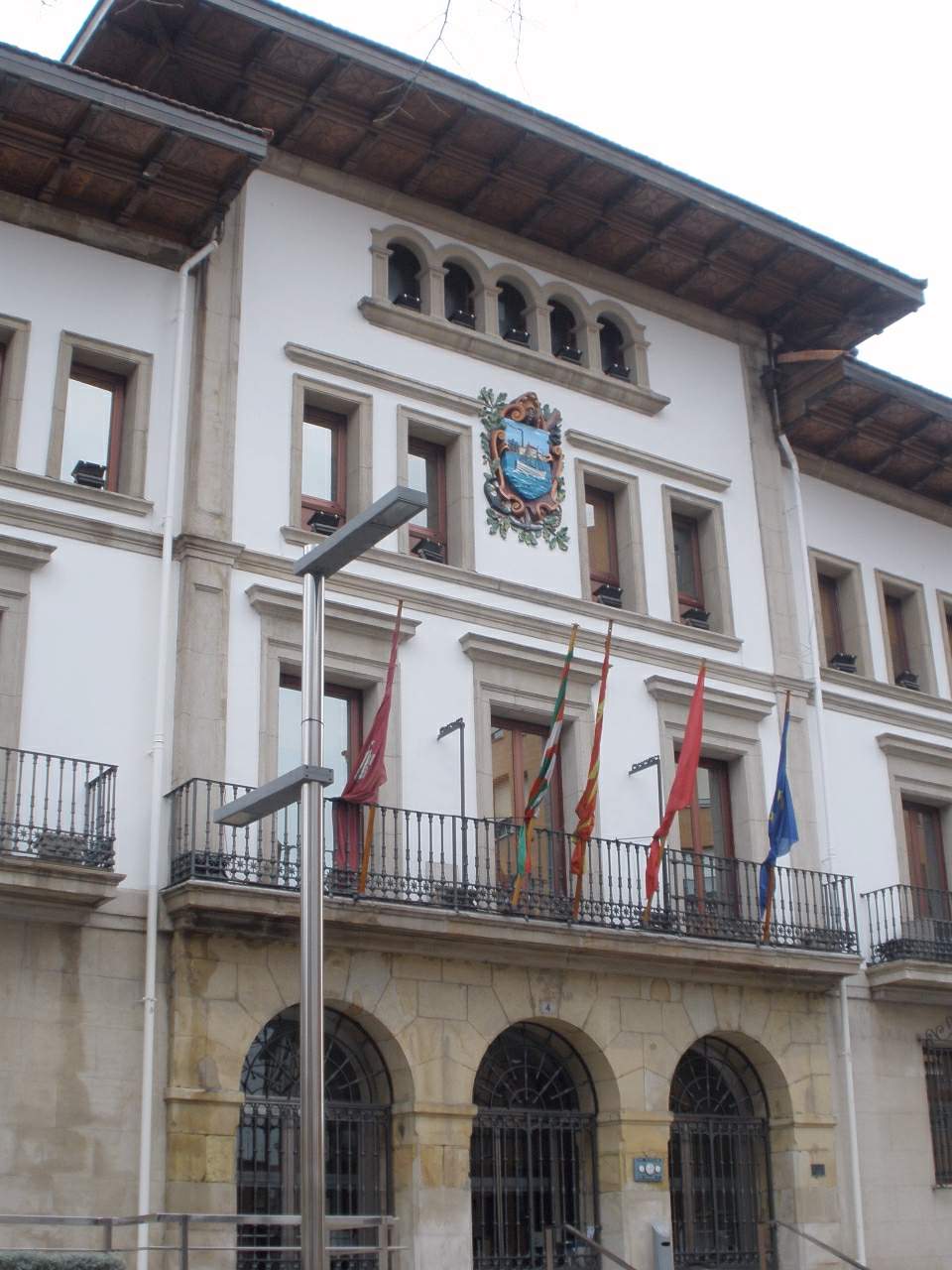
Sestao Town Hall stands on Plaza del Kasko, right in the heart of this industrial town on the estuary of the Nervión River, in the province of Biscay, in Spain's Basque Country. Beyond housing the local council, the building works as a landmark for anyone tracing how Sestao grew from a modest riverside settlement into one of the region's key industrial centers.
How did the building come to be?
Sestao's town government wasn't always based here. The town's first consistorial house went up in 1823, near what was then Plaza Conde de Valmaseda, at a time when Sestao was still a small fishing and farming community with little in common with the industrial powerhouse it would later become. As shipbuilding and metallurgy took hold along the Nervión through the second half of the 19th century, the old building could no longer keep pace with a rapidly expanding municipality.
The response was a new, more imposing seat of government. The current town hall on Plaza del Kasko was completed in 1879, designed by architect Julio Saracíbar. Its construction coincided with the period when Sestao was shedding its rural character and turning into one of the busiest industrial hubs on this stretch of coast — a shift the building's scale and ambition were meant to reflect.
What does the town hall look like?
The structure is built in ashlar stone, giving it the solid, monumental presence typical of late 19th-century civic buildings. Architecturally it's usually described as eclectic, blending classical references with details characteristic of the era in which it was raised.
At ground level, three arches open the façade onto the square, creating a symmetrical, clearly marked entrance. Above them, on the main floor, runs a continuous balcony — the kind of feature many Spanish town halls of the period included so officials could address townspeople gathered below. Higher still, the municipal coat of arms crowns the façade, marking the building's civic role at a glance. In total the town hall rises three floors, which today house the various departments of the local administration.
What else is worth seeing nearby?
Plaza del Kasko makes a natural starting point for exploring central Sestao on foot. Despite its long association with heavy industry, the town has held onto pockets of older streetscape that hint at its pre-industrial past. The nearby Nervión estuary is a reminder of just how central the river was to the economic transformation of this part of Biscay.
Frequently asked questions
Who designed Sestao Town Hall? The building was designed by architect Julio Saracíbar and completed in 1879.
Is this the town's original town hall? No. Sestao's first consistorial building dates back to 1823 and stood in a different part of town, near the former Plaza Conde de Valmaseda. The current building replaced it later in the 19th century as the town grew.
What architectural style is the town hall built in? It's generally classed as eclectic, built in ashlar stone, with a three-arched ground floor and a continuous balcony on the main level.
Can visitors go inside Sestao Town Hall? As an active municipal building, it primarily serves residents' administrative needs rather than functioning as a tourist attraction, so interior access is limited. The façade and the square in front of it, however, can be freely viewed and photographed.
How do you get to Sestao Town Hall? It sits right in the town center, on Plaza del Kasko, making it an easy walk from almost anywhere in Sestao and just a short distance from the Nervión waterfront.
Nearby places

Earn badges for the places you visit
Download NextOnTrip, discover new places and check off your trails.