About this place
U Nového mlýna is a small but scientifically remarkable nature reserve on the southwestern edge of Prague, where a former limestone quarry and the valley of the Dalejský stream preserve the traces of both deep geological time and centuries of quarrying. Covering just under 13 hectares, the protected area sits on the right bank of the stream, above the railway line from Prague to Rudná near the Holyně stop, at an elevation of 255 to 310 metres above sea level, within the cadastral territories of Hlubočepy and Holyně.
Why is this site protected?
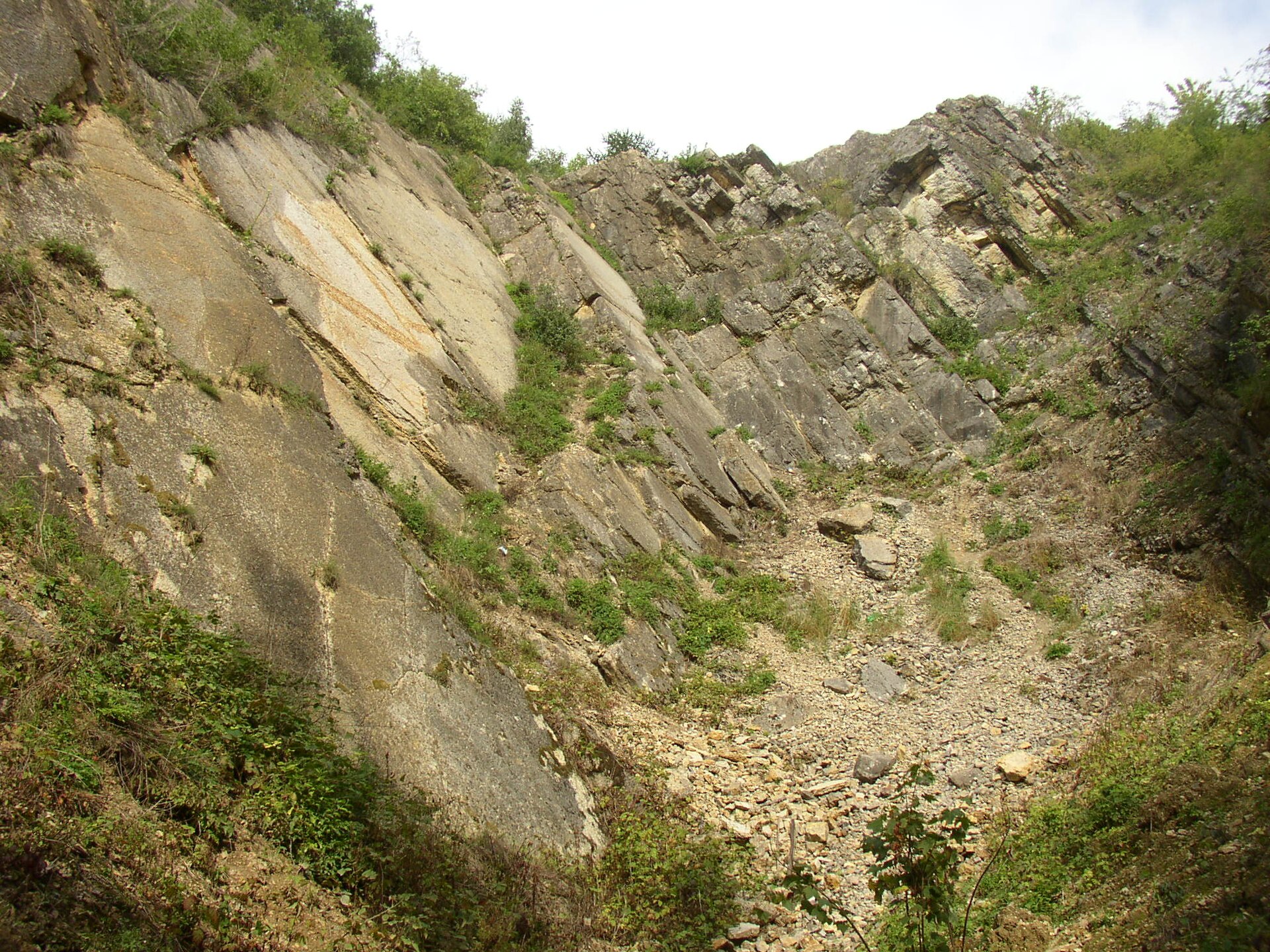
Protection of the area dates back to 1982, and it is now managed by the Nature Conservation Agency of the Czech Republic, Central Bohemia regional office. The reason for the protection has little to do with scenery and everything to do with what the rock faces of the former Prastav quarry reveal. The exposed geological profiles document the boundary between the Lower and Middle Devonian periods – a span of time more than 380 million years ago, when what is now Central Europe lay beneath a shallow, warm sea.
What makes the Prastav quarry significant?
The profile at Prastav holds the status of an international parastratotype for the Lower–Middle Devonian boundary, meaning it serves as one of the reference points geologists worldwide use when comparing rocks of similar age to pinpoint exactly when they formed in Earth's history. This gives U Nového mlýna a significance that reaches well beyond the Czech Republic's borders. The limestone layers also preserve numerous fossils, making the site an important palaeontological locality – a record of marine life from hundreds of millions of years ago, now exposed at the surface thanks to the quarrying that once took place here.
What does the surface habitat look like?
Beyond its geological value, the reserve also protects habitats that developed on the limestone bedrock and rocky slopes of the old quarry. The warm, sun-exposed terrain favours xerothermic grasslands and rocky steppe communities – vegetation adapted to dry, nutrient-poor conditions and high summer temperatures. Habitats of this kind are rare and valuable in the Czech Republic, since they support plant species more typically associated with a considerably warmer, more southern climate.
Who is this place for?
U Nového mlýna appeals above all to visitors interested in geology, palaeontology, and the deep history of the Earth – few spots near Prague offer such a clear window into events from hundreds of millions of years ago. Its location beside the railway line and close to the Holyně stop makes it easy to combine a visit with a walk along the Dalejský stream valley, a route popular with Prague residents looking for nature without leaving the city.
Frequently asked questions
Can visitors enter the former Prastav quarry? The site holds nature reserve status, so any visit should respect the conservation rules in place – staying on marked paths and avoiding disturbance to the geological exposures or vegetation.
What makes this quarry significant on a global scale? The geological profile at Prastav functions as an international reference point for the Lower–Middle Devonian boundary, used by scientists worldwide to date rocks of this age.
Since when has the area been protected? Formal protection has been in place since 1982.
How do you get to U Nového mlýna? The easiest way is by train to the Holyně stop on the Prague–Rudná line – the reserve lies just above the tracks, on the right bank of the Dalejský stream.
Nearby places

Earn badges for the places you visit
Download NextOnTrip, discover new places and check off your trails.