About this place
Dalejský profil is a national nature monument in Prague 5, stretching along the northern bank of the Dalejský stream between the districts of Řeporyje, Stodůlky and Holyně. Covering just under 24 hectares at an elevation of 285 to 345 metres, it ranks among the most significant geological sites in the Czech Republic.
Why was this area protected?
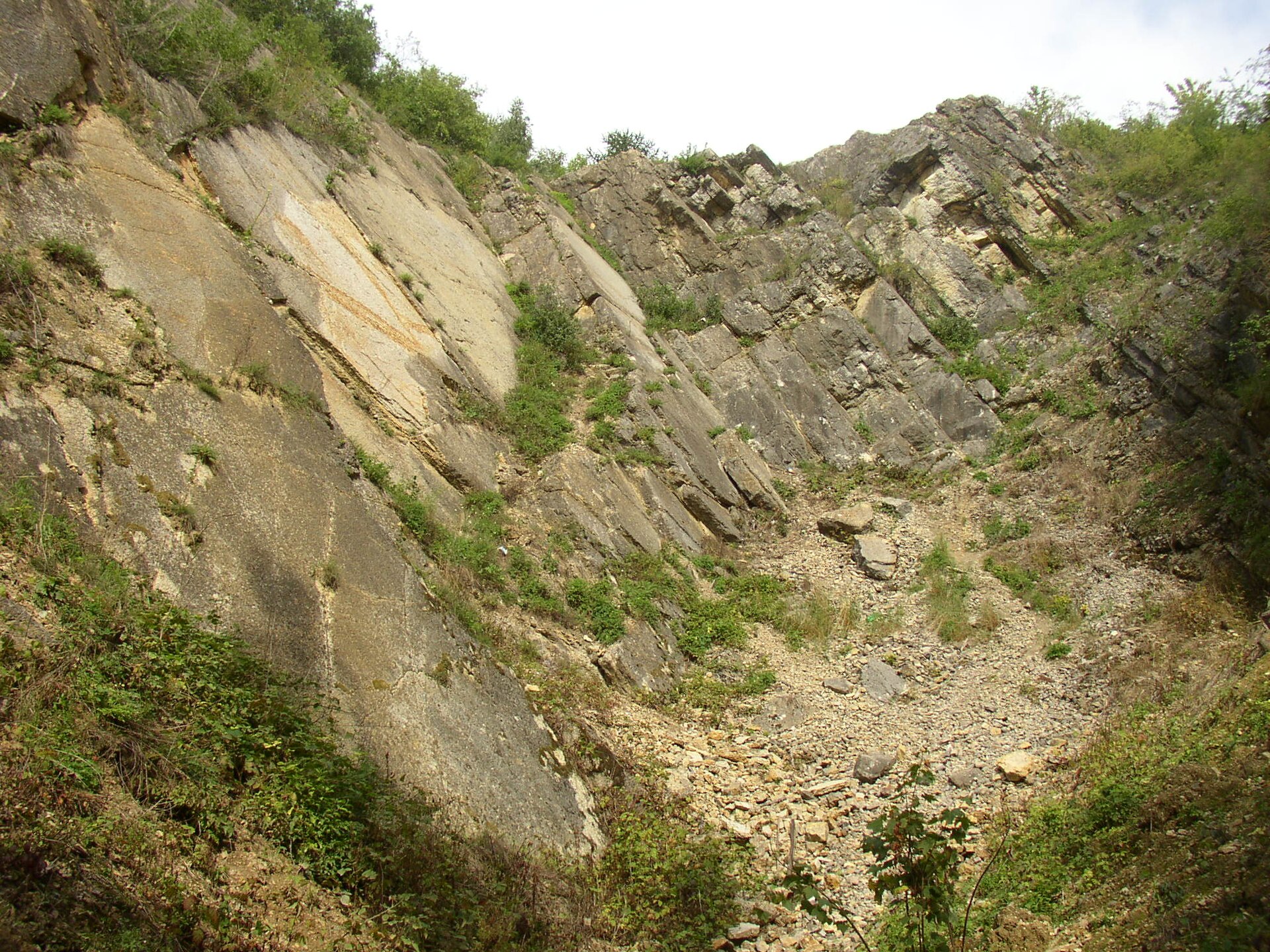
The reserve encompasses steep slopes, rock outcrops and the walls of abandoned quarries built from Paleozoic rock roughly 400 million years old. It was this exceptional geological record that led to its protection — first in 1982 as a category III nature monument, then upgraded in 1992 to national nature monument status.
What makes it so important for geology?
The exposed rock layers at Dalejský profil document an uninterrupted sequence spanning the Ordovician, Silurian and Lower Devonian periods. Such a continuous, textbook-like progression of geological strata is rare and draws researchers from around the world.
What fossils have been found here?
The site is renowned for numerous finds of Paleozoic marine invertebrates. Fossils identified in the outcrops include cephalopods, trilobites, bivalves, gastropods, graptolites and brachiopods, making Dalejský profil one of the key paleontological localities in the Prague region.
What grows on the rocky slopes?
The vegetation is dominated by rock steppe communities. Critically endangered species grow here, including Gagea bohemica and Veronica dillenii. A particular rarity is Geastrum pouzarii, the only fungal species known to be endemic solely to Czech territory.
How can visitors explore the area?
An educational trail runs through the valley, guiding visitors through the site's geological and natural history step by step. The route continues onward into Prokopské údolí, forming part of a popular walking and cycling corridor connecting several of Prague's protected natural areas.
Frequently Asked Questions
What is Dalejský profil? It is a national nature monument in Prague protecting unique Paleozoic rock outcrops along with important paleontological and botanical sites.
When did it become a protected area? It was designated a category III nature monument in 1982, then elevated to national nature monument status in 1992.
What fossils can be found there? Cephalopods, trilobites, bivalves, gastropods, graptolites and brachiopods from the Ordovician, Silurian and Lower Devonian periods.
Is there a hiking trail through the reserve? Yes, an educational trail runs through the valley and connects with the route through Prokopské údolí.
How large is the reserve? It covers approximately 23.6 hectares at an elevation between 285 and 345 metres.
Nearby places

Earn badges for the places you visit
Download NextOnTrip, discover new places and check off your trails.