About this place
Požáry is a national nature monument on the southwestern edge of Prague, within the cadastral territory of the Prague-Řeporyje district. It's a small but geologically remarkable site, tucked away among farmland far from the usual tourist trail — yet known to specialists worldwide for its scientific importance.
Where is it?
Požáry lies in the southwestern part of Prague, roughly 500 meters south of the Prague Ring Road and less than 200 meters north of a railway line. The surrounding landscape is agricultural, and the protected area itself is fairly small and somewhat isolated — expect quiet countryside rather than crowds, in a setting typical of the outer edges of a large city.
What makes this place special?
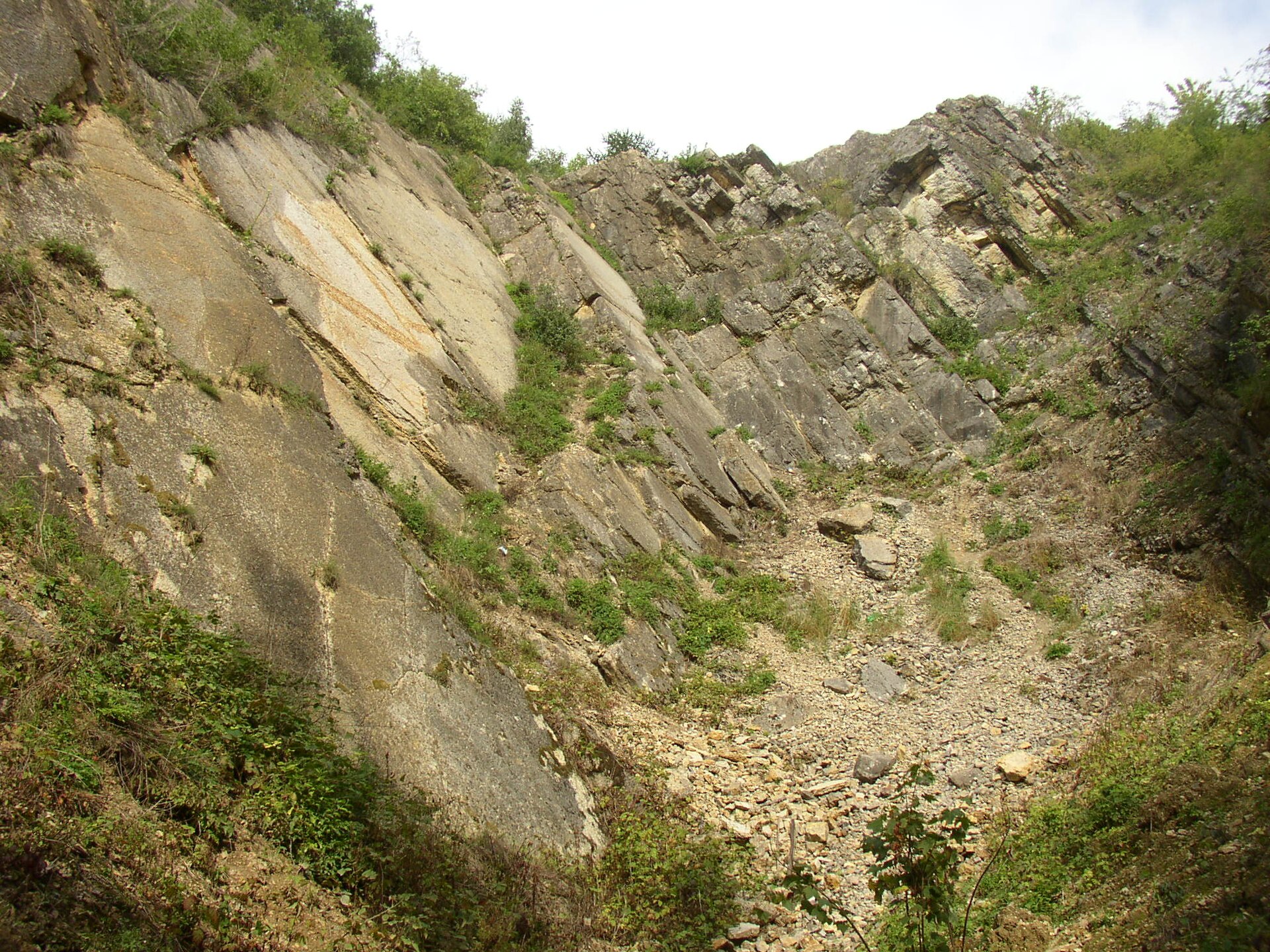
At the heart of the nature monument are two former limestone quarries, known as Požár 1 and Požár 2 (the latter no longer part of the protected area), along with the deep access cut that once served them. It's this rock cut that matters most: it exposes a geological profile of international significance — a stratotype marking the boundary between the Ludlow and Přídolí stages within the Silurian period. In practical terms, this is one of the reference points scientists use to define a chapter in Earth's geological timeline, which gives Požáry global relevance for geologists and paleontologists alike.
The protected area itself is modest in size, variously reported as somewhere between just over two and just over four hectares, sitting at an elevation of roughly 310 to 340 meters above sea level. It's a striking contrast: physically tiny, yet scientifically significant on a global scale.
A history of protection
The site first received legal protection in 1982, aimed at preserving the unique rock exposure once quarrying activity there had ended. Today it forms part of Prague's network of specially protected natural areas, overseen by the city's nature conservation authorities.
Who is it for?
Požáry isn't a conventional tourist destination with visitor infrastructure, viewpoints, or large-scale educational trails. It's better suited to visitors with a specific interest in geology, Earth history, or Prague's lesser-known corners — a place worth seeking out deliberately rather than stumbling upon. For geology enthusiasts, though, it's something close to a must-see, given how few places in the world play a comparable role in defining geological time periods.
When to visit
Given the nature of the terrain — an exposed rock cut and former quarries surrounded by farmland — spring and summer are the best times to visit, when the weather favors longer walks and vegetation doesn't obscure the exposed rock layers. Autumn tends to be quieter, though damp conditions can make the unpaved paths harder to navigate.
Frequently asked questions
What is Požáry? It's a national nature monument in Prague-Řeporyje, comprising two former limestone quarries and a rock cut of international geological significance.
Why is this site protected? Because of a geological exposure that forms the stratotype for the Ludlow–Přídolí boundary within the Silurian period — a globally significant reference point for geological classification.
When did protection begin? The area was granted legal protection in 1982.
Is this a place for casual sightseeing? It's more of a destination for those interested in geology than a typical tourist attraction — a small site among farmland, without extensive visitor infrastructure.
Nearby places

Earn badges for the places you visit
Download NextOnTrip, discover new places and check off your trails.