About this place
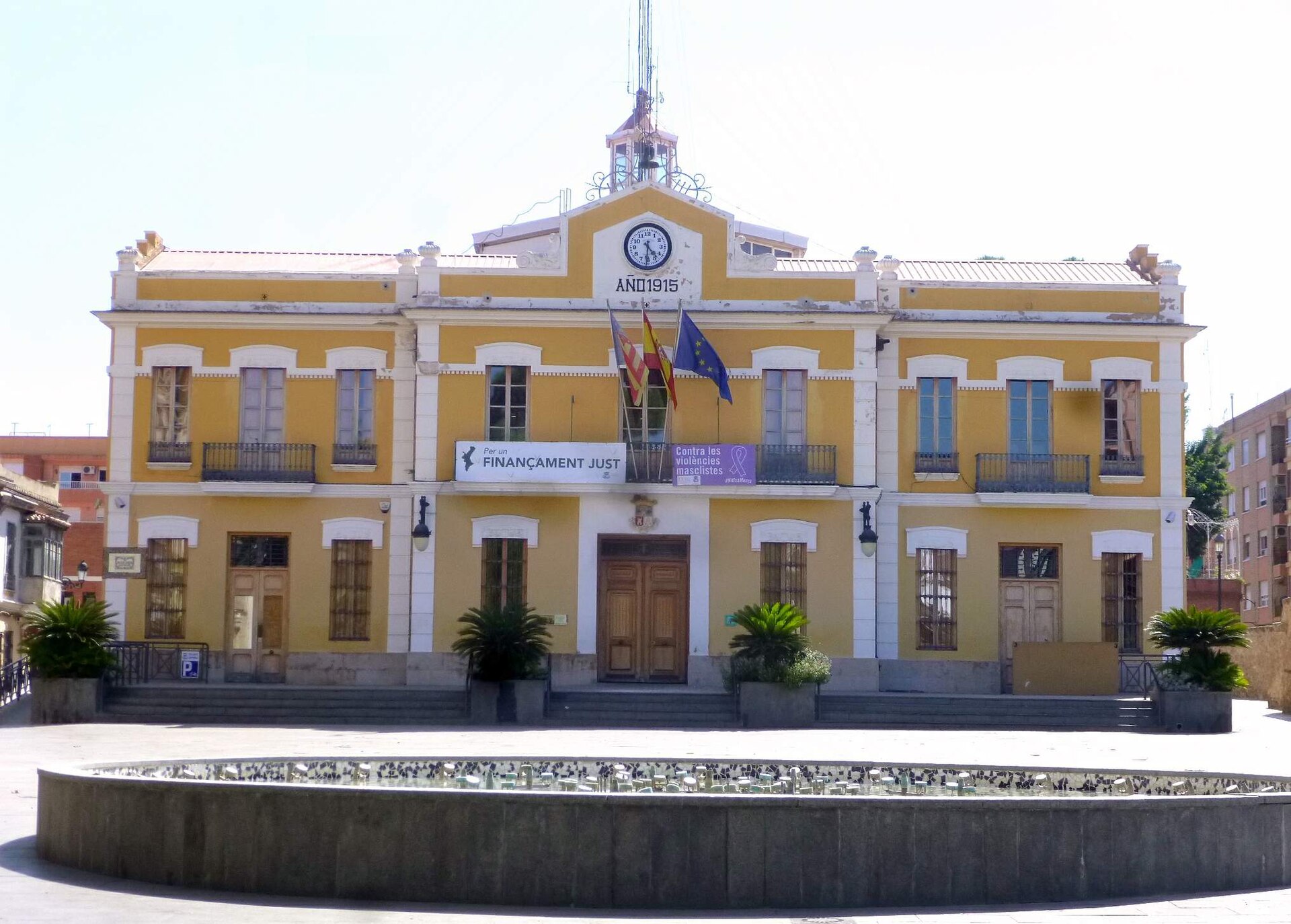
The town hall of Alfara del Patriarca occupies the main square of this small town in the Horta Nord region of Valencia province. It houses the local council and forms part of a compact cluster of historic buildings that makes Alfara del Patriarca worth a brief detour for anyone touring the towns north of Valencia city.
What does the building look like?
The town hall stands on Plaça de Sant Joan de Ribera, the town's central square, and was built in the early 20th century in a neo-Gothic style. Pointed-arch window openings and vertical lines along the façade set it apart from the plainer, more rural buildings on the surrounding streets, so it is easy to spot even for visitors who weren't specifically looking for it.
What else shares the same square?
Plaça de Sant Joan de Ribera works almost like a timeline of the town in miniature. Alongside the town hall stands a 14th-century seigniorial house, a three-storey building that once had a defensive tower on each of its four corners, though only one has survived to the present day. Facing it across the square is the Baroque parish church of Saint Bartholomew, completed in 1732. Seeing a civic building, a former noble residence, and a church within a few steps of each other gives a fairly clear sense of how the town's built environment layered up over the centuries.
How old is the town itself?
Alfara del Patriarca's origins go back to the Muslim period, when it existed as a small alquería, a rural farming settlement tied to a larger administrative centre. After King James I conquered the area in 1249, the settlement passed through several hands until 1396, when it came under the control of the Cruïlles family, who held it until the 16th century. The current town hall building is far younger than this history — it was only put up at the start of the 20th century, once the town needed a dedicated administrative seat separate from the older private residences that had previously occupied the same square.
Is the area under any heritage protection effort?
In recent years, the Horta Nord region has received funding from the provincial council (Diputació de València) for heritage restoration across several municipalities at once, Alfara del Patriarca included. That points to an ongoing effort by both local and provincial authorities to treat the historic fabric around Plaça de Sant Joan de Ribera as something worth preserving, rather than simply a backdrop for newer development.
Who should plan a stop here?
The town hall of Alfara del Patriarca isn't a destination that justifies a trip on its own, but it fits naturally into a short walking loop through Horta Nord, a region where several small towns sit only a few kilometres apart. Visitors interested in regional civic architecture, in how municipal government has evolved across Valencia's smaller towns, or simply in a quiet, uncrowded stop will find a square that takes only a few minutes to walk around while covering three distinct architectural periods in one glance.
Frequently Asked Questions
What architectural style is the town hall built in? It was built in the early 20th century in a neo-Gothic style, most visible in its pointed-arch window details.
Where exactly is the town hall located? On Plaça de Sant Joan de Ribera, the town's main square, next to a 14th-century seigniorial house and the Baroque church of Saint Bartholomew.
Are there other historic sites nearby? Yes — the same square holds the surviving tower of the old seigniorial house and the parish church, completed in 1732, so several sights can be seen without moving far.
Does Alfara del Patriarca have a history older than the town hall? Yes — the settlement existed as a Muslim-era alquería before the Christian conquest of 1249, making the 20th-century town hall a relatively recent chapter in a much longer story.
Nearby places

Earn badges for the places you visit
Download NextOnTrip, discover new places and check off your trails.