About this place
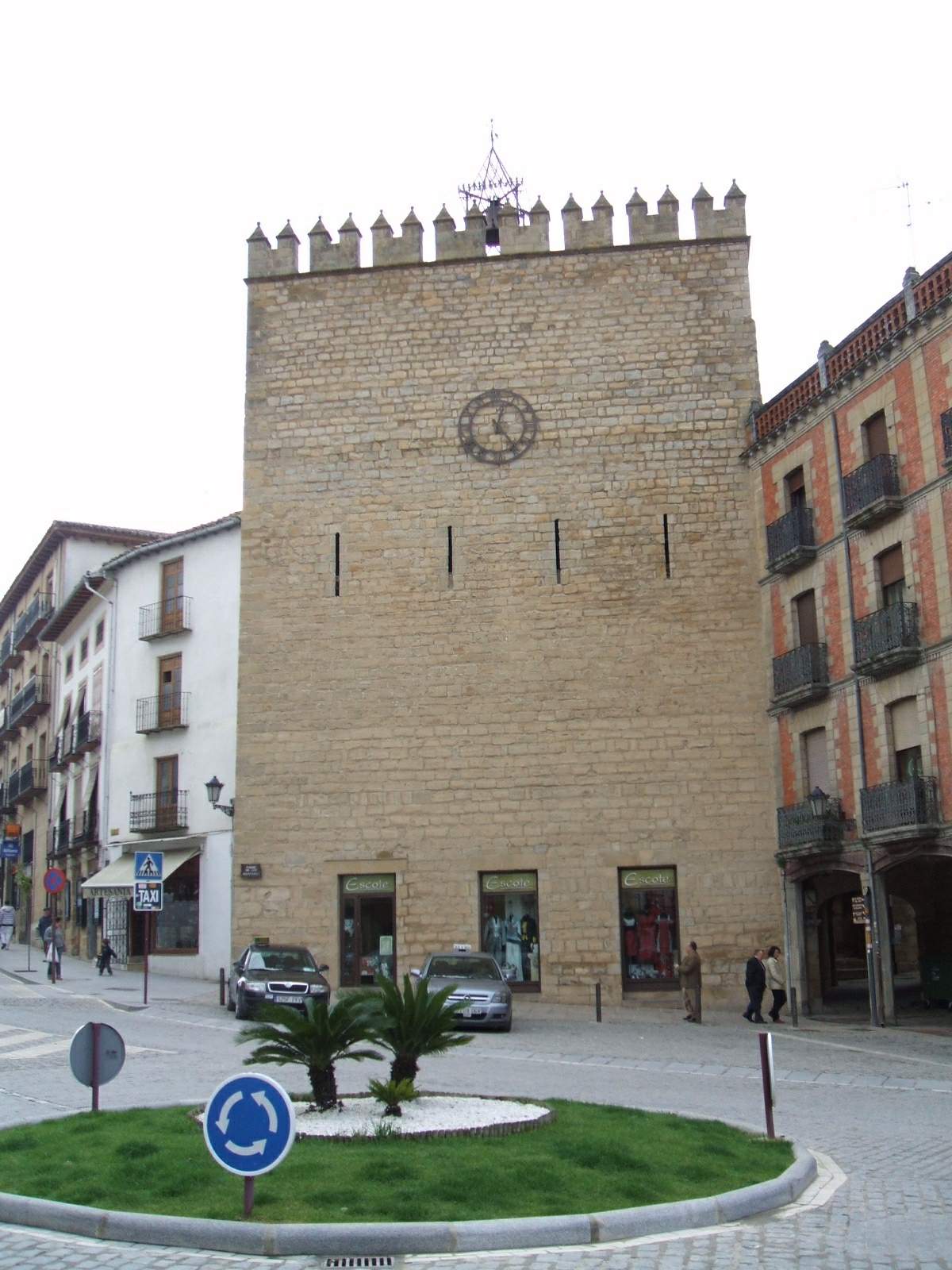
Torre de los Aliatares is a medieval defensive tower standing at the heart of Baeza, in Andalusia, Spain, and one of the best-preserved reminders of the city's Moorish past. It sits on Plaza de España, at the corner with Calle Obispo Narváez, right in the middle of the historic quarter most visitors already walk through.
Where does the tower come from?
The tower was built in the 12th century by the Muslim rulers of Baeza as part of the city's defensive wall. Its job was to guard the nearby Puerta del Cañuelo gate together with its barbican, an outer fortified structure set in front of the main wall line. Thanks to its considerable height, the tower allowed defenders to keep watch over a large stretch of the city and made it one of the most strategically important points along Baeza's entire fortification system.
Once the city passed into Christian hands, the walls lost most of their military purpose. In 1476, Isabella I of Castile ordered the city walls torn down, yet Torre de los Aliatares escaped that fate — which is exactly why it remains today one of the few tangible traces of the Moors' presence in Baeza.
What will you see there?
The tower has a rectangular floor plan and stands about 25 meters tall, built from cut stone blocks. Three semicircular arches are visible at its base, and narrow arrow slits run partway up the structure, once used by defenders to watch the surroundings and repel attackers. The top is crowned with a crenellated frieze, a design typical of Moorish military architecture of the period. A clock was added to the structure in the 19th century and remains a distinctive part of its silhouette today.
The tower is in good condition, though its interior is not generally open to visitors — most people take it in from the outside while wandering through Plaza de España and the surrounding old-town streets. As a legally protected monument (covered by the 1949 castle-preservation decree and the 1985 Historic Heritage Law), it holds formal status as a Bien de Interés Cultural, Spain's designation for nationally protected heritage.
How to get there and when to visit?
Baeza sits in the province of Jaén, well connected to nearby Úbeda and to the city of Jaén itself, both easily reached by bus or car. The tower stands right in the historic center, within walking distance of the cathedral and the bishop's palace, so it fits naturally into a walk around the old town. Spring and autumn are the best times to visit — Baeza summers get quite hot, which makes long walks across sun-exposed squares less comfortable.
Given how compact this part of the city is, it's worth setting aside at least half a day to see the tower alongside the nearby monuments, and to stop by the tourism office for any current information on interior access.
Frequently asked questions
Can you go inside the tower? The interior of Torre de los Aliatares is not routinely open to the public. Check with the local tourism office for any current access arrangements.
How tall is the tower? It stands roughly 25 meters high on a rectangular floor plan, making it one of the most imposing surviving pieces of Baeza's Moorish walls.
Why did the tower survive when the walls were demolished? The city walls were torn down in 1476 on the orders of Isabella I of Castile, but Torre de los Aliatares was spared and still stands today as one of the few physical remnants of Moorish Baeza.
What else is worth seeing nearby? The tower faces Plaza de España, close to Baeza's historic center with its cathedral and bishop's palace, making it an easy stop on a walk through the old town.
Nearby places

Earn badges for the places you visit
Download NextOnTrip, discover new places and check off your trails.