About this place
Torre de Biel is a medieval defensive tower standing in the village of Biel, in the province of Zaragoza, in the Aragón region of northeastern Spain. The tower rises on a small hillock right next to the village's parish church, at a point slightly higher than the rest of the settlement, overlooking the valley of the Arba de Biel river. Biel lies within the historic Cinco Villas district, an area known for its dense concentration of medieval frontier strongholds.
What is the history behind the tower?
The tower standing today was built in the 11th century, during the reigns of Sancho the Great and Ramiro I, at a time when this territory formed an important frontier zone of the Kingdom of Aragón. Because of its strategic position, the tower remained crown property, and records document a stay by King Ramiro II in the 12th century, when the fortress was held on his behalf by Castán de Biel. In the 15th century King Martín I granted the estate to Ramón de Mur, and in 1444 his heirs sold the tower and its surrounding lands to the Archbishop of Zaragoza, Dalmau de Mur. Even though the village itself fell under the ecclesiastical jurisdiction of the diocese of Pamplona, the tower remained under the archbishopric of Zaragoza as late as the 18th century. Remodeling work commissioned by Hernando de Aragón was completed in 1551. In 1996 the roof was restored with funding from Spain's Ministry of Culture, and in 2006 the tower was formally declared a Bien de Interés Cultural (Asset of Cultural Interest) by the Aragonese government.
What will you see on site?
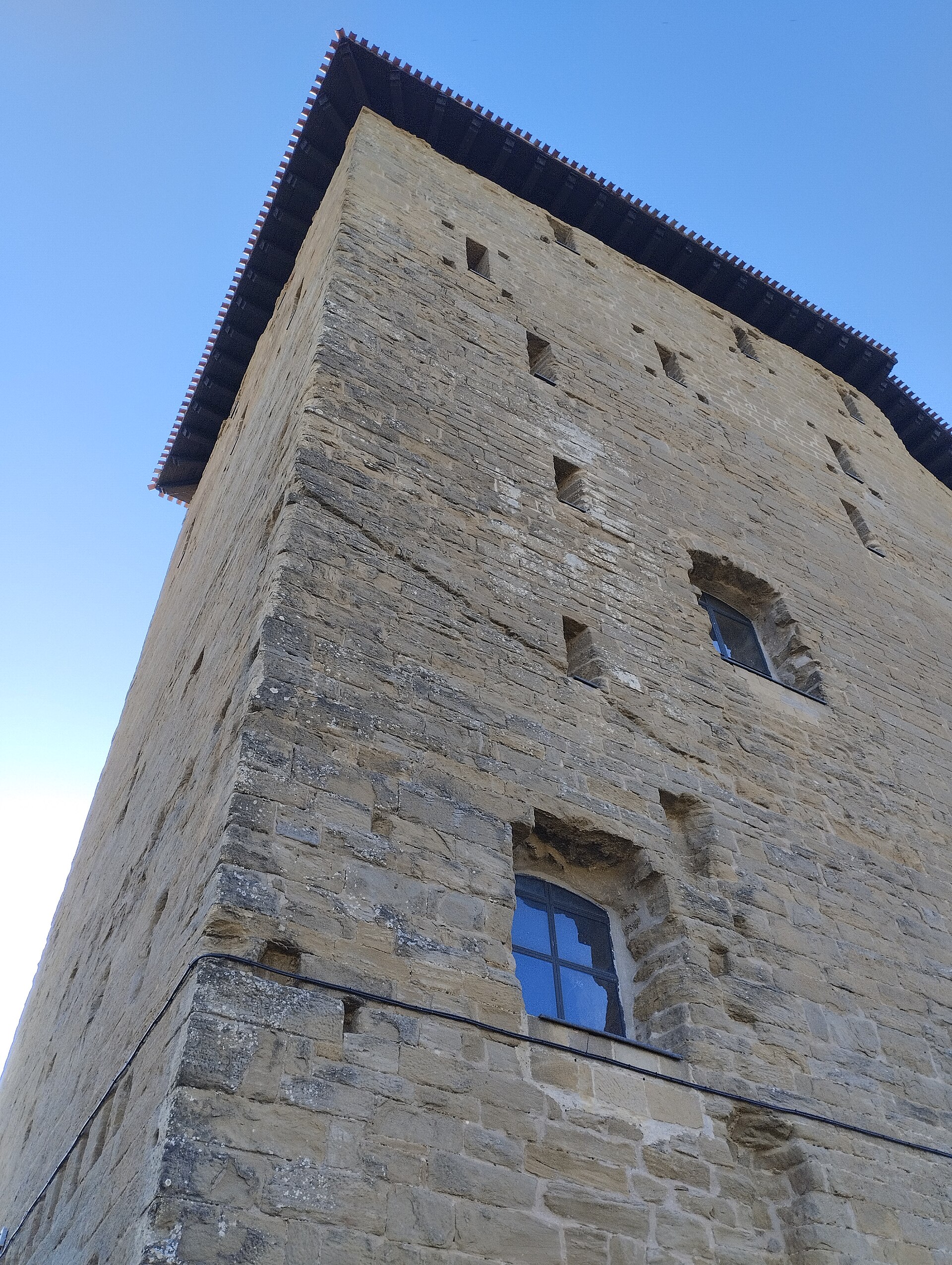
Torre de Biel stands out for its unusual pentagonal floor plan, with longer sides measuring around 20 meters and shorter sides around 10 meters, reaching a height of nearly 30 meters. It was built using ashlar masonry, giving it the austere, monumental character typical of the region's frontier defensive towers. The east and west walls in particular are pierced by numerous narrow window and arrow-slit openings, deeply splayed toward the interior in the manner typical of medieval military architecture. Inside, the tower is divided into four floors, with the most prominent room — the former main hall — occupying the highest level, while an underground storage cellar lies beneath the structure. The current four-sloped roof likely replaced an original crenellated parapet. Together with probable traces of surrounding fortification walls, the tower forms a coherent example of the military architecture found throughout Cinco Villas.
How do you get there?
Biel sits at the heart of Cinco Villas, in the province of Zaragoza, surrounded by the foothill landscape typical of Aragón at the edge of the Pyrenees. The tower stands right in the village center, next to the parish church, making it easy to reach on foot for anyone visiting the settlement. Given the small scale of Biel, a visit to the tower and its adjoining old quarter takes relatively little time, so it pairs well with visits to other fortified villages across the Cinco Villas region.
When is the best time to visit?
Cinco Villas has a continental Aragonese climate, with hot summers and cooler, often windy shoulder seasons. Spring and autumn are the most comfortable times for walking through the village and taking in its stone architecture without the summer heat.
Frequently Asked Questions
Where exactly is Torre de Biel located? The tower stands in the village of Biel, in the province of Zaragoza, within the Cinco Villas district of Aragón, on a small hillock next to the village's parish church.
When was the tower built? The present structure dates to the 11th century, built during the reigns of Sancho the Great and Ramiro I, though it was later remodeled, notably in 1551.
What protected status does it hold? In 2006 the tower was declared a Bien de Interés Cultural by the government of Aragón, giving it formal protected heritage status.
What makes its design distinctive? Its unusual pentagonal plan, a height of nearly 30 meters, and its numerous narrow arrow-slit openings set it apart from other defensive towers in the region.
Nearby places

Earn badges for the places you visit
Download NextOnTrip, discover new places and check off your trails.