- Sacred Monuments
- Religious monuments
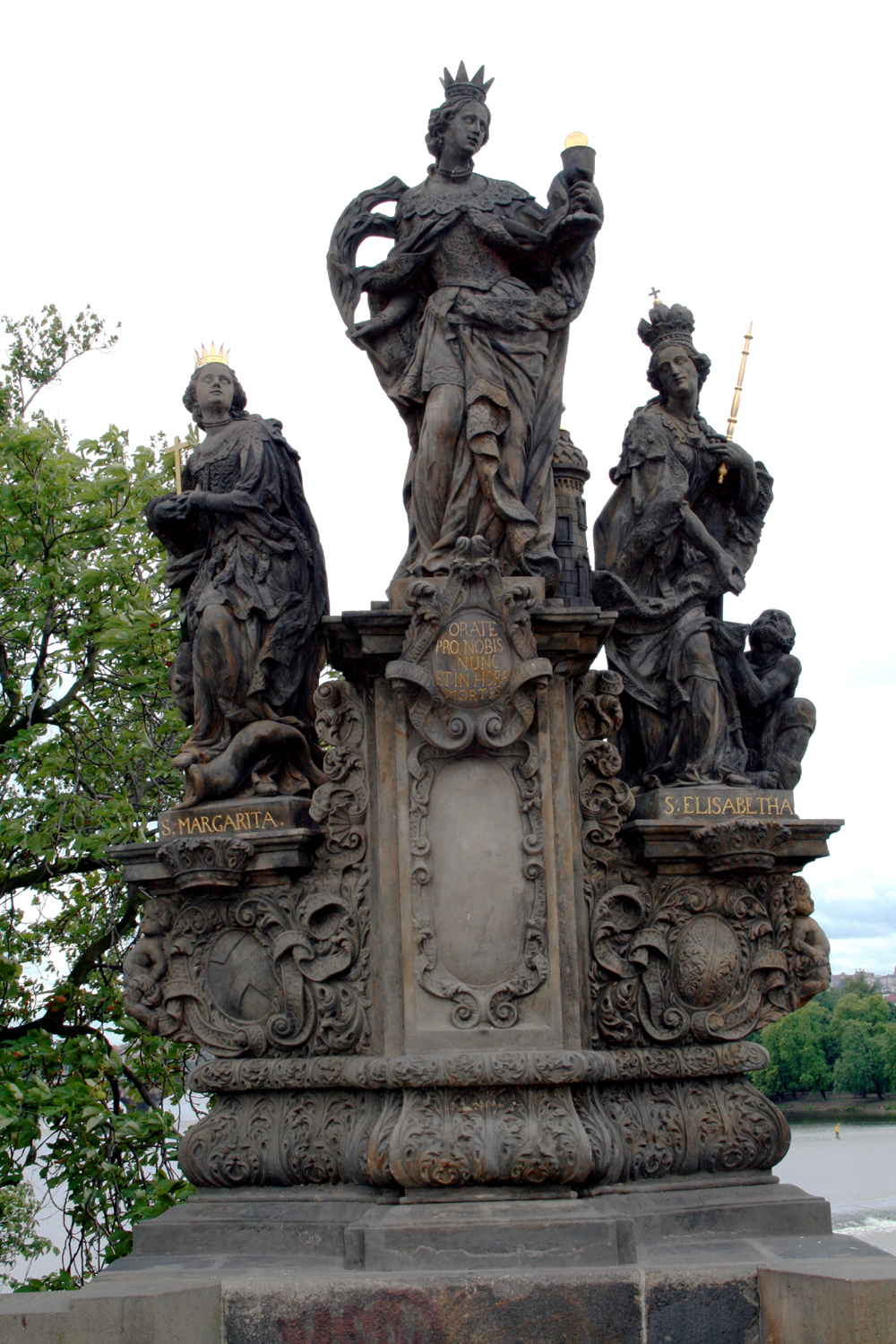
Statues of Saints Barbara, Margaret and Elizabeth, Charles Bridge
About this place
The Statues of Saints Barbara, Margaret and Elizabeth form a Baroque sculptural group from 1707, standing on the south side of Prague's Charles Bridge — one of thirty large statues that have lined this famous crossing over the Vltava for more than three centuries.
Where exactly does this group of statues stand?
The statues occupy the second spot from the Old Town side on the left, south-facing row of the bridge, positioned between the statue of St. Ivo and the Pietà group. The coordinates are 50.086219, 14.412764. Charles Bridge is a pedestrian-only crossing in the heart of tourist Prague, so reaching the statue needs no separate route — just walk the bridge from the Old Town side and look along the left-hand pedestals.
Who carved it, and why these three saints together?
The group came from the workshop of Jan Brokoff, though the carving is mainly credited to his son, Ferdinand Maximilian Brokoff, with Michael Brokoff also contributing — the Brokoff family produced more than a dozen statues on Charles Bridge and ranked among the leading sculptors of Czech Baroque art. The commission came from Jan Václav Obytecký of Obytec, an imperial councillor, who had Saint Barbara carved as protector against sudden, unprepared death — a typical motive behind the votive Baroque statues wealthier patrons placed in public space.
How are the three figures arranged?
The composition follows a clear hierarchy: Saint Barbara stands in the centre as the principal figure, Saint Margaret to the right, and Saint Elizabeth to the left — a layout that reflects Barbara's role as the reason the whole group was commissioned.
Who were these three saints, and why them specifically?
Barbara and Margaret belong to an early Christian cult tradition going back to roughly the 3rd century, though historians have never confirmed that either woman actually existed — unlike Elizabeth of Thuringia, also known as Elizabeth of Hungary, whose life is historically documented. Barbara was venerated as patron of miners and artillerymen and as protector against lightning and sudden death: legend holds her own father, who beheaded her for professing Christianity, was struck dead by lightning right afterward. Margaret is shown with her emblem, a dragon, referencing the legend that she was swallowed by the devil in dragon form during her torture and emerged unharmed — hence her role as protector of women in pregnancy and difficult childbirth. Elizabeth of Thuringia is best remembered for the miracle of the roses, when bread she carried to the poor under her cloak turned into roses the moment her husband demanded to see what she was hiding — the story behind her lasting image as patron saint of charity.
Is the statue standing on the bridge today the original?
No — what visitors see on the bridge is a copy. The original sandstone group suffered significant erosion from Prague's polluted air and the damp river climate, so it was moved to safekeeping and replaced on the bridge with a faithful replica. The same fate befell many other Charles Bridge statues, whose originals now sit in conservation collections, most often the Lapidarium of the National Museum or the Charles Bridge Museum.
Frequently asked questions
When was the statue group of Barbara, Margaret and Elizabeth made? In 1707, in the workshop of Jan Brokoff, with the carving mainly credited to his son Ferdinand Maximilian Brokoff.
Where exactly does it stand on Charles Bridge? On the south side, the second statue from the Old Town end, between the statue of St. Ivo and the Pietà group.
Which saint stands in the centre of the group? Saint Barbara — the whole group was commissioned for her, with Margaret to the right and Elizabeth to the left.
Who paid for the statue? Jan Václav Obytecký of Obytec, an imperial councillor, who commissioned Saint Barbara's figure for protection against sudden death.
Is the statue on the bridge the original 18th-century sculpture? No, it's a copy — the erosion-damaged original was moved into museum conservation.
Why is Saint Margaret shown with a dragon? It refers to the legend that she was swallowed by the devil disguised as a dragon during her martyrdom and miraculously emerged unharmed.
Nearby places

Earn badges for the places you visit
Download NextOnTrip, discover new places and check off your trails.