About this place
The Statue of Pietà is one of the thirty Baroque sculptures lining Prague's Charles Bridge, standing on its south side. The group shows the Virgin Mary holding the body of Christ after his crucifixion, flanked by Mary Magdalene and Saint John the Evangelist — a lamentation scene familiar from centuries of European religious art.
Who made the statue, and when?
The Pietà now standing on the bridge is the work of Emanuel Max, a Czech sculptor active in the mid-19th century. Prague's Old Town council commissioned the piece in 1858, and the finished statue was installed on the bridge the following year, in 1859. Unusually for the bridge's statuary, it was paid for by funds collected from the public rather than by a noble family or religious order, which financed most of the other figures.
Why is a Pietà standing at this particular spot?
The site has a longer history than the current statue suggests. A wooden crucifix stood here as early as the 15th century, until it was destroyed by a flood in 1496. In 1695, the Baroque sculptor Jan Brokoff carved his own lamentation group for the same spot, and it remained there for more than 150 years. During the revolutionary unrest that swept Prague in 1848, Brokoff's statue was damaged by gunfire. Deemed unfit to stay on the bridge, it was moved in 1859 to the grounds of a convent of the Sisters of Mercy below Petřín hill, and replaced with the new composition by Emanuel Max that visitors see today.
What exactly does the sculpture show?
The composition centers on Christ's body resting across Mary's lap, the most prominent element of the group. Beside her, sharing in the grief, stand Mary Magdalene and Saint John the Evangelist. This arrangement, typical of Pietà scenes in Baroque religious sculpture, emphasizes the human dimension of mourning rather than the more triumphant biblical episodes depicted by some of the bridge's other statues.
How does the Pietà fit into the bridge's larger collection?
Charles Bridge, which links Prague's Old Town to the Lesser Town (Malá Strana), is best known for its avenue of thirty statues of saints and biblical scenes, most of them carved in the 17th and 18th centuries. The Pietà belongs to a smaller group of 19th-century additions created to replace earlier works that had been damaged or destroyed — several other figures on the bridge share a similar history. For visitors, this means a walk along the balustrades reveals both original Baroque masterpieces and later replacements that, despite their younger age, still belong to the bridge's overall religious program.
How do you spot it while crossing the bridge?
The Pietà stands on the south side of the bridge, so it's easiest to see while walking along the right-hand balustrade heading toward the Lesser Town. The bridge gets extremely crowded around midday, especially in summer, so an early morning or evening visit makes it easier both to view the statue and to photograph it without a wall of tourists in the frame. The area is among the most visited spots in Prague, and virtually anyone crossing toward Prague Castle passes right by it.
Frequently asked questions
Who created the current Pietà statue on Charles Bridge? Sculptor Emanuel Max, commissioned by Prague's Old Town authorities; the statue was made between 1858 and 1859.
Was there an earlier statue at this spot? Yes. From 1695, a Pietà by Jan Brokoff stood here until it was damaged by gunfire in 1848 and moved to a convent below Petřín hill.
Who is depicted in the statue? The Virgin Mary holding the body of Christ after his crucifixion, together with Mary Magdalene and Saint John the Evangelist.
Which side of the bridge is the Pietà on? The south side, among the other Baroque statues lining Charles Bridge.
Nearby places
-

Calvary, Charles Bridge
Praga
-
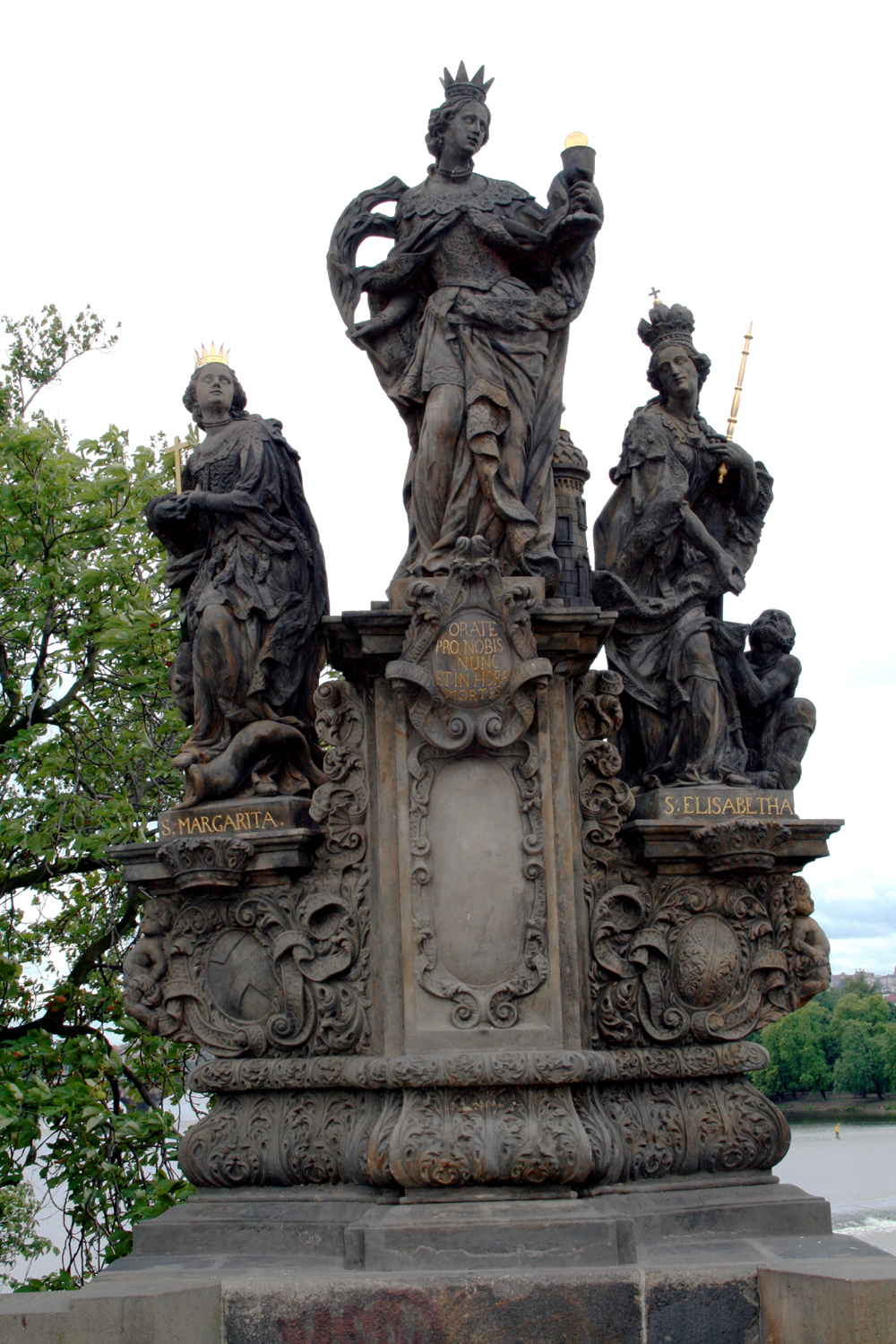
Statues of Saints Barbara, Margaret and Elizabeth, Charles Bridge
Praga
-
Statue of Saint Joseph, Charles Bridge
Praga
-
Statues of Madonna, Saint Dominic and Thomas Aquinas, Charles Bridge
Praga
-
Statue of Saint Anne, Charles Bridge
Praga
-
Statue of Ivo of Kermartin, Charles Bridge
Praga
Earn badges for the places you visit
Download NextOnTrip, discover new places and check off your trails.