- Sacred Monuments
- Religious monuments
Statues of Madonna and Saint Bernard, Charles Bridge
About this place
The Statues of Madonna and Saint Bernard form a Baroque sculptural group standing on the north side of Charles Bridge in Prague, one of Central Europe's most recognizable bridges. The group was created in 1709 by Matěj Václav Jäckel, a sculptor who added several Marian and saintly compositions to the bridge around the turn of the 18th century. The same artist also carved the nearby group of Madonna, Saint Dominic and Thomas Aquinas, making him one of the most prolific contributors among the bridge's sculptors.
Who commissioned the statue?
The group was commissioned by Benedikt Littwerig, abbot of the Cistercian monastery in Osek in northern Bohemia. Such commissions were common practice during the Baroque period, when religious orders and wealthy patrons paid for successive statues along the bridge as a display of personal piety and institutional prestige.
What does the composition depict?
At the center of the group stands the Virgin Mary holding the infant Jesus. To her right kneels Saint Bernard in monastic habit, while an angel beside him holds an abbot's mitre, an attribute referring to the office Bernard held during his lifetime. The other side of the composition carries symbols of Christ's Passion: a cross and a cloth known as the veraicon, along with nails, a hammer, pincers and a rooster figure recalling the biblical scene of Saint Peter's denial, according to descriptive sources. Ribbons originally ran from the mouths of Mary and Bernard bearing an inscription - effectively a recorded dialogue between the two figures, referencing the mystical experiences Bernard described in his own writings.
Who was Saint Bernard of Clairvaux?
Bernard of Clairvaux (1090-1153) was a French Cistercian abbot, theologian and mystic, regarded as one of the leading figures of the 12th-century spiritual revival in Europe. He co-founded numerous Cistercian monasteries and left behind writings devoted to contemplation and intense Marian devotion. This spiritual tradition made him a natural subject for a sculptural composition depicting a direct, mystical bond between the saint and the Virgin Mary.
Where exactly does the statue stand on the bridge?
The statue stands on the north side of Charles Bridge, among the row of sculptures lining the balustrade of the bridge that connects Prague's Old Town with Malá Strana. Charles Bridge itself was built in the 14th century under Charles IV, but only began acquiring its present Baroque appearance toward the end of the 17th century, when successive statues of saints started being installed along its length. Around thirty statues now stand on the bridge, with the Madonna and Saint Bernard group counted among them, standing near other compositions by Jäckel and fellow masters of Prague Baroque sculpture.
Frequently asked questions
Who created the Statues of Madonna and Saint Bernard? The group was carved by Matěj Václav Jäckel, a Prague sculptor active around the turn of the 18th century who also created several other statue groups on Charles Bridge.
When was the statue made? The sculptural group dates from 1709.
Who commissioned the statue? It was commissioned by Benedikt Littwerig, abbot of the Cistercian monastery in Osek, northern Bohemia.
What do the objects on the left side of the composition represent? They are symbols of Christ's Passion - including a cross and the veraicon cloth - referencing Christ's suffering and themes present in Cistercian spirituality.
Who was the Saint Bernard depicted in the statue? He is Bernard of Clairvaux (1090-1153), a French Cistercian abbot, theologian and mystic known for his deep Marian devotion and contemplative writings.
On which side of the bridge does the statue stand? On the north side of Charles Bridge, among a row of other Baroque statues lining the balustrade.
Nearby places
-

Statue of Ivo of Kermartin, Charles Bridge
Praga
-
Statues of Madonna, Saint Dominic and Thomas Aquinas, Charles Bridge
Praga
-
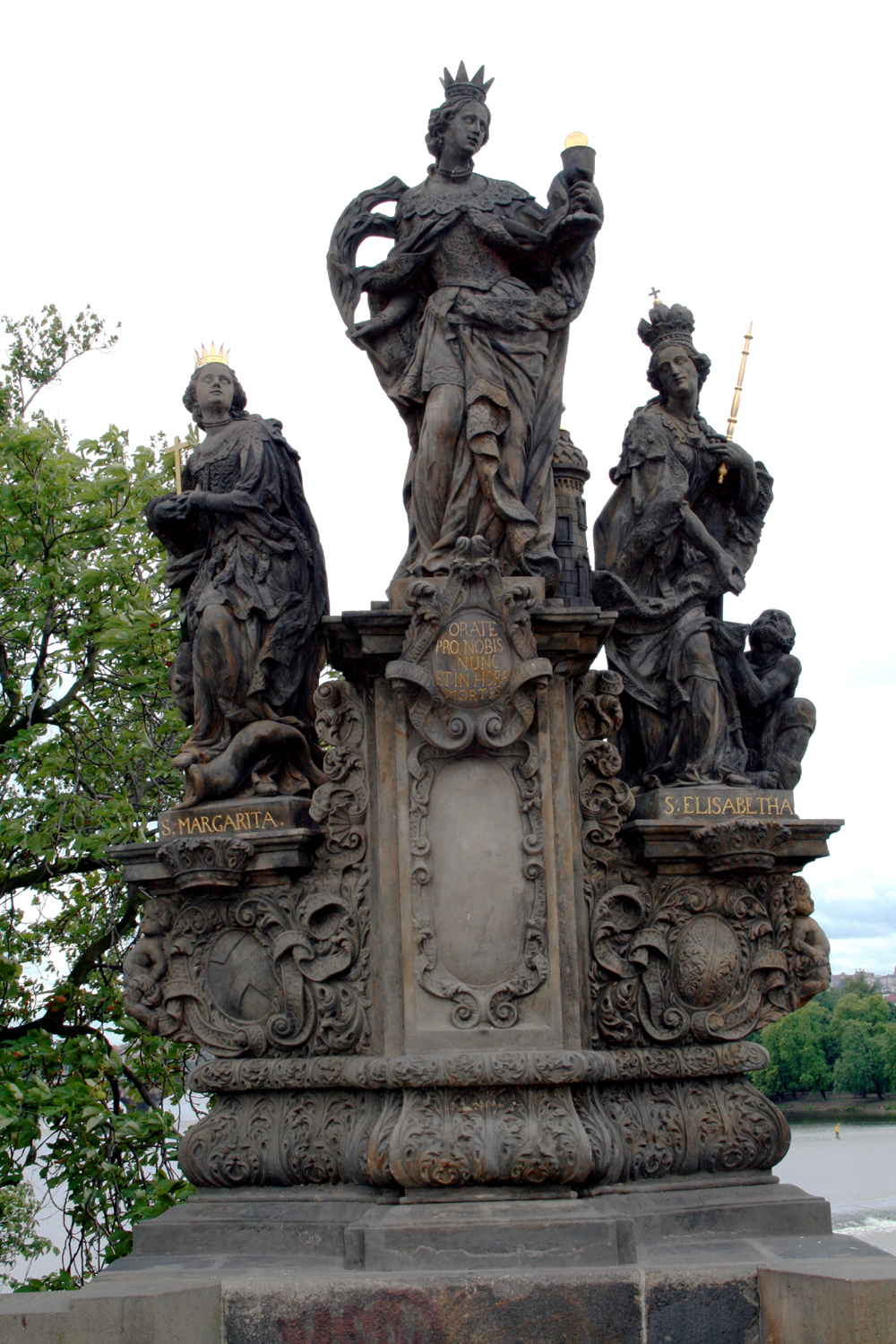
Statues of Saints Barbara, Margaret and Elizabeth, Charles Bridge
Praga
-
Calvary, Charles Bridge
Praga
-
Statue of Pietà, Charles Bridge
Praga
-
Church of Saint Francis of Assisi
Praga
Earn badges for the places you visit
Download NextOnTrip, discover new places and check off your trails.