About this place
Segart Castle stands on a hilltop above the small village of Segart, in the province of Valencia, within the Camp de Morvedre area.
Where is the castle and how do you get there?
The ruins occupy the summit right above the village of Segart, a small settlement set inland from the Costa del Azahar coastline. From up here the whole valley and surrounding hills open up, which makes the climb a favourite short but demanding walk for anyone interested in views rather than crowds. A steep path leads up from the village centre — sturdy footwear is worth packing, since the ground is rocky and uneven the whole way.
Who built the fortress at Segart?
The stronghold was raised during the period of Muslim rule, most likely in the 13th century, as a defensive post controlling access to the valley below. It belonged to a wider network of similar fortifications built along the eastern coast of the Iberian Peninsula at the time, whose purpose was to protect farmland and travel routes from raids.
How did ownership of the castle change hands?
Christian forces took the castle around 1238, when King James I of Aragon conquered it. He first granted it to the Bishop of Vic, and by 1248 the property had passed to Adam de Paterna. Later, King Peter the Ceremonious handed the castle to Bernardo Ripax, and in time it was folded into the jurisdiction of Sagunto — it only regained independent status in 1535. This long chain of owners shows how strategically valuable Segart was considered by successive rulers of the region.
What happened after the expulsion of the Moriscos?
A turning point for both the village and the castle came with the expulsion of the Moriscos in 1609, a decree that left the settlement nearly empty. The task of repopulating the area fell to Juan de Villarrasa, then lord of the barony covering Segart and Albalat. He brought in Old Christian settlers from Catalan lands, who resettled the surrounding countryside. From that point on, the castle steadily lost its military role and began to fall into disrepair.
What survives at the site today?
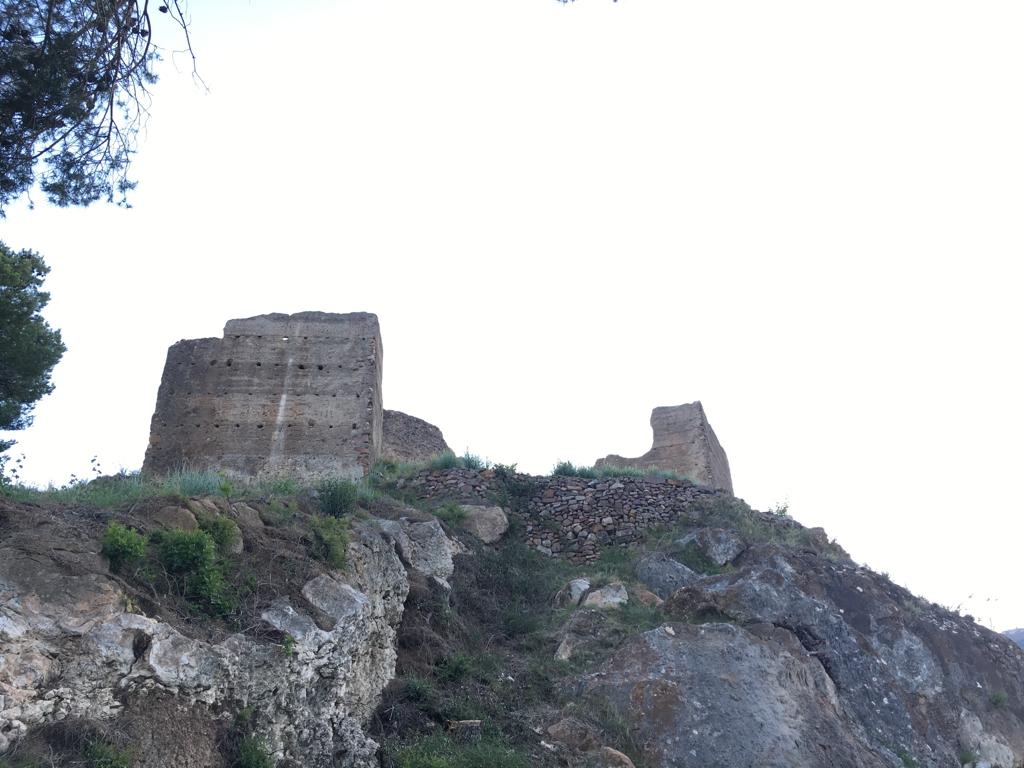
Visitors can still make out stretches of the old defensive walls and part of a square-shaped water cistern. Two rammed-earth (tapial) towers also remain, standing on the northern side of the complex — each with a roughly trapezoidal footprint, about 6 metres along the outer face and reaching close to 10 metres in height. A third tower, built from stone and mortar, stands nearby. The whole site is in a state of ongoing decay, which gives it a raw, unrestored character — better suited to history enthusiasts and landscape photographers than to visitors expecting a fully restored monument.
Why visit Segart?
Beyond the castle itself, the Camp de Morvedre area offers a quiet, largely uncrowded alternative to the busier coastline nearby. Segart makes a good base for anyone wanting to combine a short hike with a slice of layered history — Muslim, Aragonese and post-Morisco periods all overlap within this one small site.
Frequently asked questions
When was Segart Castle built? The fortress dates from the period of Muslim rule, most likely the 13th century, before Christian forces conquered it in 1238.
Can the castle be visited? Yes, the ruins are reachable on foot via a path from the village of Segart, though the site is unrestored and continues to deteriorate, so caution is advised.
What remains of the original structure? Sections of the walls, part of the cistern, and three towers — two built of rammed earth on the northern side and one built of stone.
Why did the castle lose its importance? The expulsion of the Moriscos in 1609 emptied the settlement, after which the fortress lost its defensive role and gradually fell into ruin.
Nearby places

Earn badges for the places you visit
Download NextOnTrip, discover new places and check off your trails.