About this place
Castell de Torres Torres is a ruined medieval fortress standing above the town of Torres Torres, in the Camp de Morvedre district of Valencia province. What remains today is a weathered stone skeleton, but its story stretches back to a time when this stretch of eastern Spain was contested ground between Muslim and Christian rule.
Where does the castle stand, and why this spot?
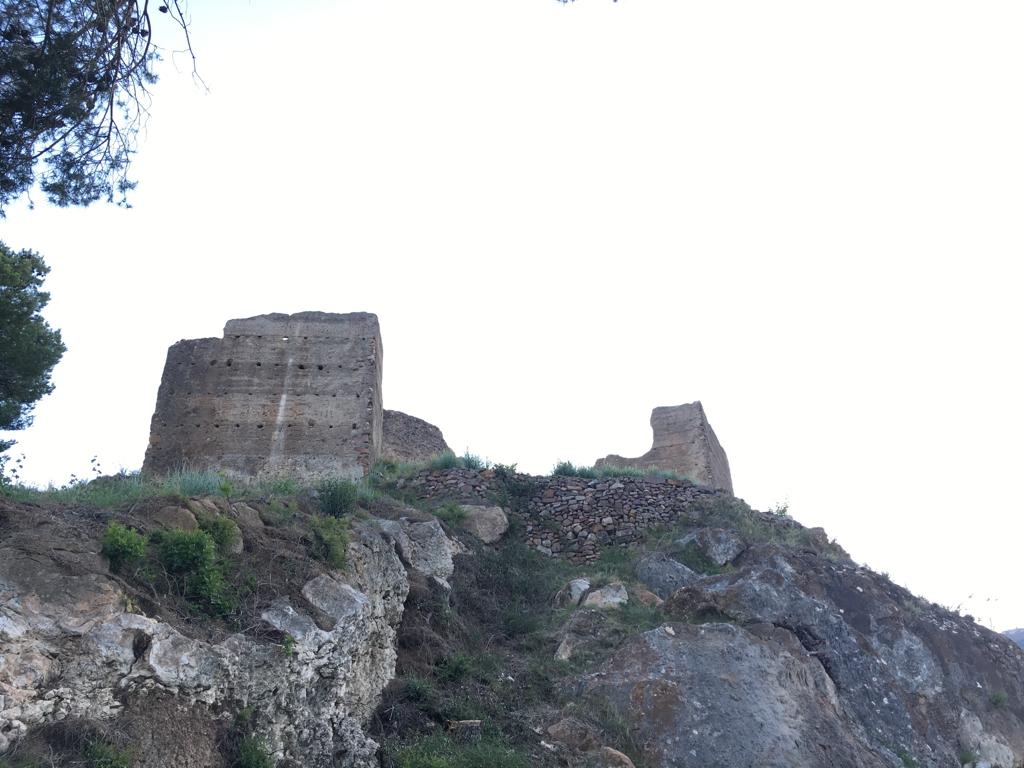
The fortress crowns a hill directly above the village, in a position that commands the route linking Valencia with the interior of the region. That location was no accident: medieval builders always favored high ground with clear sightlines over the roads used by merchants, travelers, and armies. Torres Torres sat squarely on such a route, making a fortified lookout an obvious necessity rather than a mere show of local power.
How did the fortress begin?
The site's origins trace back to the Islamic period, likely the 12th century. A watchtower went up first, later enclosed by a defensive perimeter, with the specific job of monitoring the road between Valencia and Teruel — a corridor of real commercial and military weight for the whole region.
What changed after the Christian conquest?
The turning point came when King James I of Aragon took the area during the Reconquista and folded it into the Crown of Aragon. The castle, along with surrounding lands, was granted to the knight Beltrán de Bellpuig, turning it into part of a defensive network guarding the landward entrance to the Kingdom of Valencia. The fortress stayed in active use until the early 17th century — more than four centuries of continuous military service.
What did the castle look like at its peak?
The original layout was polygonal, its perimeter marked by four towers linked by curtain walls. At the center stood the keep, the last line of defense and likely the residence of the garrison's commander. This combination — a walled circuit reinforced by towers plus a strengthened central keep — was standard for border fortresses of this era across the Iberian Peninsula.
What survives today?
Two of the original towers remain standing, along with part of the rectangular, three-story keep. Sections of the perimeter walls are still visible, as are traces of auxiliary structures that once housed the garrison and sheltered nearby villagers in times of danger. The site underwent significant alterations in the 19th century during the Carlist Wars, when it was pressed back into defensive use. Today the castle sits in a state of ongoing decay, which gives it a raw, unrestored character rarely found in more heavily renovated Spanish castles.
Why is it worth the climb?
Most visitors come for the view: the hilltop opens onto the valley and the surrounding hills of Camp de Morvedre, and the quiet, uncrowded setting makes it easy to linger. It's also a rare chance to see what border fortifications from the Christian-Muslim frontier actually looked like before restoration smoothed over their rough edges — this one never got that treatment.
Frequently Asked Questions
When was the castle in Torres Torres built? Its origins go back to the Islamic period, probably the 12th century, when a watchtower was first built to control the road toward Teruel.
Who took over the castle after the Reconquista? King James I of Aragon captured it and granted it, together with surrounding lands, to the knight Beltrán de Bellpuig.
What remains of the original structure? Two of the four original towers survive, along with part of the three-story keep and sections of the walls and auxiliary buildings.
Was the castle still used in later centuries? Yes — it served defensive purposes until the early 17th century, and it was pressed back into military use in the 19th century during the Carlist Wars.
Nearby places

Earn badges for the places you visit
Download NextOnTrip, discover new places and check off your trails.