About this place
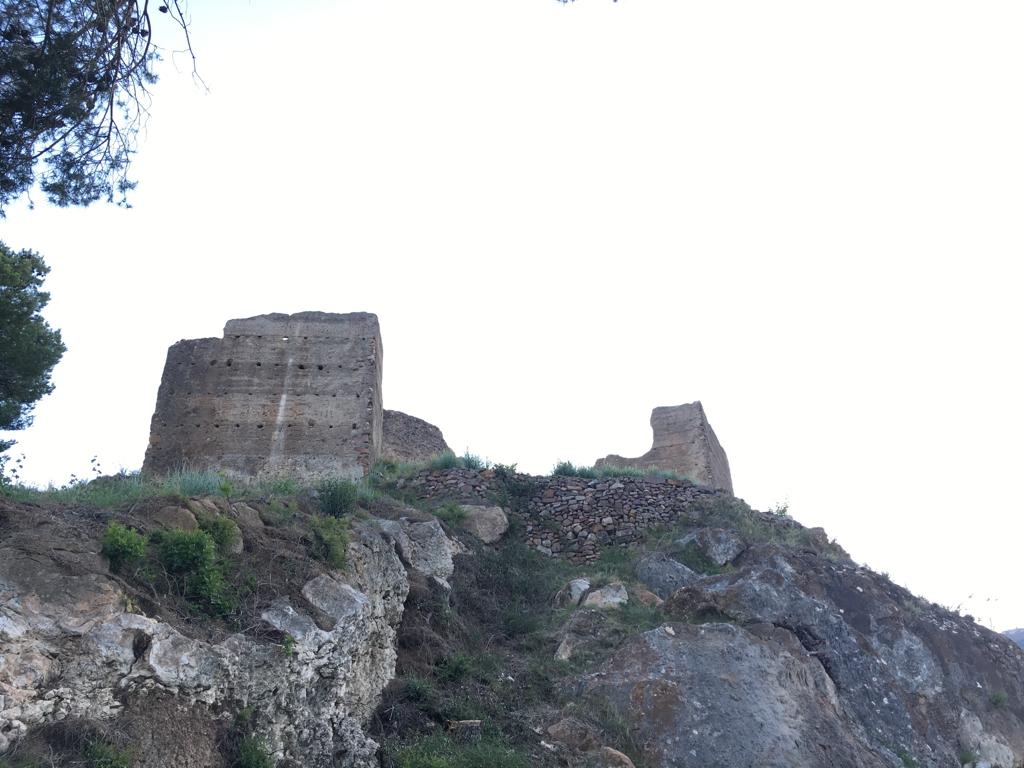
Castillo de Beselga is a ruined medieval castle on the northern slope of Monte Garbí, about two kilometers from Estivella, in the Camp de Morvedre region of the Valencian Community, Spain. Listed as a Bien de Interés Cultural (Cultural Heritage Site), it belonged to a chain of small fortresses that once guarded access to the Palancia river valley.
What is the history behind the castle?
The site began life under Muslim rule during the Almohad period, when a classic watch-and-defense tower stood here, likely enclosed by a defensive wall protecting a nearby settlement. The tower formed part of a broader fortification network linked to the castle of Morvedre (present-day Sagunto), functioning as an observation and signaling point along the valley.
After the Christian conquest, around 1499, Baron Gracià Monsoriu ordered a castle-palace built onto the existing tower structure. Work continued into the early 16th century under Berenguer Martí de Torres. The result was a residential fortified complex typical of the turn of the 15th and 16th centuries in the Valencian region, standing directly beside the older Muslim tower.
What will you see on site?
The tower is the best-preserved element: a rectangular structure roughly 7.10 by 7.30 meters at its base, with walls 1.15 meters thick, rising through three stories at the western end of the complex. It was built using the rammed-earth (tapial) technique characteristic of Islamic-era defensive architecture in this part of Spain. From the tower's position, the site offers wide views over the surrounding hills and the valley below.
Next to the tower lie the remains of the castle-palace raised by the Monsoriu family — the part of the complex that has suffered the most damage over the centuries.
What condition is the castle in today?
On July 7, 2004, the north wall of the castle-palace collapsed. Following the collapse, conservation work restored and secured the tower, and the remaining wall sections were consolidated to prevent further deterioration. Even so, much of the castle-palace remains in ruins, a state shared by many small fortresses in the region that have not undergone full reconstruction.
How do you get there, and when should you visit?
Reaching the castle involves a walk up the hillside above Estivella; the path calls for moderate fitness, so comfortable hiking shoes and water are worth bringing, especially in summer when the Camp de Morvedre region gets quite hot. Spring and autumn are the most comfortable seasons to visit, offering milder temperatures and clearer views from the lookout point by the tower. Access to the inside of the tower is sometimes restricted for conservation reasons — the Ajuntament d'Estivella (local town hall) is the point of contact for current information on guided visits.
Frequently asked questions
Is Castillo de Beselga open to visitors? The grounds and the exterior of the tower can be visited year-round. Entry to the interior of the tower depends on guided routes organized by the town council, so it is worth checking with the Ajuntament d'Estivella before your visit.
How long does it take to walk there from Estivella? The castle sits about two kilometers from the town, on the slope of Monte Garbí. The walk typically takes between thirty minutes and an hour, depending on pace and fitness.
What is the difference between the tower and the castle-palace? The tower is the oldest part of the site, dating to the Muslim Almohad period and built using the tapial (rammed-earth) technique. The castle-palace was added next to it only at the end of the 15th century, under Baron Gracià Monsoriu.
Is it worth combining this visit with other nearby sites? Yes — Castillo de Beselga lies in the Camp de Morvedre region, close to the castle of Sagunto, with which it once formed part of a shared defensive system along the Palancia river valley.
Nearby places

Earn badges for the places you visit
Download NextOnTrip, discover new places and check off your trails.