About this place
Castell de Serra is a medieval fortress overlooking the small town of Serra in the province of Valencia, eastern Spain. Its ruins sit on a modest hilltop roughly a kilometer from the town center, offering views over the Turia river valley and the entrance to the Sierra Calderona mountain range.
What is the history behind the castle?
The fortress was built during the period of Arab rule, likely between the 8th and 11th centuries, as a small defensive outpost guarding the natural pass leading into the mountains. It was never designed to house a civilian population — its role was purely military and observational, forming part of a defensive network alongside the nearby castles of Náquera and Olocau and a chain of watchtowers, including the Ria, Ermita and Satarenya towers.
A turning point came in 1094, when El Cid took control of the castle after his conquest of Valencia, recognizing its strategic value for holding the surrounding territory. The more lasting change came in the 13th century: in 1232 King James I of Aragon launched the conquest of the Kingdom of Valencia, and Serra fell under Christian rule. In 1240 the town, together with its castle, mills and ovens, was granted to Gauteri de Roma, later passing into the hands of the Bellpuig family.
What can you see today?
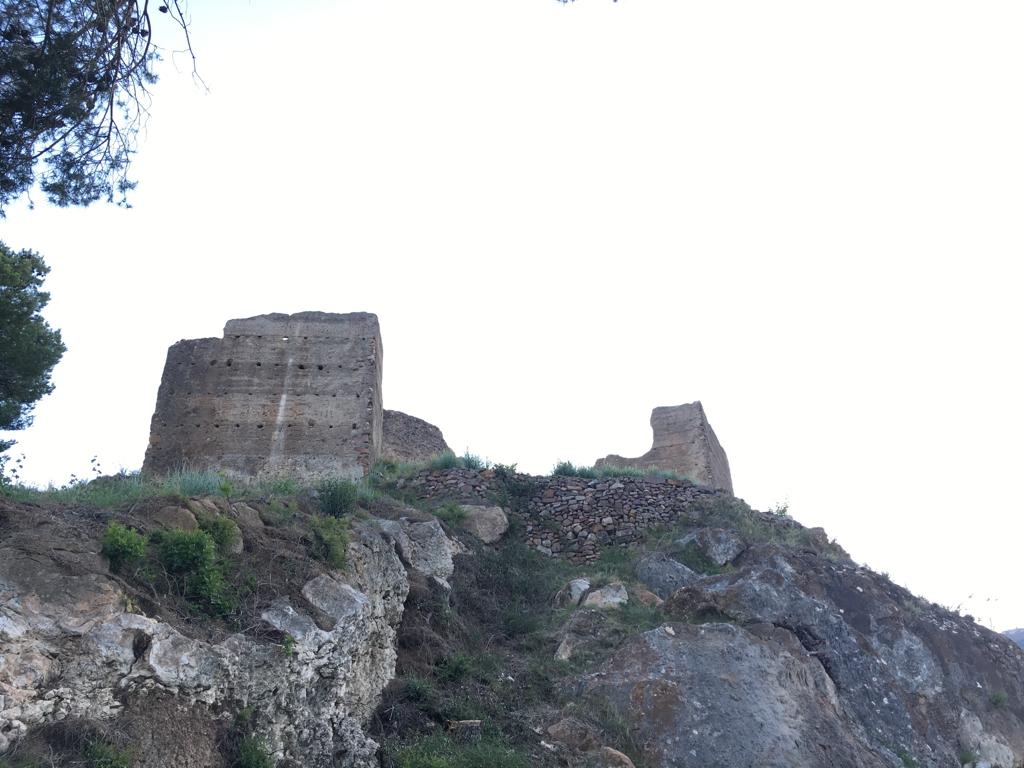
The main surviving structure is a tower roughly 10 meters tall, standing alongside remnants of two crenellated defensive walls. The entire fortified site originally covered around 600 square meters — a modest scale compared to larger regional castles, consistent with its role as a watchpost rather than a residence.
The ruins now hold the status of a Bien de Interés Cultural (Asset of Cultural Interest) and belong to the municipality of Serra. The site draws hikers and history enthusiasts more for its panoramic setting and atmosphere than for the scale of its remaining walls.
How do you get there?
The castle sits on a hill directly above the town of Serra, in the province of Valencia, close to the Sierra Calderona natural park. Access is on foot, via a steep path climbing the hillside; the walk from the town center typically takes fifteen to twenty-five minutes depending on pace. The trail isn't technically difficult, but sturdy footwear is recommended given the rocky, uneven terrain.
When is the best time to visit?
Since the site offers no shade or shelter, spring and autumn are the most comfortable seasons, with milder temperatures and clearer views over the Turia valley and the Sierra Calderona range. In summer, early morning or late afternoon visits help avoid the hottest hours. The site remains accessible in winter, though stronger winds on the exposed hilltop can make longer stays less pleasant.
What else is worth seeing nearby?
The castle makes a natural starting point for exploring the Sierra Calderona natural park, known for its hiking trails, rock formations and typical Mediterranean vegetation. The town of Serra itself, spread at the foot of the hill, retains the character of a traditional Valencian village with narrow streets and local architecture.
Frequently asked questions
Is there an entrance fee for the castle? No, access to the ruins is free and possible year-round via the hiking trail leading up the hill.
How long does a visit take? The climb and a look around the ruins usually takes about 1 to 1.5 hours round trip, though many visitors extend the outing with a longer hike through the surrounding Sierra Calderona trails.
Is the castle suitable for children? The path is steep and rocky, and there are no railings at the top, so extra caution is advised with younger children, and the climb is best avoided in rain or strong wind.
Is it worth combining with other attractions in the region? Yes — the proximity of the Sierra Calderona natural park and the short distance to Valencia make Castell de Serra a good fit for a day trip combining history and nature.
Nearby places

Earn badges for the places you visit
Download NextOnTrip, discover new places and check off your trails.