About this place
The Sanctuary of Our Lady of the Fuensanta stands on Monte de la Fuensanta, a hill overlooking Murcia near the Algezares district. It is the region's most important Marian shrine and the destination of an annual pilgrimage that draws crowds from across the city.
How did this shrine come to be here?
The site began as a small medieval hermitage watched over by a lone hermit. The image of the Virgin venerated here is far older than the building itself, dating back to at least the 15th century. For a long period the figure was kept inside Murcia Cathedral, where it was known as the Virgen de las Fiebres — Our Lady of the Fevers. It was Bishop Trejo who gave the image its new title and tied its cult to the Fuensanta hill.
Construction of the current church began in 1694 and continued through the first third of the 18th century. By the mid-1700s, Our Lady of the Fuensanta had been declared patroness of Murcia, which raised the sanctuary's standing considerably. The towers were restored in 1925 by Rafael Castillo Sáiz, but the Spanish Civil War brought serious destruction to the interior, which had to be rebuilt almost entirely. That restoration was only completed by the mid-20th century.
What will you see inside and out?
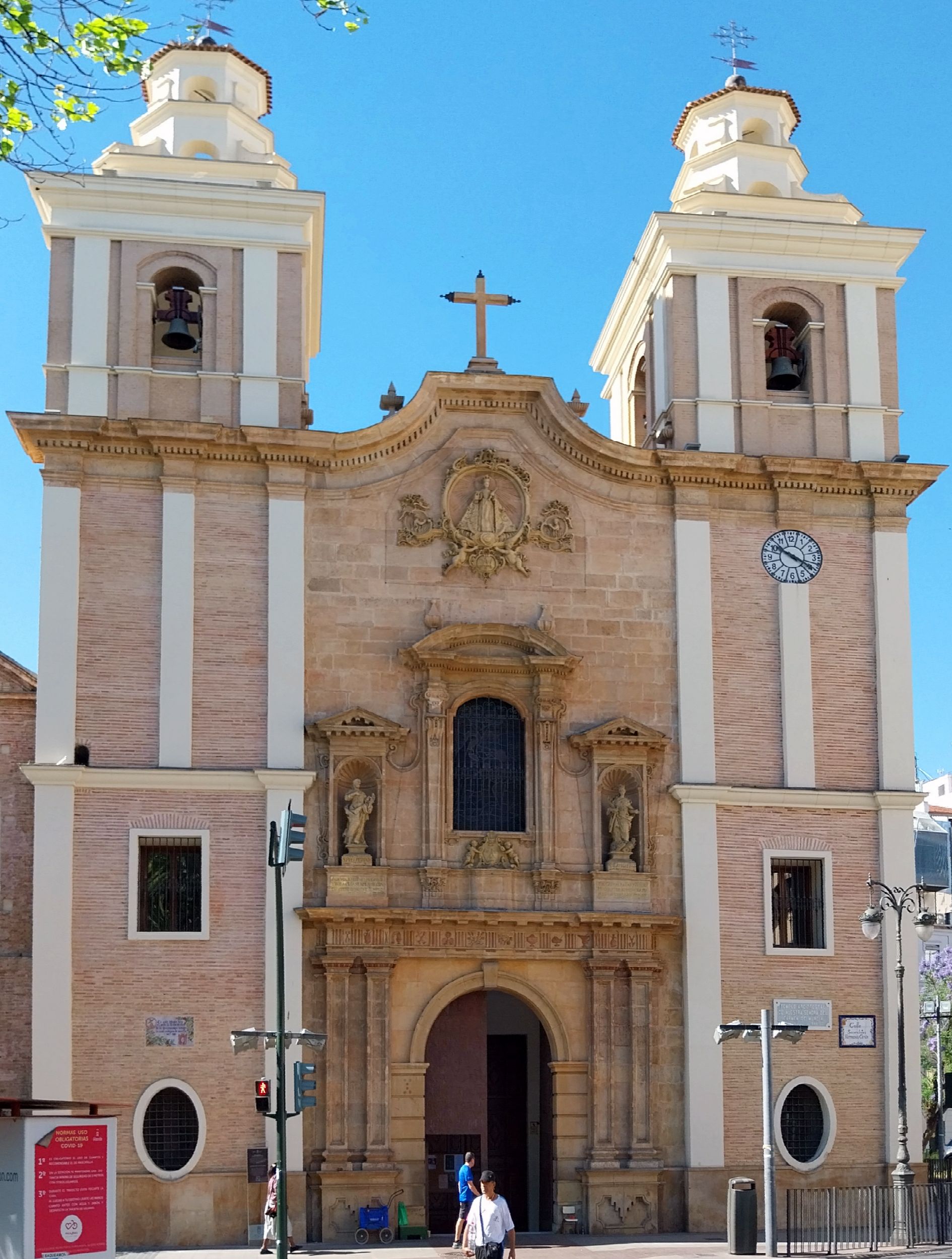
The building follows the Baroque style typical of Murcia, with three naves: a larger central one flanked by two side naves lined with chapels. The 1705 façade, designed by Toribio Martínez de la Vega, features twin towers and a round-arched doorway, with a central niche holding the image of the Virgin, carved by sculptor Jaime Bort.
Inside, look up toward the dome — its paintings, along with those in the choir, are the work of the painter Pedro Flores. The dome depicts a pilgrimage scene tied to the Virgin alongside the history of Murcia and portraits of notable figures from the city's past, effectively turning the ceiling into a painted record of local identity.
How do you get there?
The sanctuary sits on the slope of Monte de la Fuensanta, right next to Algezares, a few kilometers from central Murcia. The easiest way to reach it is by car or taxi, following the road as it climbs gradually uphill; a terrace beside the church offers views over the Segura river valley and the city below. Travelers without a car can take a local bus to Algezares and continue on foot up the hill from there.
When is the best time to visit?
The standout moment on the calendar is the annual pilgrimage honoring the city's patroness, when large crowds of worshippers and residents make their way up to the sanctuary. Outside that period, the site remains a quiet vantage point and place of worship — a good choice for an afternoon trip out of the city, particularly in spring and autumn when temperatures are milder than in the height of summer.
Frequently asked questions
Is this sanctuary dedicated to the patroness of Murcia? Yes — Our Lady of the Fuensanta was declared patroness of the city in the mid-18th century and remains the most important Marian devotion in the region to this day.
Is the interior original from the 18th century? Only in part. The structure and façade date from the Baroque period, but the interior suffered serious damage during the Spanish Civil War and was not fully restored until the mid-20th century.
Who designed the façade and carved the image of the Virgin? The 1705 façade was designed by Toribio Martínez de la Vega, while the figure of the Virgin in the central niche was carved by the sculptor Jaime Bort.
Is it worth going inside, or is the exterior enough? It's worth stepping inside — the dome paintings by Pedro Flores portray the history of Murcia and are one of the main reasons the sanctuary draws not only pilgrims but also visitors interested in religious art.
Nearby places

Earn badges for the places you visit
Download NextOnTrip, discover new places and check off your trails.