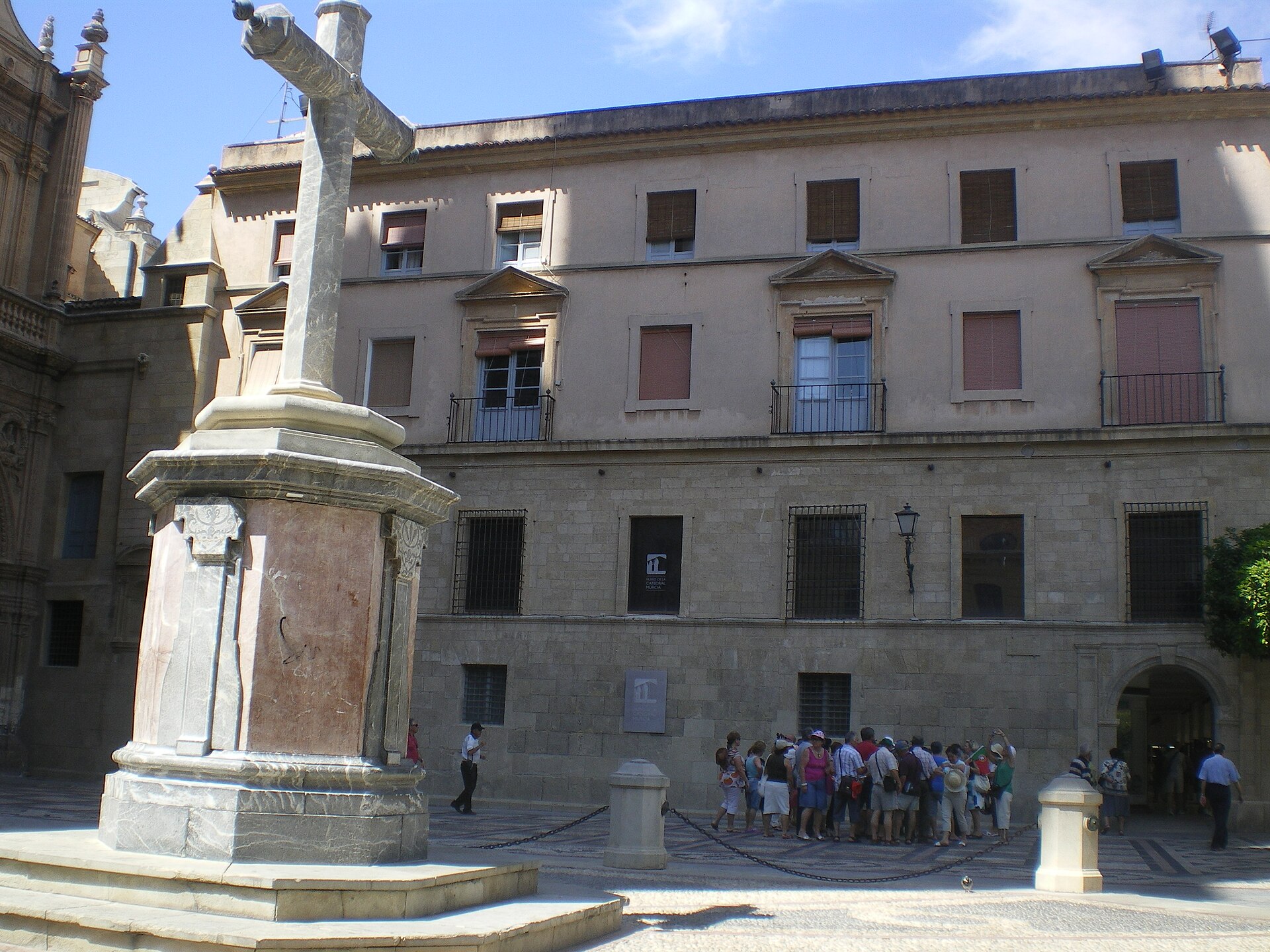
About this place
Museo de la Catedral de Murcia is the cathedral museum of Murcia, housed inside the old Gothic cloister attached to the Santa María Cathedral. Its collection spans religious art from the Roman era to modern times, and a walk through the building doubles as a walk through centuries of the city's history.
Where is it and how do you get there?
The museum occupies the former cloister next to the cathedral, built during the tenure of Bishop Peñaranda (1337–1351). It sits right in the historic core of Murcia, so it's within easy walking distance from anywhere in the old town. The museum has its own entrance, separate from the cathedral's, though a combined ticket covers both.
What can you see inside?
The exhibition is spread across several rooms holding paintings and altarpieces, liturgical silverware, sculpture, and ecclesiastical vestments gathered over centuries, many donated by Murcia's wealthiest families. On the ground floor, look for the Roman sarcophagus known as the Sarcophagus of the Muses, the Gothic altarpiece of the Virgin of the Milk by Bernabé de Módena (14th century), and the historic bell known as La Mora. Among the most valuable pieces are works by Francisco Salzillo, Murcia's celebrated Baroque sculptor, including his San Jerónimo and Cristo del Fascistol, alongside Italian Trecento paintings and canvases by Luca Giordano. A standout piece is the Custodia del Corpus, a monumental processional monstrance crafted by Antonio Pérez de Montalto in the 17th century.
What's hidden beneath the floor?
One of the most memorable parts of the visit is a wood, metal, and glass walkway suspended above an archaeological dig uncovered during restoration work. Beneath it lie the remains of the old Friday mosque that once stood on this spot before the cathedral was built — walking over it means stepping across more than a thousand years of the site's construction history in a single glance.
What's the museum's history?
The museum opened in 1956, an initiative of Bishop Miguel de los Santos Díaz-Gomara, who held office from 1935 to 1949 and pushed for a permanent home for the cathedral's art collection. It reached its current layout and scale after a major expansion in 2007, when exhibition space was enlarged and the collection reorganized by theme.
When should you visit, and what does it cost?
From October to June, the museum is open Tuesday to Saturday from 10am to 1pm and 4pm to 7pm, and Sundays and public holidays from 10am to 1pm. In summer, from July to September, hours shift to Tuesday–Saturday 10am to 5pm with no midday break. A cathedral-only ticket costs €5, the museum alone €4, and a combined ticket for both €7. Visitors over 65, under 16, and those with disabilities pay reduced rates: €4 for the cathedral, €3 for the museum, and €6 for the combined ticket.
Frequently asked questions
Does a cathedral ticket include museum entry? Not automatically — the cathedral and the museum are ticketed separately, but a combined ticket at €7 (€6 reduced) works out cheaper than buying both on their own.
How long does a visit take? A typical visit runs 45 minutes to an hour, depending on how much time you spend in each room and on the underground archaeological walkway.
Is the museum accessible for visitors with disabilities? Reduced-rate tickets are available for visitors with disabilities, but given the building's historic, multi-level layout it's worth checking accessibility of specific rooms ahead of your visit.
Is it worth combining the museum with a climb up the cathedral tower? Yes — it's a separate attraction within the same complex, and it pairs well with the museum visit, offering sweeping views over Murcia's old town.
Nearby places

Earn badges for the places you visit
Download NextOnTrip, discover new places and check off your trails.