About this place
The Church of Santa Eulalia stands at the northern edge of Murcia's old town, on ground once marked by the city's medieval walls.
Where did this church come from?
The story begins on February 2, 1266, when King James I of Aragon entered Murcia after putting down the Mudéjar revolt. He rode in through a gateway in the city walls known as the Gate of the Seven Gates, near which stood a mosque. The king ordered it converted into a church dedicated to the Catalan saint Eulalia of Barcelona — the name that has survived to this day. The original building therefore had medieval roots and served for centuries as the parish church for this part of the city.
Over time the old structure fell into disrepair. Before 1760, part of the ruined building was torn down, and construction of a new church began on the same site soon after. Work progressed in stages: part of the building was ready by 1766, and the church itself was blessed and opened to worshippers on June 21, 1766. Full completion of the construction, however, did not come until December 1779. That final push is credited to the architect Antonio Albarracín, who secured the necessary funds through a donation from Bishop Rubín de Celis.
What will you see at the façade?
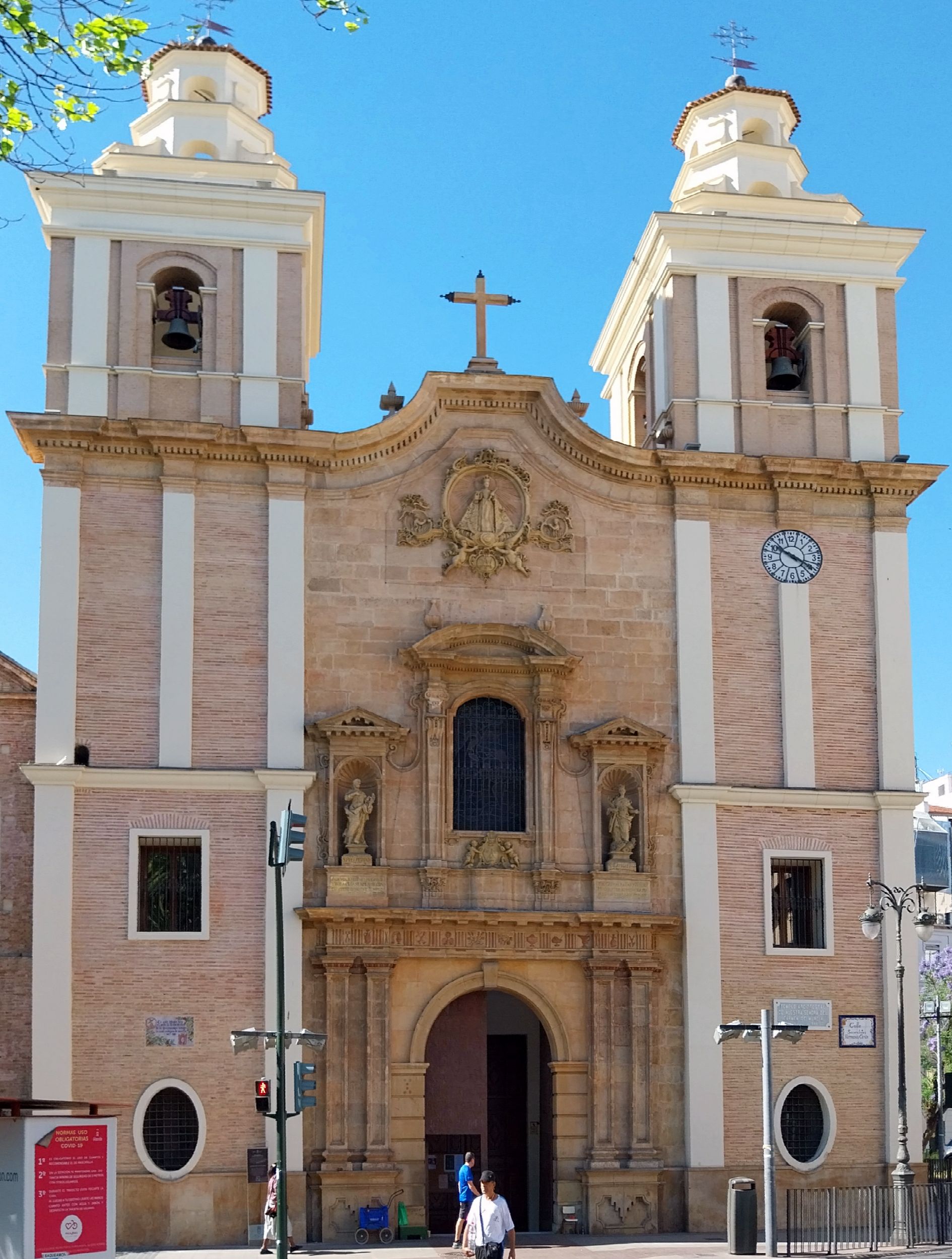
Although the church's origins are medieval, the building standing today was entirely raised in the second half of the 18th century — one of the last examples of Baroque-Rococo style in Murcia. The most distinctive feature of its façade is a broken, curved pediment, a shape typical of Levantine architecture of that period. It's this silhouette that sets Santa Eulalia apart from Murcia's other churches and makes it easy to spot among the narrow streets of the old town.
The building's overall form still reflects the long, staggered construction process — stretching from the first blessing in 1766 to the final completion in 1779. It's worth pausing to look at the façade's proportions and stonework details, both characteristic of the region's late Baroque period.
How to get there and when to visit?
The church sits in Murcia's historic center, close to the former line of the city walls, making it an easy stop on foot during a walk through the old town. Morning or early afternoon tends to be the best time to visit, when the light falls favorably on the façade from the square. Since it still functions as a parish church, access may be tied to service times — it's worth timing a visit so it doesn't clash with Mass.
The surrounding area rewards a longer stroll: Santa Eulalia sits close to several other landmarks of old Murcia, making it easy to combine a visit here with a short walking route through the historic center.
Frequently asked questions
Is the Church of Santa Eulalia a medieval building? Its origins date to 1266, when a former mosque was converted into a church, but the structure standing today was built in the second half of the 18th century — a rebuilding rather than the original medieval construction.
When was today's church actually built? The new church went up in stages: part of it opened in 1766, with the whole project finished in December 1779 thanks to architect Antonio Albarracín.
Where does the church's name come from? It honors the Catalan saint Eulalia of Barcelona, chosen by King James I of Aragon after he entered Murcia in 1266.
What architectural style does the building represent? It's an example of late Baroque with Rococo touches, typical of Levantine architecture — most recognizable by the broken, curved pediment on its façade.
Nearby places

Earn badges for the places you visit
Download NextOnTrip, discover new places and check off your trails.