About this place
Sancho VII the Strong is a monumental statue of the medieval King of Navarre standing in Tudela, on the square that bears his name — Plaza de Sancho VII el Fuerte, in the modern part of the city.
Who was Sancho VII the Strong?
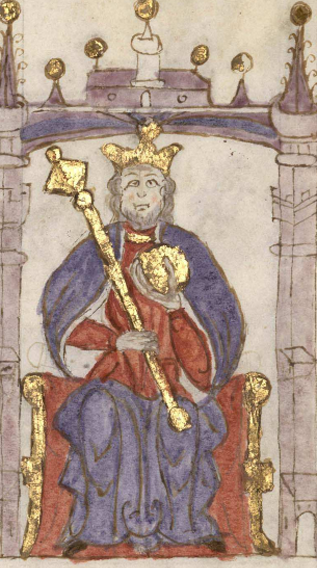
Sancho VII, known as "the Strong" (el Fuerte), ruled the Kingdom of Navarre around the turn of the 12th and 13th centuries and died in 1234. He was the last king of the native Jiménez dynasty — after his death the crown passed to a dynasty of foreign origin, closing a defining chapter of the region's history. Chronicles and legend credit him with exceptional physical strength and a warlike temperament, which earned him his nickname. In his final years, ill and heavily overweight, he withdrew to Tudela, where he spent the rest of his life. That personal connection is the reason the city, rather than the former capital, chose to honor him with a monument.
Who created the statue, and when?
The statue was commissioned by the Real Sociedad de Amigos del País de Tudela and unveiled in 1981. Its author is Antonio Loperena, a sculptor born in nearby Arguedas who died in 2010 and became one of the most decorated artists in Navarre, with pieces placed across Europe and the Americas. The Sancho VII monument ranks among his best-known works in the region.
What is the statue made of, and how large is it?
The figure was carved from golden limestone quarried near Salamanca — an extremely hard, difficult-to-work stone that local craftsmen nickname "the whetstone" for its resistance to tools. The finished sculpture weighs five tonnes, making it one of the heaviest monuments in the city. The sheer scale and mass of the block were meant to underline the strength and commanding presence of the king it portrays.
Why does the king on the statue look different from how he really appeared?
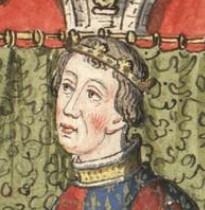
Loperena took as his model the recumbent effigy of Sancho VII at the monastery of Roncesvalles, considered the most faithful surviving likeness of the monarch. Rather than reproduce the ailing, obese ruler of his final years, though, the sculptor deliberately rejuvenated the figure, presenting the king at the height of his physical power and legendary vigor. That was a conscious artistic choice: the monument is meant as a tribute to the king's strength and historical weight, not a literal record of his old age.
Has the statue been restored recently?
Yes. Tudela's city council recently carried out a full rehabilitation of the sculpture. The work included cleaning the stone surface, filling in lost volumes and sealing cracks, retouching the lettering of the inscription on the pedestal, and applying a water-repellent treatment to protect the monument from further weathering. As a result, the statue has regained an appearance close to the one Loperena originally gave it.
Frequently Asked Questions
Where in Tudela is the Sancho VII the Strong statue located? On Plaza de Sancho VII el Fuerte, in the modern part of the city, a square named after the king.
When was the monument created, and by whom? In 1981, commissioned by the Real Sociedad de Amigos del País de Tudela and sculpted by Antonio Loperena.
Why did Tudela specifically choose to honor this king? Sancho VII spent his final years in Tudela, ill and overweight, and is believed to have died there in 1234 as the last ruler of Navarre's native dynasty.
What did the sculptor use as a reference for the statue? The recumbent tomb effigy of the king at the monastery of Roncesvalles, regarded as his most faithful surviving portrait — though in the Tudela statue he is shown younger and at the peak of his strength.
Nearby places

Earn badges for the places you visit
Download NextOnTrip, discover new places and check off your trails.