About this place
The Church of San Joan Bataiatzailearen eliza (Church of St. John the Baptist) stands on the main square of Aulesti, a small town in Biscay, in the Basque Country. The church occupies one side of the square, flanked by Renaissance townhouses, a substantial town hall, and several neoclassical mansions — a layout typical of Basque "puebla" settlements, where houses form tight, continuous street fronts.
Where does the name Aulesti come from?
For centuries the town was known as Murelaga, and older heritage records and documents still list the church under that name. Aulesti is said to have originally referred only to the street that circled the church, before eventually becoming the name of the entire town.
What will you see inside?
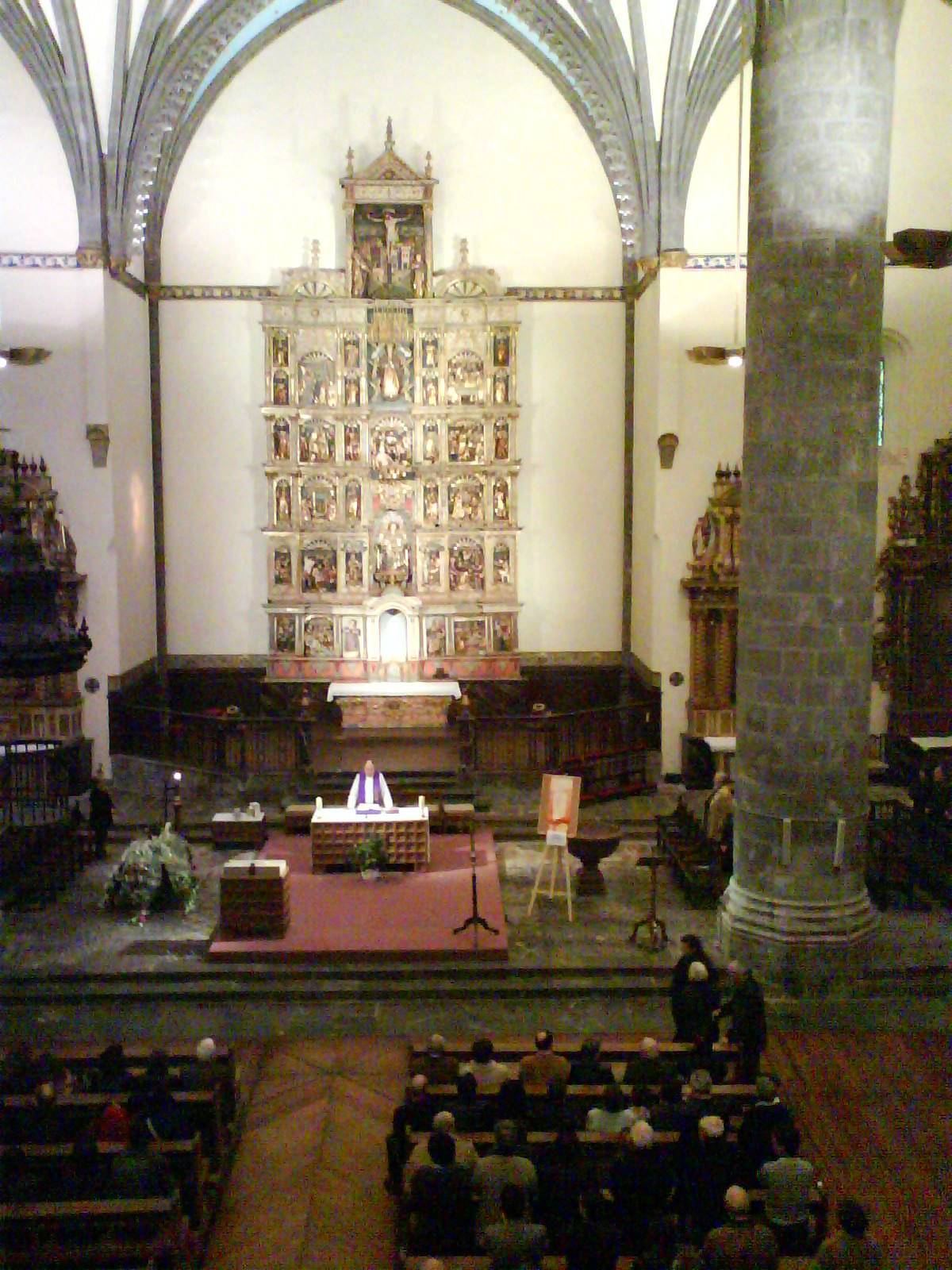
The church follows a building typology deeply rooted in Basque Renaissance architecture: three naves covered with ribbed vaults in the Gothic manner, resting on classical Doric columns. The interior contains twelve Gothic ribbed vaults, carried by six Renaissance central columns, with Baroque corbels supporting the side walls. The temple itself dates to the 16th century, though its furnishings were added and enriched over the following centuries.
The most striking feature inside is the main altarpiece in the Rococo style — richly decorated, and in clear visual contrast with the sober Gothic-Renaissance structure of the building. The tabernacle dates from 1749 and was made by Hilario Mendizábal, a craftsman from nearby Eibar. The religious sculptures inside are attributed to three noted sculptors from the Montaña region of Cantabria: Jerónimo de Argos, Manuel de Azebo, and Juan de Munar.
How do you get there?
Aulesti sits inland in Biscay, among the green hills of the Lea valley, close to Lekeitio and Gernika. The easiest way to arrive is by car — the church stands right in the town center, on the main square, so it's impossible to miss. It makes a good stop on a route through the smaller Basque inland towns, away from the crowds of the coast.
When should you visit?
Spring and early autumn are the best times, when the surrounding hills are green and temperatures are mild — perfect for walking around the square and the nearby streets. In summer, it's worth combining a visit with a trip to the nearby coast; in winter, the church and square keep a quiet, provincial character with almost no tourist traffic.
Frequently asked questions
Can you visit the inside of the church? The building is an active parish church, so access to the interior depends on Mass times and local custom — it's worth checking locally before your visit.
Why is the church sometimes called "de Murelaga"? That was the historical name of the town of Aulesti itself, and older heritage documents and registries still describe the church under that older name.
What is the most valuable feature of the interior? The Rococo main altarpiece and the 18th-century tabernacle by Hilario Mendizábal are considered the most notable elements of the furnishings.
Are there other attractions nearby? Yes — Aulesti is close to Lekeitio, with its cliffs and beaches, and to historic Gernika, making it easy to combine into a single day of exploring the region.
Nearby places

Earn badges for the places you visit
Download NextOnTrip, discover new places and check off your trails.