About this place
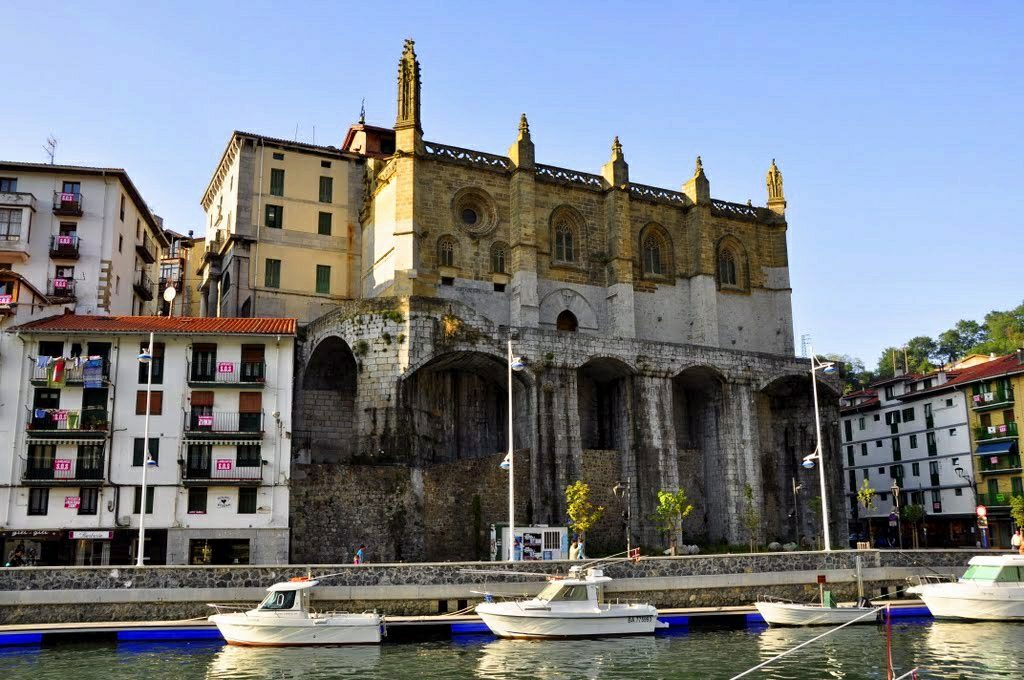
The Convent of Santo Domingo in Lekeitio, in the Basque Country, is one of the oldest religious complexes in this coastal town in Biscay.
When was the convent founded?
The story begins in the second half of the 14th century. In 1368, Don Tello, the last Lord of Biscay, who died two years later, granted his palace and surrounding lands to a community of Dominican nuns. The initiative to bring the sisters to Lekeitio is credited to Juana Ibañez de Arsuaga. After further grants and land extensions, the community was formally established as a convent in 1396, and it has remained home to the Dominican nuns ever since — locally it is still known as the "Convent of the Dominican Mothers."
Why is today's building a reconstruction?
The convent's history has not been an easy one. Two devastating fires that swept through Lekeitio, in 1442 and 1595, destroyed the convent buildings along with much of the town. On both occasions the nuns rebuilt their home, reusing materials salvaged from the earlier structures. As a result, the complex visitors see today is effectively a multi-layered reconstruction, carrying traces of several building phases across the centuries.
What is worth seeing inside the convent church?
The centrepiece of the complex is the convent church, built in the 16th century in a Gothic-Renaissance style. It follows a Latin-cross plan, with a polygonal chancel divided into five vaulted sections covered by ribbed vaulting, plus three further bays roofed with barrel vaults. Two side chapels of contrasting character flank the nave: an early 16th-century Gothic chapel and a fully Baroque chapel from the 18th century. The church's main doorway was actually brought over from the Santa Maria parish church, and a low medieval wall still marks out the boundary of the convent grounds.
What does the cloister look like?
The convent's cloister retains two tiers of arcades resting on Tuscan marble columns. Both the cloister and the church have since been restored, and the church building now doubles as a cultural centre and exhibition space for the town. This gives the former convent a dual identity: a protected historic monument that also functions as a living venue for cultural events.
How can visitors fit the convent into a trip to Lekeitio?
The convent stands in the historic centre of Lekeitio, within easy walking distance of the harbour and the town's other main landmarks, making it easy to combine with a stroll through the old quarter. Because the church now hosts exhibitions and cultural events, access to the interior can vary depending on what is currently on show, so it is worth checking opening times locally before visiting.
Frequently Asked Questions
Who founded the Convent of Santo Domingo in Lekeitio? Don Tello, the last Lord of Biscay, donated his palace and lands to a community of Dominican nuns in 1368; the convent received its formal status in 1396.
Is the current building original to the 14th century? No. Fires in 1442 and 1595 destroyed the earlier convent, and the present complex is a reconstruction built with materials salvaged from the older structures.
What architectural style is the convent church? The 16th-century church is Gothic-Renaissance in style, with a Latin-cross plan, a polygonal chancel and two chapels — one Gothic, one Baroque.
Can the convent be visited today? The church now functions as a cultural centre and exhibition space, and its restored cloister is one of Lekeitio's notable architectural landmarks.
Nearby places

Earn badges for the places you visit
Download NextOnTrip, discover new places and check off your trails.