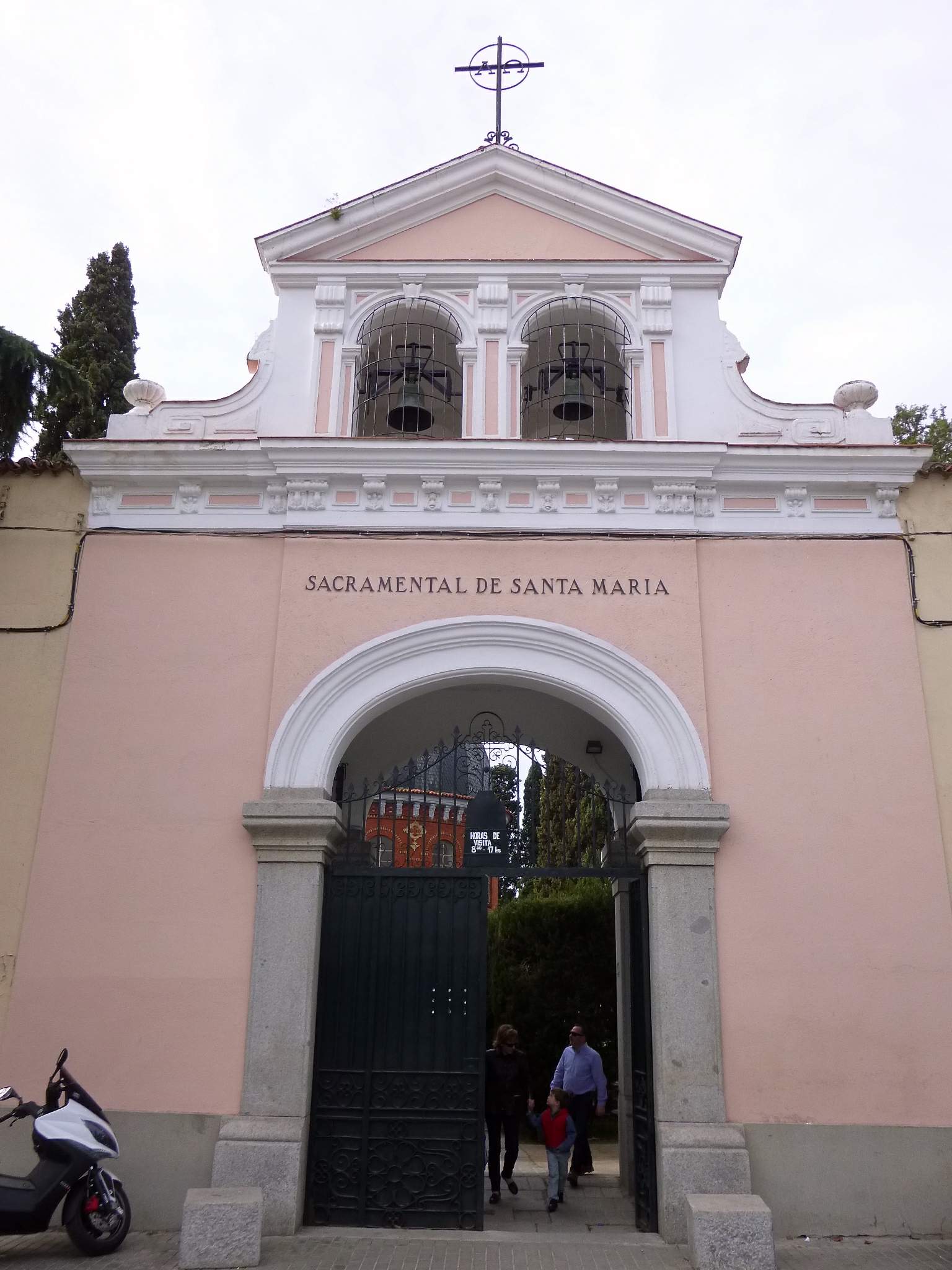
About this place
Sacramental de Santa María cemetery is one of three historic sacramental cemeteries in Madrid's Carabanchel district, set on the San Dámaso hill overlooking the Pradera de San Isidro. It combines more than two centuries of city history with a peaceful atmosphere and architecture typical of nineteenth-century necropolises.
Who founded this cemetery?
The cemetery owes its existence to the archconfraternity of Sacramental de Santa María, founded back in 1580 by the Blessed Bernardino de Obregón, together with the brotherhood attached to the Almudena church. It was these two religious communities that, in the nineteenth century, decided to build a new necropolis on the site of a former hermitage dedicated to Saint Damasus, which had earlier been destroyed by French troops.
When was the cemetery built?
The original neoclassical design was signed in 1839 by architect José Alejandro Álvarez. Construction ran from 1840 to 1848 and covered mainly the San Dámaso courtyard and a provisional chapel. After the architect's death in 1850, financial difficulties forced significant simplifications to the original plans, which is still visible today in the more modest finish of certain sections of the necropolis.
What role did it play for Madrid's residents?
From 1844 onward, the cemetery became the final resting place for the poor who died at Madrid's Hospital General. This followed the elimination of the hospital's own small cemetery by order of Joseph Bonaparte. For decades, Sacramental de Santa María thus served as a necropolis accessible to those who could not afford burial in the city's more prestigious cemeteries.
Who is buried here?
Among those interred are actress Loreto Prado, General Camilo Polavieja, former Madrid mayor José Francos Rodríguez, and writer Enrique Jardiel Poncela, one of the most acclaimed Spanish comic playwrights of the twentieth century. The presence of such varied figures — from military officers and politicians to cultural icons — reflects how the cemetery served different layers of Madrid society for more than a century.
Why is it worth visiting?
Sacramental de Santa María stands out among Madrid's necropolises for its scenic hilltop setting, offering views over the Pradera de San Isidro, green grounds long tied to the city's popular traditions and the feast of its patron saint. Walking among the nineteenth-century tombs and chapels offers a glimpse of old Madrid, away from the bustle of the city center.
Frequently asked questions
Where exactly is the cemetery located? The necropolis sits on the San Dámaso hill in the Carabanchel district, in the southern part of Madrid.
Is it the only sacramental cemetery in the area? No — Sacramental de Santa María is one of three historic sacramental cemeteries clustered in Carabanchel, making this part of the city an important site of remembrance for Madrid families across generations.
Who designed the cemetery? The original neoclassical design was drawn up by architect José Alejandro Álvarez in 1839.
Which notable people are buried here? They include actress Loreto Prado, General Camilo Polavieja, former Madrid mayor José Francos Rodríguez, and writer Enrique Jardiel Poncela.
Nearby places

Earn badges for the places you visit
Download NextOnTrip, discover new places and check off your trails.