- Sacred Monuments
- Religious monuments
Royal abbey of Santa María la Real
About this place
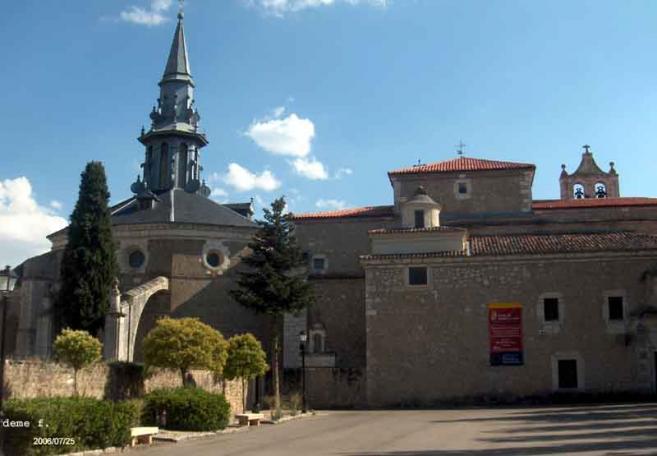
Royal abbey of Santa María la Real is a former Cistercian monastery near Fuente el Olmo de Fuentidueña, in the province of Segovia. The abbey stands at a spot known as Coto de San Bernardo, roughly two kilometres from Sacramenia, amid the gentle hills and open farmland typical of the Castilian plateau.
How do you get there?
The abbey sits in a rural corner of Segovia province, close to the town of Fuentidueña. A car is the practical way to reach it, since public transport in this part of Castile is sparse and the approach roads run through classic agricultural countryside. It's worth building the visit into a broader route through Segovia's Romanesque and Cistercian heritage sites, since several related monuments lie within a couple of hours' drive.
What will you see?
The monastery was founded in 1141 by King Alfonso VII, who brought Cistercian monks over from France — making it one of the order's earliest footholds on the Iberian Peninsula. In 1147 the community was granted the estate of Armedilla in Valladolid province, and its Cistercian standing was formally confirmed in 1179 through a papal bull issued by Alexander III.
The abbey's prosperity didn't last. Decline had already set in by the 13th century, and in the second half of the 15th century the monastery was raided and sacked by Pedro de Luna, lord of Fuentidueña. In 1481 the community was absorbed into the Congregation of Castile in an attempt to stabilize it. A fire in 1674 damaged part of the buildings and forced major repairs. Monastic life continued here until 1835, when Spain's Mendizábal disentailment decrees confiscated monastery properties nationwide.
The most remarkable chapter in the site's history, though, dates to 1925. The owners at the time sold the cloister, chapter house, and monks' refectory to American press magnate and art collector William Randolph Hearst. The stonework was dismantled piece by piece, crated, and shipped across the Atlantic — it now stands rebuilt in Miami, Florida. That makes Sacramenia's abbey and its Miami counterpart two halves of a single architectural story, separated by an ocean.
What remains of the abbey in Segovia was declared a Bien de Interés Cultural (Spain's protected heritage designation) on 3 June 1931, formal recognition of the site's historical value despite the loss of some of its original stonework.
When should you visit?
Spring and early autumn are the best times to visit, when Castile's climate is milder than the summer heat and the surrounding farmland is at its most scenic. Summers can get quite hot, which makes lingering outdoors less comfortable.
Frequently asked questions
Who founded the Santa María la Real monastery? King Alfonso VII founded the abbey in 1141, bringing in Cistercian monks from France.
Why is part of the monastery in Miami? In 1925 the cloister, chapter house, and refectory were sold to William Randolph Hearst, who had them dismantled and shipped to the United States.
Is the monastery still an active religious site? No — monastic life ended in 1835 with Spain's disentailment decrees, when monastery properties passed into state ownership.
Is the site officially protected as a heritage monument? Yes, the remaining structure was listed as a Bien de Interés Cultural on 3 June 1931.
Nearby places

Earn badges for the places you visit
Download NextOnTrip, discover new places and check off your trails.