About this place
Reus Town Hall (Ajuntament de Reus) stands on Plaça del Mercadal, right in the heart of the old town of Reus — the second-largest city in the Tarragona province of Catalonia. It houses the local city council and is a natural stop on any walk through a city best known as the birthplace of Antoni Gaudí.
How to get there?
Plaça del Mercadal sits within the pedestrian-friendly historic centre of Reus, so the easiest way to reach it is on foot — it's a short walk of roughly ten to fifteen minutes from Reus railway station, and about the same from the main bus hub. The city itself has solid rail connections to Barcelona (around an hour away) and Tarragona, and Reus Airport nearby serves mostly charter and low-cost flights. Once in the old town, simply head toward the historic centre — the square, ringed by arcaded buildings, is easy to spot.
What will you see?
The first municipal building on this site went up in the early 15th century, marking the point when Plaça del Mercadal became the city's administrative and commercial hub. The current town hall building has its roots in the 17th century, but its present appearance is the result of extensive remodelling carried out in the 18th and 19th centuries, followed by later renovation work led by architects Antoni Pujades, Joan Mas, and Antoni Sardà i Moltó. The result is a building that blends Baroque elements with touches of Noucentisme — the early 20th-century Catalan architectural movement known for its classical order and monumental facades.
The town hall's facade is richly detailed, befitting its role as the seat of city government, while its interior houses the representative halls where the city council still meets and civic ceremonies take place today.
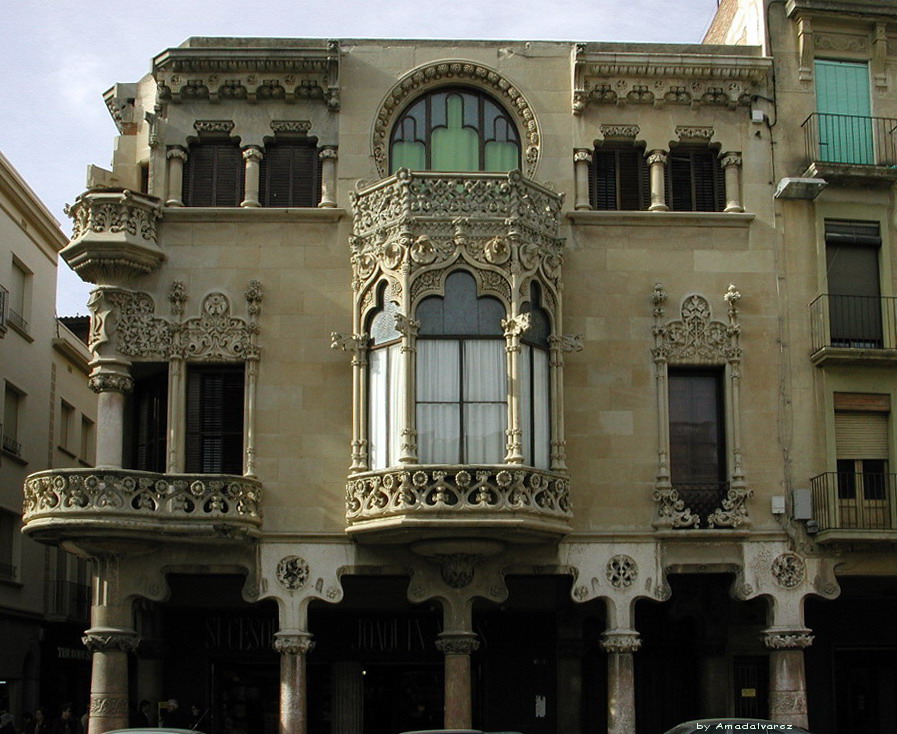
The square itself, Plaça del Mercadal, predates the town hall by centuries — its origins trace back to the 13th century, when Reus's Jewish quarter was laid out and the area began taking shape as the city's central gathering point. Right up until 1948, it hosted the city's produce market, which is why it was once nicknamed "plaça de la verdura" — the vegetable square. The square is lined with arcades of different architectural periods: on the north and south sides, square-based columns with octagonal shafts support the porticoes, while on the west side, Modernista columns topped with floral-motif capitals take over. Just steps away stands Casa Navàs, one of the city's finest examples of Catalan Modernisme, designed by architect Lluís Domènech i Montaner.
When to visit?
Spring and early autumn are the best times to explore Reus, offering milder temperatures than the height of summer and a quieter Plaça del Mercadal than during peak holiday season. It's worth pairing a stop at the town hall with a walk along the city's Modernisme trail, which leads to landmarks including the Gaudí Centre — a museum dedicated to the work of the architect born in Reus.
Frequently asked questions
Where exactly is the Reus town hall located? It stands on Plaça del Mercadal, the main square of the historic city centre, surrounded by period buildings and arcaded porticoes.
How old is the town hall building? The first municipal building on the site dates to the early 15th century, while the current structure has 17th-century origins and was substantially remodelled in the 18th and 19th centuries.
What architectural style is the town hall? It combines Baroque elements with Noucentisme, the early 20th-century Catalan style introduced during later renovation work.
Does Plaça del Mercadal have historical significance beyond the town hall? Yes — the square has served as the city's commercial centre since the Middle Ages and hosted its produce market until 1948, and it also borders Casa Navàs, a landmark of Catalan Modernisme.
Nearby places

Earn badges for the places you visit
Download NextOnTrip, discover new places and check off your trails.