About this place
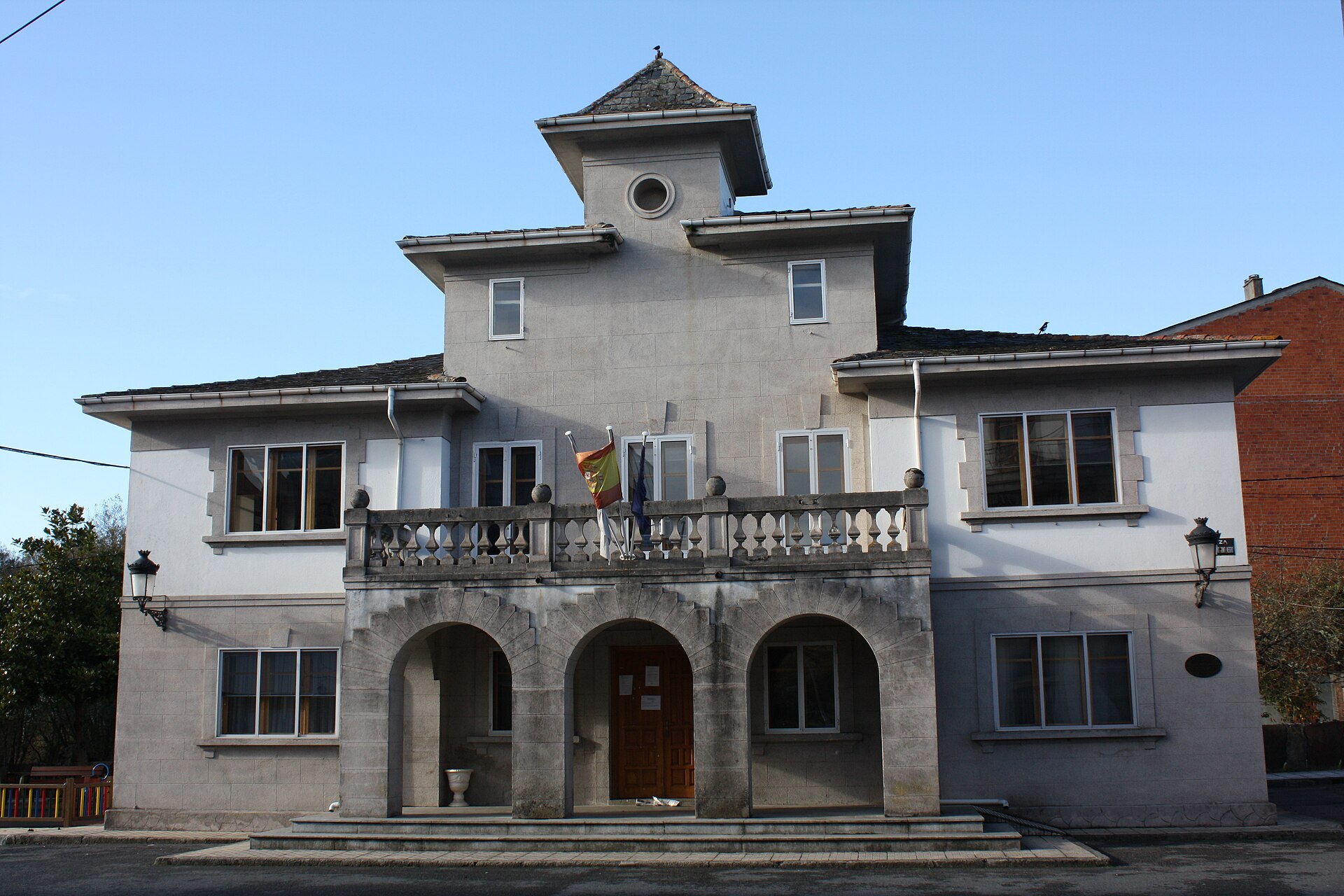
Rábade town hall serves as the seat of local government for Rábade, one of Galicia's smallest municipalities, set along the Miño River in the province of Lugo. The building is the administrative heart of a town whose small size belies a distinct local identity built over the past century.
Why does such a small municipality have its own town hall?
Rábade covers only about 5.16 square kilometers, making it the second-smallest municipality by area in all of Galicia. Despite this, it has governed itself independently since 1925, when it split off from the neighboring municipality of Begonte. The driving force behind that split was Ángel Penas Magdalena, a local figure who became the town's first mayor. The town hall stands as the physical expression of that independence — proof that the community chose to run its own affairs rather than remain administratively tied to a larger neighbor.
How did the town's name and status change over time?
The town's own history traces a path of gradual formal recognition. In 1935, the Spanish government granted the settlement the title of "villa," marking its growing administrative standing. Before that, the town was known as San Vicente de Rábade; it wasn't until 1950 that the name was shortened to simply Rábade. These weren't just paperwork changes — they mirrored the town's rising importance as a trade and light-industry hub within Lugo province, a role that became especially visible through the 1940s and 1950s, in the years following the Spanish Civil War.
What was Rábade's role in the wider region?
Its position on the Miño River and its status as a transport junction, including rail links, helped Rábade grow into a commercial and small-industry center despite its tiny administrative footprint. The municipality also had a hand in broader regional politics: in 1932, its representatives took part in an assembly of Galician town councils that worked on a draft statute of autonomy for the region. From early on, this small town punched above its administrative weight.
What is there to see around the town hall?
The town hall building sits in the center of Rábade and makes a natural starting point for exploring the town — a short walk leads to the banks of the Miño and to the historic core, which has drawn renewed local attention following the centenary of the municipality's founding (2025 marked one hundred years since its creation). Rábade is compact: most points of interest lie within easy walking distance of the administrative center.
Frequently Asked Questions
Since when has Rábade been an independent municipality? Since 1925, when it was administratively separated from Begonte at the initiative of Ángel Penas Magdalena, who became its first mayor.
Was the town always called "Rábade"? No. Until 1950 it was known as San Vicente de Rábade; the shorter, current name was adopted that year.
Is Rábade a large municipality? No — it's the second-smallest municipality in Galicia by area, covering roughly 5.16 square kilometers.
What role did Rábade play in the region by the mid-20th century? It was regarded as the most commercially and industrially active municipality in Lugo province, particularly during the 1940s and 1950s.
Nearby places

Earn badges for the places you visit
Download NextOnTrip, discover new places and check off your trails.