About this place
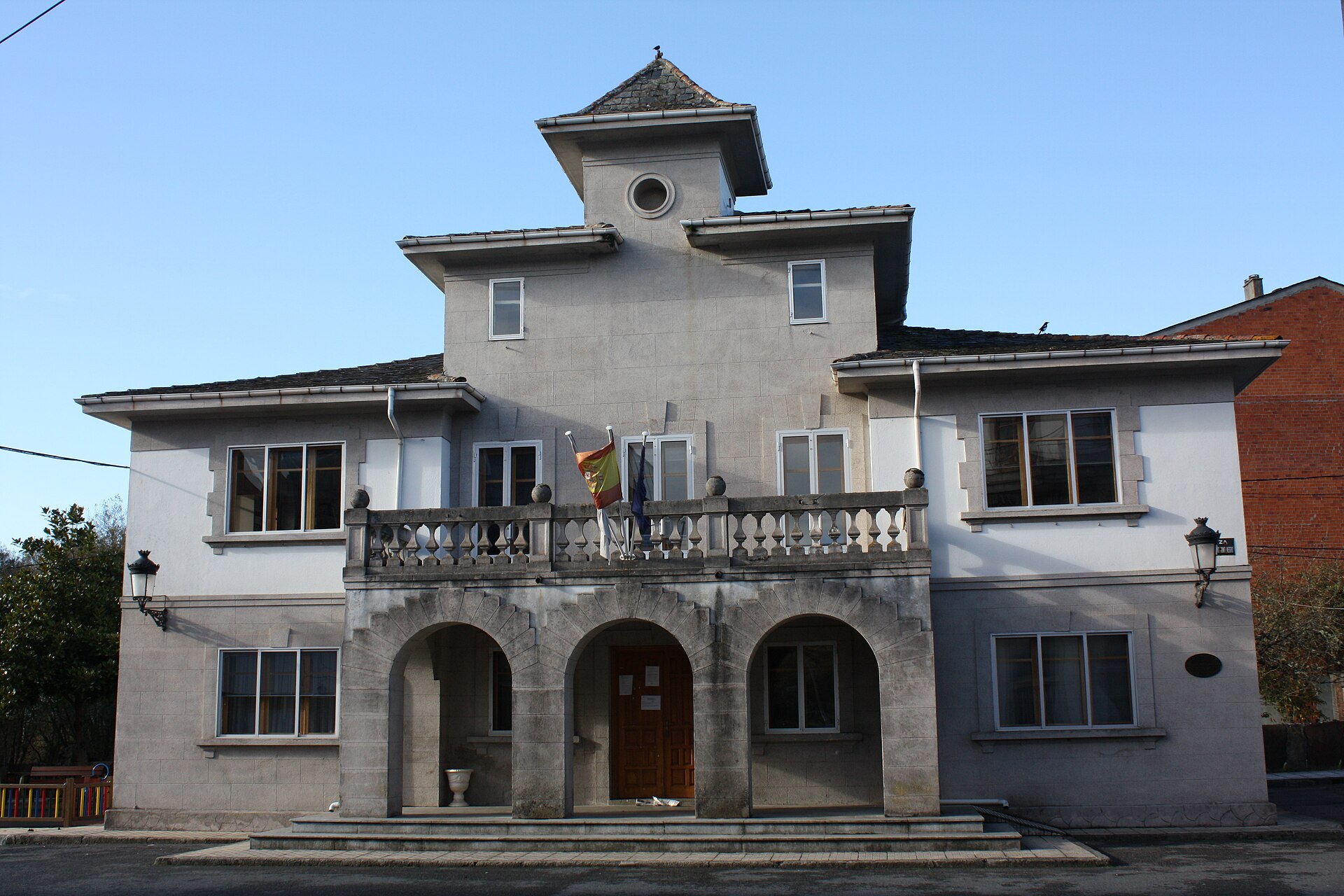
Friol town hall, in the town of Friol, is the seat of local government for this small municipality in the province of Lugo, in Galicia, northwestern Spain. Standing at Plaza de España 4, the building houses the mayor's office, the municipal council and the departments that handle residents' everyday administrative needs.
Where is the town hall and how do you get there?
Friol belongs to the comarca and judicial district of Lugo, sitting inland in central Galicia, well away from the coast. The town hall occupies a central spot in the town's layout, and the square in front of it has long served as a natural gathering point for locals passing through. The easiest way in is by car along the local roads connecting Friol with the city of Lugo, under half an hour's drive away. Its coordinates, 43.0289174, -7.7912003, make it simple to find with GPS.
What does the building itself look like?
Friol's town hall is a straightforward example of Galician civic architecture — a functional building without monumental ambitions, built around its public role rather than any decorative statement. Inside are the mayor's office, the council chamber and service counters where residents handle registration, local taxes and other paperwork. The building is busiest on weekdays, when routine administrative work takes place.
What is the historical background of the area?
The territory that now forms the Friol municipality was already settled in Roman and Visigothic times, with traces of that occupation still scattered around the countryside. In the Middle Ages, the noble houses of Ulloa, Parga and Seixas competed for control of this part of Galicia, and their legacy survives today in the towers and ruined castles found across the municipality. The town hall itself is far more recent than those structures, but it stands on ground that has served as a local center of power and exchange for centuries.
How big is Friol, and what kind of place is it?
According to 2024 INE figures, the municipality has around 3,616 residents, making it a small, largely rural community typical of inland Galicia. Daily life here revolves around farming and local services, and the town hall functions as the natural point of reference for people living in the surrounding parishes and villages.
When is the best time to visit Friol?
Since the town hall is a working administrative building rather than a sightseeing attraction with fixed visiting hours, anyone needing to deal with the office should plan a visit on a weekday. Travelers more interested in the medieval towers of the Ulloa and Parga families nearby will find the warmer months — roughly May to September — the most rewarding time, when the Galician interior is at its greenest and touring the surrounding villages is most comfortable.
What else is worth seeing nearby?
Friol makes a good base for exploring the towers and fortification remains linked to the powerful noble families of medieval Galicia scattered across the municipality. The square by the town hall, though modest in size, is a convenient stop for anyone passing through the region's interior, particularly on routes between Lugo and other towns in the comarca.
Frequently asked questions
Can you visit Friol town hall as a tourist attraction? No — it is an active administrative building, the seat of the municipal government, not a museum. Access is mainly for residents dealing with official business.
How far is Friol from Lugo? Friol lies within the Lugo comarca, and driving to the center of Lugo usually takes under 30 minutes on local roads.
Are there other historic sites near the town hall? Yes, the Friol municipality preserves towers and ruins connected to the medieval Ulloa, Parga and Seixas noble families, who once controlled this territory.
How large is the municipality of Friol? According to 2024 INE data, Friol has around 3,616 inhabitants, making it a small, rural municipality in inland Galicia.
Nearby places

Earn badges for the places you visit
Download NextOnTrip, discover new places and check off your trails.