About this place
Puy de Chanturgue is a volcanic hill and plateau rising just above Clermont-Ferrand, one of the most distinctive landmarks in the city's skyline. Together with the neighboring Puy de Var, it forms the protected area known as the Côtes de Clermont-Chanturgue, classified as an Espace Naturel Sensible (Sensitive Natural Area) for its rich plant and animal life. Locals call it the "green lung of the city" — in spring the meadows across the plateau turn into a natural sanctuary for wild orchids.
What is there to see?
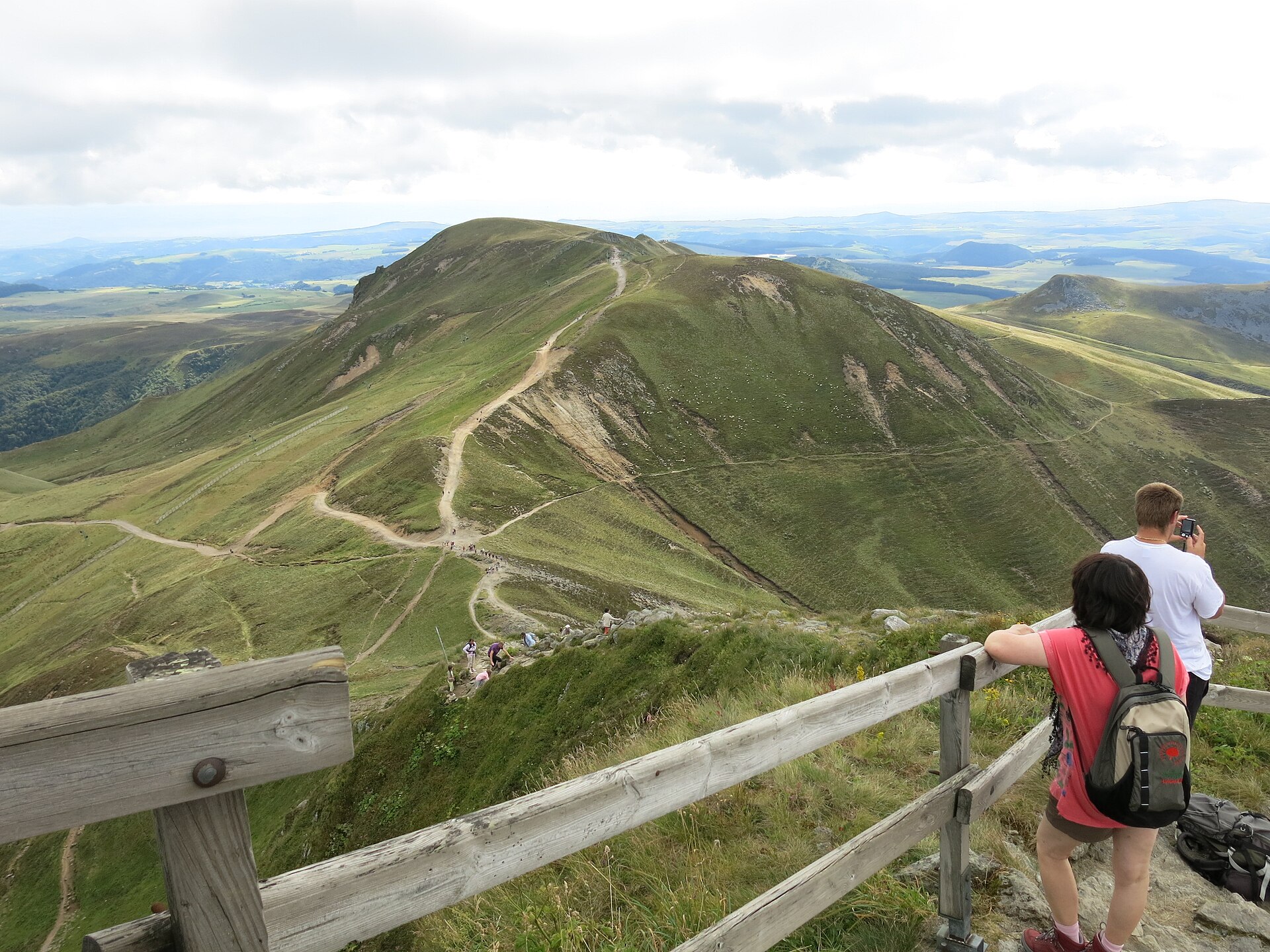
From the summit, the view stretches over Clermont-Ferrand and the entire Chaîne des Puys, the UNESCO-listed chain of volcanoes that defines the Auvergne landscape. It is the kind of viewpoint that instantly clarifies the region's geography: the city sitting in the valley, with a rolling line of extinct volcanic cones behind it.
The plateau also carries a long history of settlement. Archaeological digs conducted since the 1950s have uncovered the remains of a Gallic oppidum (a fortified hilltop settlement), a Gallo-Roman temple, and a villa — evidence that the hill served strategic and religious purposes long before the modern city grew around it.
The land still bears the marks of past agriculture. Through the 19th century, the surrounding slopes were widely planted with vineyards, and traces of old terraces and dry stone walls remain visible among the grasses and scrub, hints of the area's former character.
How do you get there and what can you do?
Puy de Chanturgue sits right on the edge of Clermont-Ferrand, making it an easy half-day outing without needing a full day trip by car. The trails are clearly marked and suit walkers of varying fitness levels.
The shortest, moderate route covers about 1.1 miles with roughly 500 feet of elevation gain and takes half an hour to an hour. For those after a longer walk, a loop of about 13.3 kilometers takes around four hours and crosses varied terrain — wooded paths, open meadows, and stretches of former vineyard land. The plateau is also suitable for mountain biking.
When is the best time to visit?
Spring is when the meadows fill with wild orchids, making it the standout season for nature lovers. In summer the grasses dry out, and views toward the Chaîne des Puys are often clearest in the morning or late afternoon light. Autumn and winter bring quieter trails, and the lower angle of the sun gives the panorama over the city a different character.
Because the site is a protected natural area, it is best to stick to the marked paths — this preserves the delicate balance of habitats that draw botanists and casual walkers alike.
Frequently asked questions
Is Puy de Chanturgue an active volcano? No — it is an extinct volcanic cone, now a fully safe viewpoint plateau that forms part of the wider Chaîne des Puys.
How long does a visit take? A short walk up to the summit and back takes about an hour. Visitors wanting to explore the whole Côtes de Clermont area should set aside half a day for the longer loop (around 13 km).
Can you get there without a car? Yes — the site's proximity to Clermont-Ferrand means public transport plus a short walk is a practical option.
What is the most significant historical feature here? The remains of a Gallic oppidum, a Gallo-Roman temple, and a villa, uncovered through excavations since the 1950s, along with a 19th-century tradition of vineyard cultivation on the surrounding slopes.
Nearby places

Earn badges for the places you visit
Download NextOnTrip, discover new places and check off your trails.