About this place
Prieuré Saint-Clément de Craon is a former Benedictine priory standing on Place Saint-Clément, just west of the historic centre of Craon in the Mayenne department of France. No longer used for worship, it survives today as a cluster of medieval buildings and archaeological remains that trace the town's religious past back more than a thousand years.
Where is the priory and how do you reach it?
The former monastic complex sits a short walk from Craon's old town, on a quiet square that gives the site its name. Its approximate coordinates are 47.8453 N, 0.9615 W, making it an easy addition to a visit that also takes in Craon's castle and town centre. Because the priory borders a small public square rather than open countryside, it can be reached comfortably on foot from anywhere in central Craon.
How did the priory come into being?
A church on this site is first recorded as early as 846, when it served as an ordinary parish church staffed by secular clergy rather than monks. The priory itself was established roughly a century and a half later: around 1010, Suhard the Elder, lord of Craon, granted the church to the Abbey of Saint-Aubin in Angers, which used the gift to found a Benedictine priory. In 1053, Geoffrey Martel, count of Anjou, transferred the priory's dependency to the Abbey of the Holy Trinity of Vendôme, and it remained under Vendôme's authority for centuries afterward.
Why did the priory clash with the lords of Craon?
Being answerable to a distant abbey rather than the local seigneur created friction. In the 11th century a dispute broke out between the priory and Maurice I of Craon, the town's lord, who pressed the monks for feudal dues he considered his due. Abbot Geoffrey of Vendôme, despite being related to Maurice, backed the priory's independence, and the conflict escalated until Maurice was excommunicated by Renaud of Martigné, bishop of Angers. The episode illustrates how much weight a priory's institutional independence carried amid the feudal rivalries of the period.
What happened to the community in later centuries?
Monastic life continued at Saint-Clément through the late Middle Ages and into the early modern period. In 1623 the community joined the Congregation of Saint-Maur, the reform movement that renewed Benedictine discipline across France at the time. The priory survived until the French Revolution, when it was suppressed in 1791 along with religious houses nationwide.
What remains to see today?
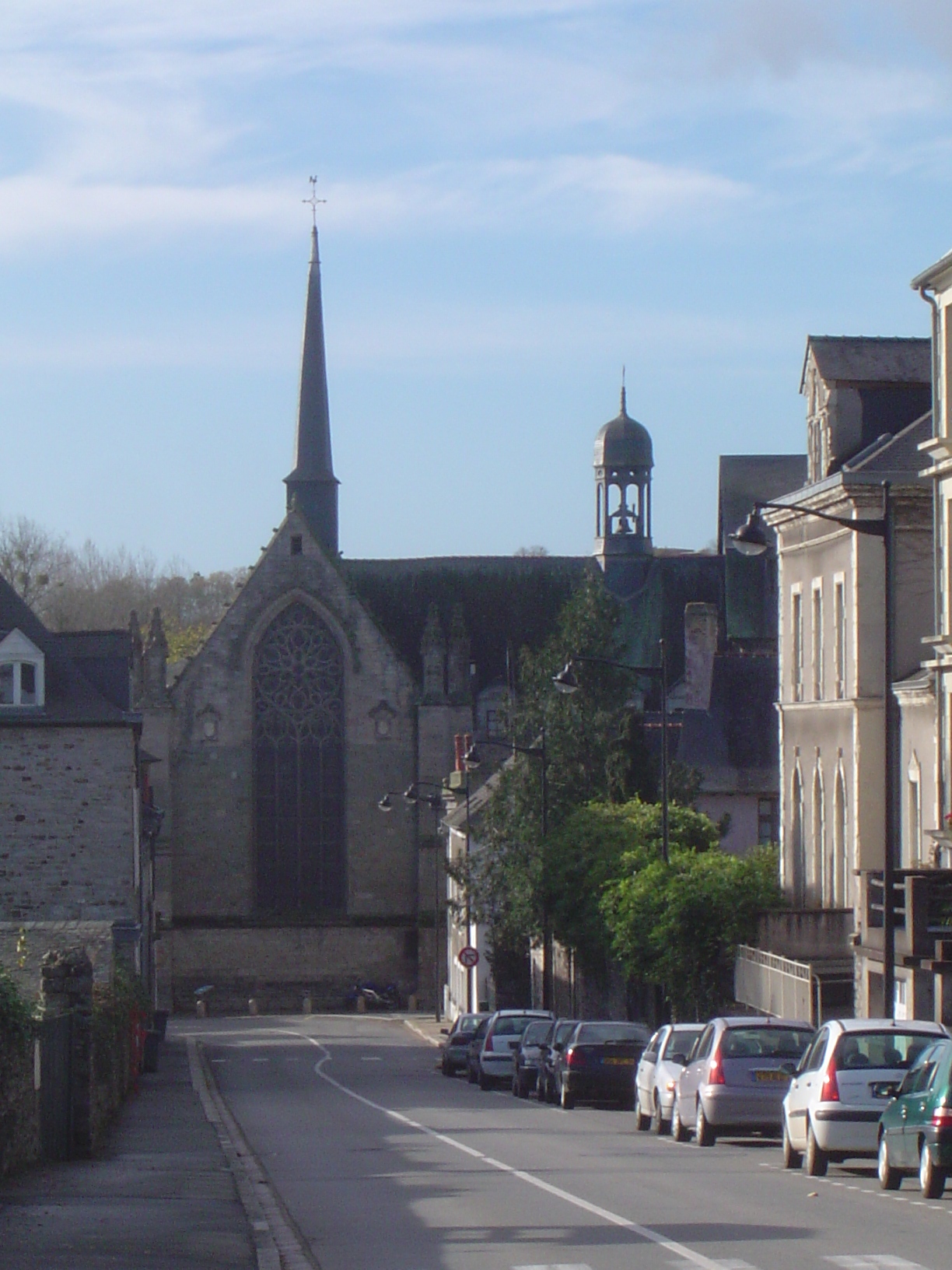
Despite the closure and more than two centuries of change, several elements of the original complex still stand: the Logis du Portail (the former gatehouse building), medieval cellars, and remnants of the Notre-Dame-la-Grande chapel. An archaeological zone also preserves traces of the former priory church, its cloister, and its chapter house. Excavations turned up an unexpected detail — a Roman inscription built into the wall of the old church, suggesting the site was occupied long before the Christian community arrived. Since 13 February 1989, the whole ensemble has been protected as a French historic monument. Today the former priory buildings house a local cultural centre.
Frequently asked questions
Can visitors enter the priory grounds? The exterior and grounds are accessible, and the surviving buildings now host a cultural centre with events open to the public.
How old is the site? A church is documented here from 846, and the Benedictine priory itself dates to around 1010, giving the site well over a thousand years of recorded history.
Why did the priory close? The monastic community was dissolved in 1791, when religious institutions across France were suppressed following the Revolution.
What are the main things to see? The Logis du Portail, the medieval cellars, the remains of the Notre-Dame-la-Grande chapel, and the archaeological site of the former church and cloister are the priory's principal surviving features.
Nearby places

Earn badges for the places you visit
Download NextOnTrip, discover new places and check off your trails.