About this place
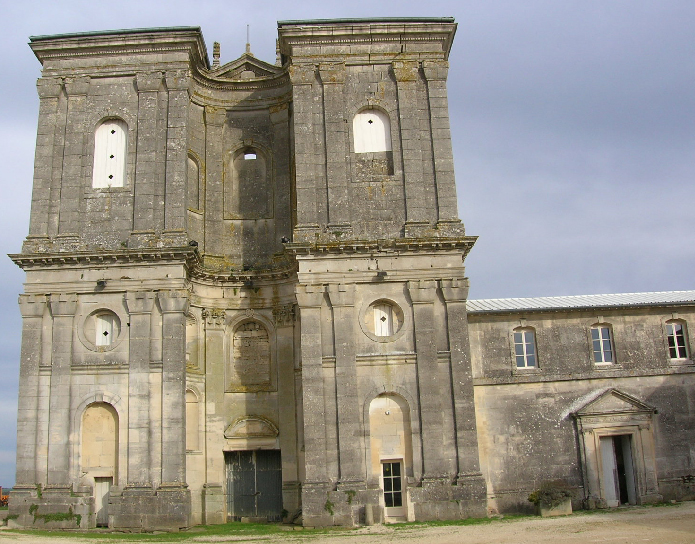
Prieuré de Breuil is a former Benedictine priory standing just outside the old ramparts of Commercy, in the Meuse department of northeastern France. Behind its solid 18th-century stone facade lies a much older story, one that begins with a community of nuns settling on the site as early as the 10th century.
Where does the priory come from?
Religious life on this spot goes back to the 10th century, when a women's monastery was established here. Everything changed at the end of the 11th century, when the lord of Commercy handed the property over to the abbot of Molesme, in Burgundy. The abbot responded by sending Benedictine monks to Commercy, who took over the site and founded a priory here — a monastic house dependent on a larger mother abbey rather than an independent one.
Why did the building suffer so much damage?
Because the priory stood outside the town walls, it had no protection when Commercy came under attack, and it paid the price during the sieges of 1553 and 1653, both of which left the buildings badly damaged. To avoid the kind of dissolution that struck many weakened monastic houses of the period, the community joined the reforming Congregation of Saint-Vanne and Saint-Hydulphe in 1621, a move that secured its survival.
What changed after Cardinal de Retz arrived?
The priory's fortunes turned decisively in 1662, the year Cardinal de Retz took up residence in Commercy. The monks became his secretaries, assisting him in writing his celebrated Mémoires. Around the same time, the house also served as a scholasticate — a training college — for the congregation's Lorraine province, drawing young monks from across the region and giving Commercy's priory an influence well beyond the town itself.
When were the current buildings constructed?
Despite this growing prestige, shaky finances delayed any major rebuilding for decades. Only once the community's accounts had recovered did work finally get authorized in 1712. Construction ran from 1714 to 1754 and gave the priory the stone buildings still standing today, and a garden was laid out on the grounds after 1722. On the north facade, a grand vestibule leads to an imposing staircase that in turn opens onto a terrace overlooking the gardens — one of the site's most distinctive architectural features.
What happened to the priory after the French Revolution?
During the 18th century, the priory doubled as a school for the boys of Commercy, taught by the resident monks. Monastic life ended abruptly with the Revolution, and the priory was closed in 1790. The departmental General Council then purchased the buildings to house the sub-prefecture and a gendarmerie brigade. Once those services moved on, a teacher training college settled into the former priory in 1853 and remained there until 1963, when it relocated to Bar-le-Duc, the administrative seat of the Meuse department.
Frequently asked questions
What exactly is a priory? A priory is a monastic house governed by and dependent on a larger mother abbey — in this case, the abbey of Molesme — rather than an independent, self-governing monastery.
Can visitors go inside Prieuré de Breuil today? The building is a listed historic monument and is occasionally opened to the public through guided heritage tours organized around the Meuse region, though it does not operate as a regular museum.
Why did the building change use so many times? Once monastic life ended during the Revolution, the priory's large, solidly built rooms proved well suited to administrative and educational purposes, which is why it successively housed a sub-prefecture, a gendarmerie brigade, and a teacher training college.
Where exactly is Prieuré de Breuil located? It sits on the edge of Commercy, close to the town's historic center, in the Meuse department of the Grand Est region of France.
Nearby places

Earn badges for the places you visit
Download NextOnTrip, discover new places and check off your trails.