About this place
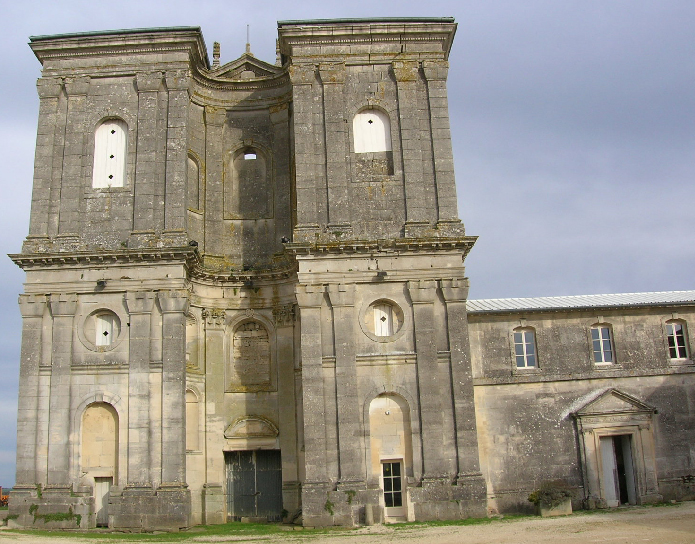
Couvent des Minimes in Saint-Mihiel is a former monastic complex that began life as a medieval Benedictine priory before spending roughly two centuries in the hands of the Minim friars. Surviving fragments of the buildings and the old cloister are listed as a historic monument in France, making the site a quiet but rewarding stop for anyone exploring the heritage of the Meuse valley.
How did the site begin?
The ground on which the convent later stood was already occupied in the first half of the 12th century. Sometime between 1122 and 1135, a Benedictine priory dedicated to Saint Thiébaut was founded just outside the town walls, in what became the Saint-Thiébaut district of Saint-Mihiel. For centuries it operated as a small dependent house under the wider Benedictine network, rather than as an independent abbey.
Why did the Minim friars take over?
The turning point came at the very end of the 16th century. In 1598, Pope Clement VIII granted the priory in commendam to the Minim friars of the Champagne province. The friars moved in before the year was out and, over the following years — spanning the turn of the 16th and 17th centuries — partly rebuilt the existing structures to suit their own community's needs. Even after the change of order, the complex kept the older name of Saint-Thiébaut for a long time.
What did the convent look like before the Revolution?
A survey drawn up in 1791, just before the religious orders were suppressed, gives a clear picture of the layout. Four wings enclosed a central courtyard with a vaulted, covered cloister walk. The complex also included a church with a bell tower, outbuildings, a stable, a fish pond, a fountain, and a garden — a fairly typical, self-sufficient arrangement for a convent of this size.
What happened to the buildings after the Revolution?
The suppression of religious communities during the French Revolution sealed the convent's fate. In 1793 the buildings were sold to Jean Bizard, a resident of Saint-Mihiel, who converted the site to agricultural use. The new owner tore down the south and east wings along with the adjoining cloister galleries, reworked the interior of the west wing, demolished both side aisles of the church, and turned what remained of the church nave into a barn. The original, enclosed monastic plan was permanently broken up as a result.
What survives today, and how is it protected?
Despite the 19th-century alterations, part of the complex survived and has been listed as a historic monument (monument historique) since 27 February 1989. Protection covers the north building — including the former south wall of the 12th-century church nave and the north cloister gallery — as well as the west building, known as the "des Religieux" building, together with its west cloister gallery. The area of the former cloister and the site of the demolished church are also protected. The complex stands on Avenue du Bois d'Ailly in Saint-Mihiel, in the Meuse department.
Frequently asked questions
Where exactly is the Couvent des Minimes? It is located in Saint-Mihiel, on Avenue du Bois d'Ailly, in the Meuse department of northeastern France.
Is this the same building as the Benedictine abbey in Saint-Mihiel? No. The Couvent des Minimes is a separate complex — a former Benedictine priory that passed to the Minim friars in 1598. It should not be confused with the town's main Benedictine abbey, known as Saint Mihiel Abbey.
How old is the complex? The oldest surviving elements, including part of the church nave wall, date back to the 12th century, making them close to nine hundred years old.
Can visitors go inside? Parts of the site are in private hands, but the protected cloister and buildings are sometimes opened to the public during local heritage events, such as Heritage Days.
Why did the convent change use after the Revolution? Like many religious communities across France, the Minim friars' house was dissolved during the Revolution, and the buildings were sold off as national property to a new, private owner.
Nearby places

Earn badges for the places you visit
Download NextOnTrip, discover new places and check off your trails.