About this place
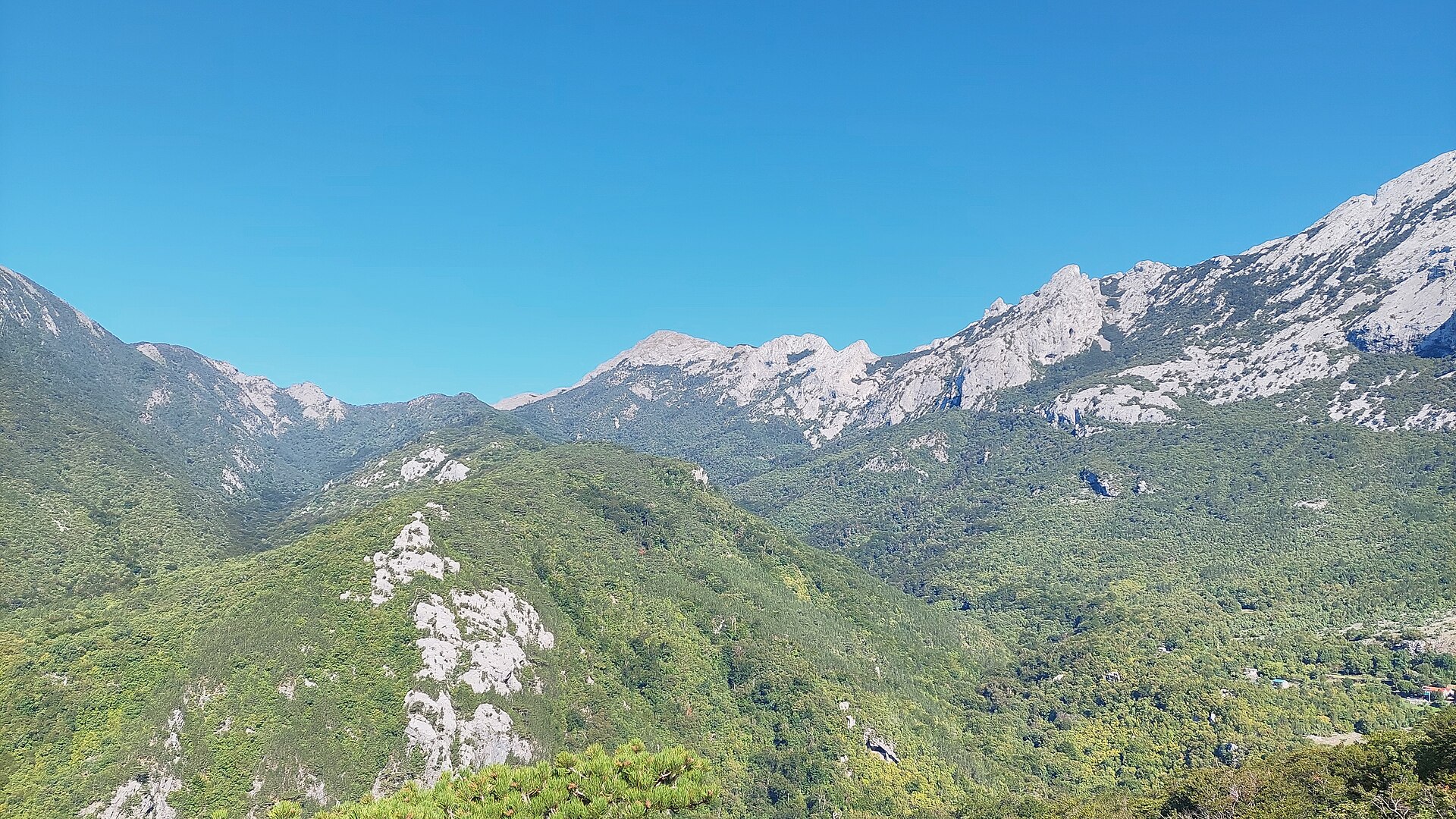
Počiteljski vrh is a mountain peak above the village of Počitelj in Croatia's Lika region, rising over the same near-deserted settlement at the foot of Velebit. It suits travelers looking for a quieter corner of Nature Park Velebit, away from the crowds that gather at the range's better-known viewpoints.
Where is Počiteljski vrh?
The summit stands at 1,546 m above sea level, in Lika-Senj County, on the southern stretch of Velebit — Croatia's longest mountain range and part of the Dinaric Alps. It sits on the Lika (eastern) side of the ridge, close to neighbors such as Smiljanića vrh (1,548 m, only a few hundred meters away) and the taller Badanj (1,639 m), roughly five kilometers to the east-southeast. With a prominence of 102 m, Počiteljski vrh belongs to a cluster of lower-key summits in this part of the massif — unassuming from a distance, but rewarding for hikers who value views and solitude over crowded trails.
At the base of the mountain lies the village of Počitelj, part of the Gospić municipality. The place has a long history: in the Middle Ages, a fortress stood on a hill above what is now the hamlet of Vuksani, once serving as the central stronghold of the entire Lika county. Today Počitelj is one of the least populated settlements in the region, home to only a handful of residents, but it remains notable for its karst springs — Bungrovac, Suvaja, Krivajica, and several others that have supplied local farms with water for centuries.
How do you get to Počiteljski vrh?
Hikes usually start from the village of Počitelj itself or from nearby hamlets on the edge of Ličko Polje, where trails lead up into Nature Park Velebit. Carrying a current hiking map of the range is worthwhile — some of the old paths in this area, including the historic Počiteljski put that once connected Lika's inhabitants with Rujno and Starigrad on the Dalmatian side of the mountains, are no longer marked and are not suitable for independent navigation today. It's safer to stick to currently maintained mountaineering routes through the nearby passes and surrounding peaks.
What will you see along the way?
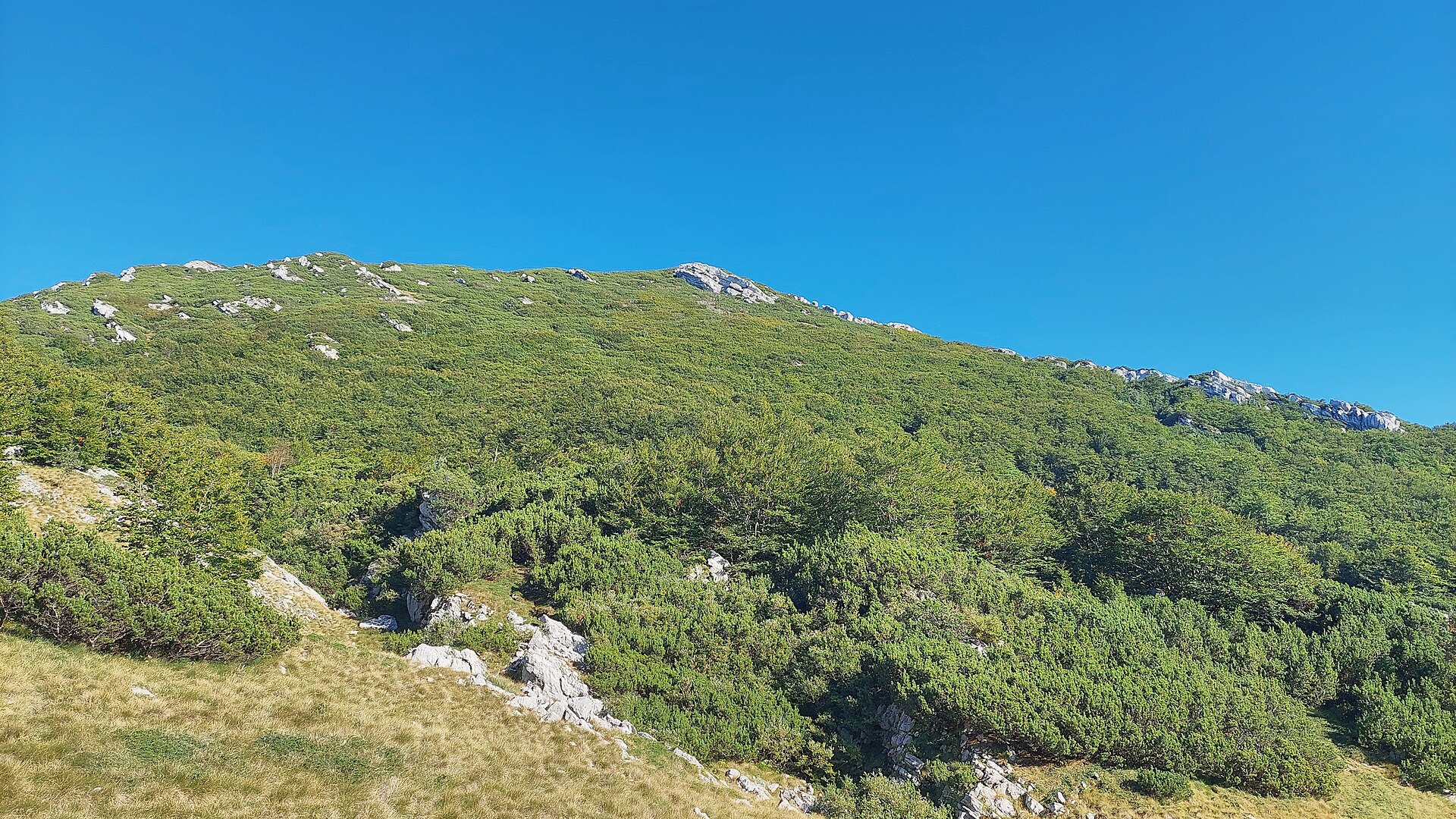
The terrain is typical of southern Velebit: rocky ridgelines, stony highland pasture, patches of mountain vegetation, and views that shift with every kilometer — one moment looking inland toward Lika and Ličko Polje, the next toward the Adriatic coast. Its proximity to taller summits like Badanj and Smiljanića vrh makes it easy to combine into a longer ridge hike for those with mountain experience. The area itself stays lightly visited, which for many hikers is its biggest draw — crowds and crowded campsites are rare here.
When is the best time to visit?
Late spring through summer and early autumn is the best window for hiking this part of Velebit, when trails are clear and mountain temperatures are moderate. In winter and early spring, snow lingers on the higher sections and weather can turn quickly, so trips during that period call for proper gear and mountain experience.
Frequently asked questions
Is Počiteljski vrh the same as the historic town of Počitelj in Bosnia and Herzegovina? No. They are entirely different places — this is a mountain peak in Croatia's Lika region, named after the small nearby village of Počitelj in the Gospić municipality, unrelated to the historic riverside town on the Neretva.
How high is Počiteljski vrh? The peak reaches 1,546 m above sea level, with a prominence of 102 m relative to the surrounding terrain.
Is the route suitable for beginners? Southern Velebit terrain can be demanding — rocky ground, little shade, and poorly marked stretches call for good fitness, a map, and some prior mountain hiking experience.
Are there other things to see nearby besides the summit itself? Yes — at the foot of the mountain lies the village of Počitelj, known for its historic karst springs and the remains of an old Lika stronghold near the hamlet of Vuksani.
Nearby places

Earn badges for the places you visit
Download NextOnTrip, discover new places and check off your trails.