About this place
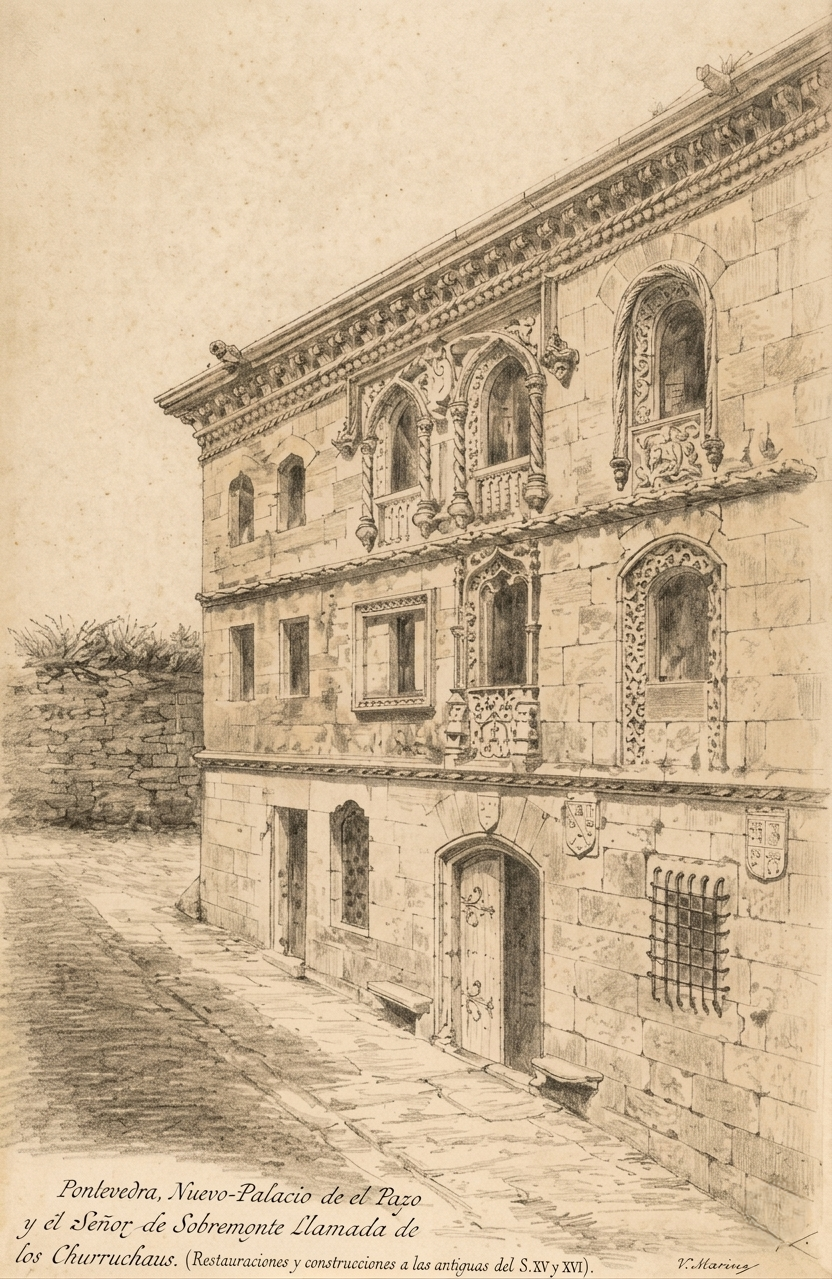
Pazo of the Maceda Counts is a Renaissance-era manor house in the center of Pontevedra, also known locally as Casa del Barón, now operating as a hotel.
What kind of building is this, and where does its name come from?
The pazo dates back to the 16th century and stands on the site of an earlier Roman villa, pointing to centuries of continuous use at this spot in the heart of Pontevedra. Its name comes from the Counts of Maceda, the noble family who owned the property for generations and shaped it into the imposing residence still visible today. Locally the building is also called Casa del Barón, and its address on the street of the same name, just steps from the medieval Burgo bridge, still reflects its aristocratic origins.
How did the building change over the centuries?
The most significant transformation came in the 18th century, when the IV Count of Maceda commissioned architect Pedro de Monteagudo to remodel the residence, giving it the Renaissance-Baroque appearance that defines its facade and interior layout to this day. After the count's death, however, the house lost its principal patron and fell into decline throughout the 19th century. During that period it served a striking range of purposes: a salt storehouse, the headquarters of the local fire brigade, a meeting place for a Masonic lodge, and, from 1880 onward, a school for children from poor families, funded by the Pontevedra town council.
When did the palace become a hotel?
The turning point came on January 15, 1955, when the building reopened as the Parador de Pontevedra, the first Parador hotel in all of Galicia. That conversion rescued the structure from further deterioration and gave it a new purpose: a place where historic architecture meets the comfort of a four-star hotel. Since then, the pazo has remained one of Pontevedra's landmark buildings and a clear example of how a historic residence can be preserved through adaptive reuse for tourism.
What should visitors look out for in and around the building?
The main draw is the architecture itself — the stone facade, the interior courtyard, and details that reflect Galicia's Renaissance and Baroque building traditions. The pazo sits right in the historic center of Pontevedra, within easy reach of the old town's main squares and of the medieval Burgo bridge, which for centuries served as the principal crossing point over the Lérez river. A walk through the surrounding streets gives a good sense of a city that grew for centuries around noble residences much like this one.
Who is this destination best suited for?
Pazo of the Maceda Counts is a natural choice for travelers who want to pair sightseeing in Pontevedra with a stay in a building carrying centuries of history. Its central location makes it a convenient base for exploring the old town on foot, and the building's architecture is worth a look even for visitors who are simply passing through rather than staying overnight.
Frequently Asked Questions
What sets Pazo of the Maceda Counts apart from other Galician pazos? Its history stretching back to a Roman villa, the 18th-century remodeling by architect Pedro de Monteagudo, and its rare conversion into a hotel run by Spain's state Paradores network all make it stand out.
Was the building always an aristocratic residence? No — during the 19th century, after its main owners were gone, it served very different roles, including a salt storehouse, a fire station, a Masonic lodge, and a school for children from poor families.
Since when has it operated as a hotel? It has operated as a hotel since January 15, 1955, when it opened as the first Parador in Galicia.
Are there other attractions nearby? Yes — the building stands right next to the medieval Burgo bridge and within Pontevedra's historic center, making it easy to continue sightseeing on foot.
Nearby places

Earn badges for the places you visit
Download NextOnTrip, discover new places and check off your trails.