About this place
Palacio Nuevo is a Renaissance palace building in Oropesa, a small town in the province of Toledo in Spain's Castilla-La Mancha region. It forms part of a larger fortified-and-residential complex that combines two castles and two palace buildings raised over several centuries.
How do you get there?
Oropesa sits on the main route linking Madrid with Extremadura, roughly 150 km west of the Spanish capital. Driving is the most practical option — the town lies close to the A-5 motorway, with a short exit road leading into the centre. The nearest major rail and air hubs are Talavera de la Reina and Madrid, from where long-distance coaches heading toward Extremadura stop in Oropesa.
What will you see?
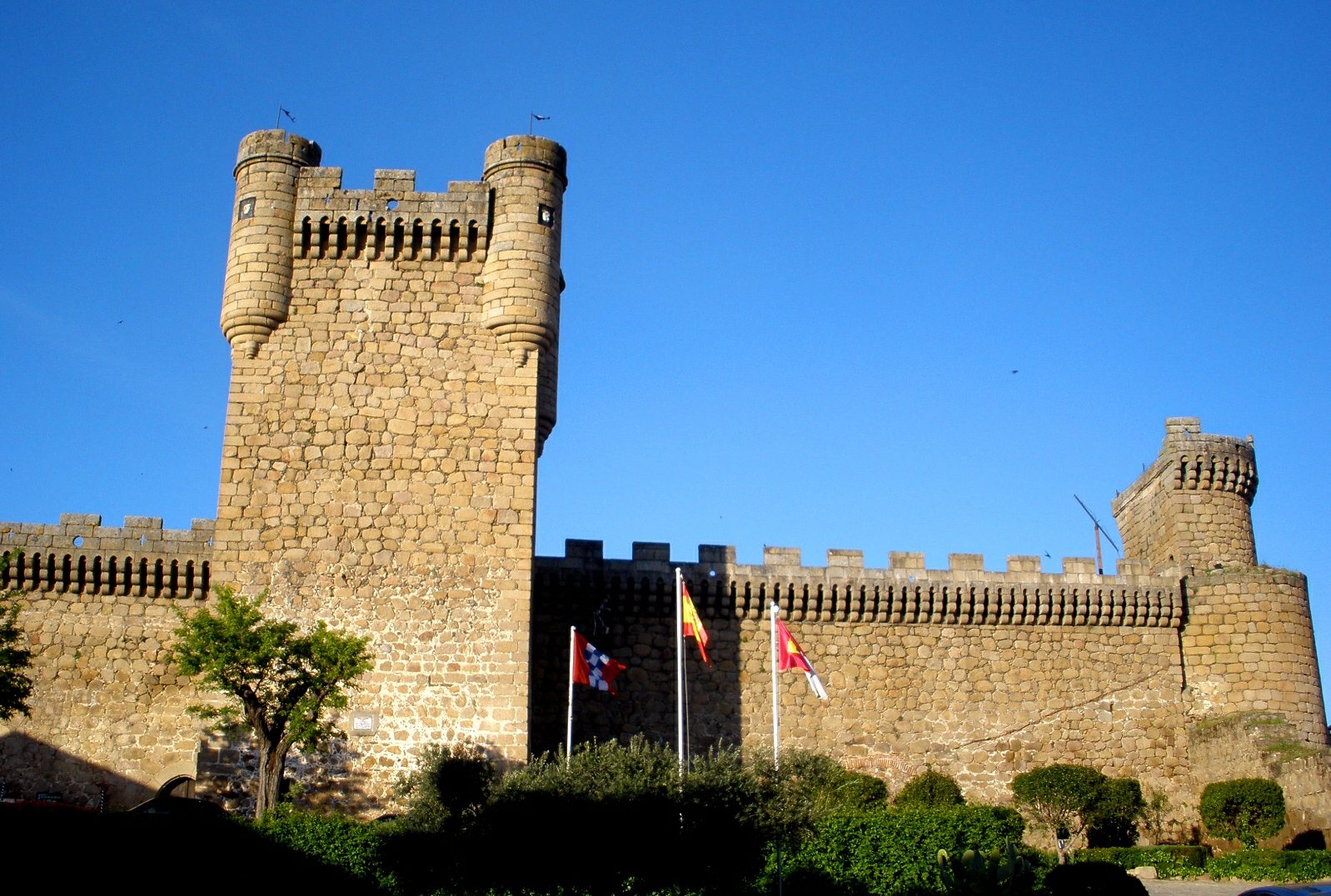
Palacio Nuevo was built in the 16th century as an addition to the older medieval fortress known as the castle of the Álvarez de Toledo family, construction of which began in 1402. The new palace was given a distinctly Renaissance character — its design is traditionally attributed to Juan de Herrera, the architect closely tied to the court of Philip II and the designer of the El Escorial monastery.
The façade is arranged over several storeys, with symmetrically placed balconies and window openings framed in cut stone. The walls combine stone masonry with brick, giving the elevation a distinctive texture. At one corner stands the so-called Peinador de la Duquesa, an octagonal structure built in dressed ashlar stonework and one of the most recognisable features of the whole complex.
Together with the older Palacio Viejo, also known as the Palacio de Doña Elvira, Palacio Nuevo forms a single palatial ensemble. Combined with the two defensive towers, the site layers centuries of architecture on top of one another — from medieval fortification to Renaissance residence.
From 1475 the Oropesa complex served as the seat of power for the County of Oropesa, home to the family that controlled the surrounding lands. In 1930 Palacio Nuevo was converted into a Parador — one of Spain's state-run hotels housed in historic buildings, and one of the earliest of its kind in the whole Paradores network. After a period during which the building fell out of use, it underwent a thorough restoration in 1966 and reopened as a Parador, a role it still holds today.
When is the best time to visit?
The Toledo region has a continental climate with hot summers and cold winters, so spring (April–June) or early autumn (September–October) offer the most comfortable conditions for sightseeing, with milder temperatures and the surrounding Extremadura and Castilian countryside at its best. In summer, mornings are the better time to explore, avoiding the midday heat.
Frequently asked questions
Can you visit the inside of Palacio Nuevo? The building now functions as a Parador hotel, so interior access is mainly limited to guests staying overnight or dining there, while the façades and the surrounding castle-and-palace grounds can be viewed freely.
What's the difference between Palacio Nuevo and Palacio Viejo? Palacio Viejo, also called the Palacio de Doña Elvira, is the older part of the complex, while Palacio Nuevo was built later, in the 16th century, in a distinctly different Renaissance style.
Who designed Palacio Nuevo? The design is traditionally credited to Juan de Herrera, the architect linked to the court of Philip II and the creator of the El Escorial monastery, though this attribution rests on historical tradition rather than firmly documented records.
What is the Peinador de la Duquesa? It's an octagonal turret built in dressed stone, positioned at one corner of the palace — one of the most distinctive architectural features of the Oropesa complex.
Nearby places

Earn badges for the places you visit
Download NextOnTrip, discover new places and check off your trails.