About this place
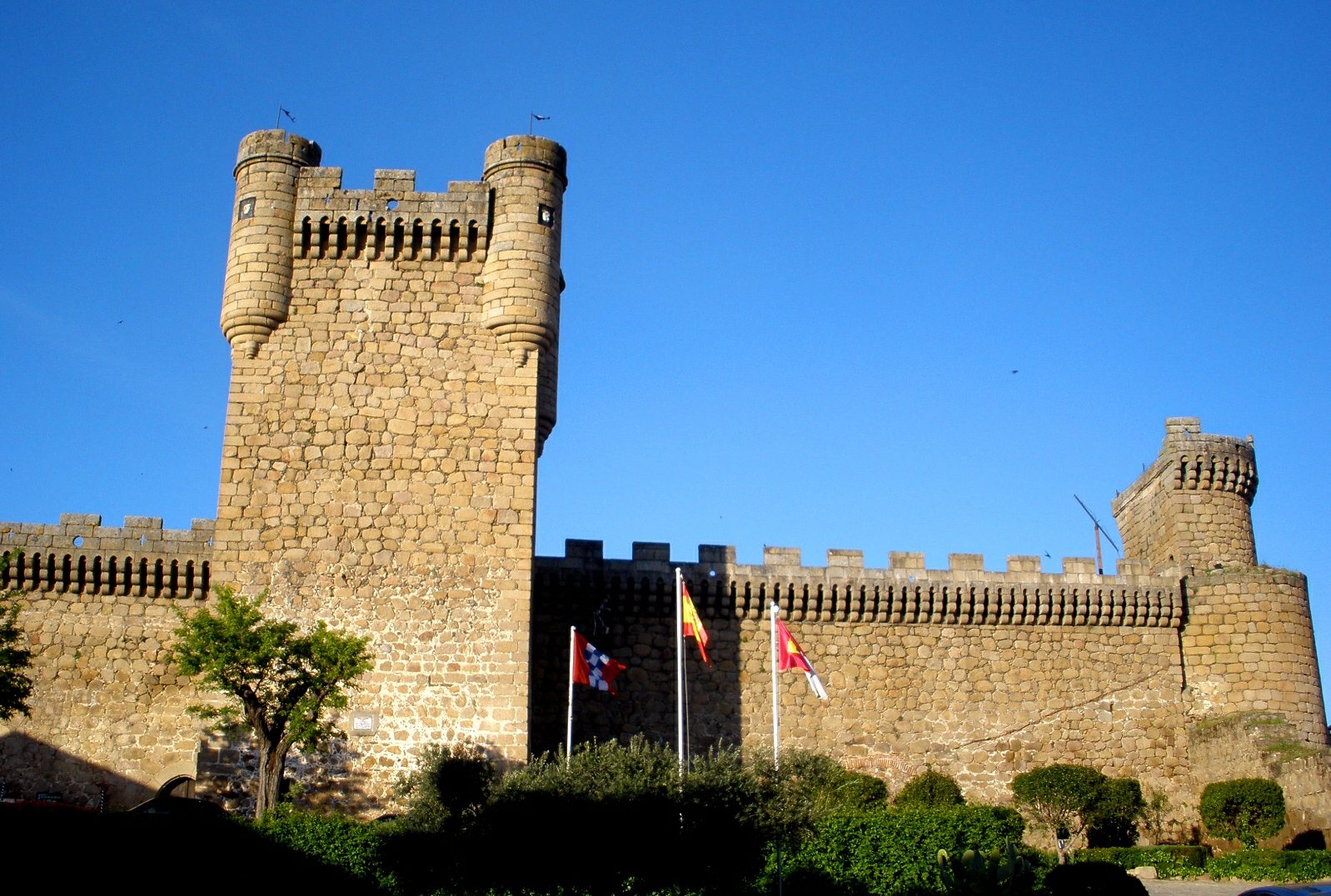
Oropesa Castle stands above the small town of Oropesa in the province of Toledo, in the Castilla-La Mancha region of central Spain. Built on a hilltop where a Roman watchpost once stood, its location alone explains why this spot was chosen for defense centuries before the current structure went up.
How do you get there?
Oropesa sits along the main route connecting Madrid with Extremadura, roughly 150 km west of the Spanish capital. Driving is by far the easiest option — the castle occupies the highest point of the town and is visible from the approach road well before you arrive. There's parking just below the walls, followed by a short but steep climb on foot to reach the entrance.
What will you see?
The complex is actually two connected buildings, and the difference between them is easy to spot with the naked eye. The older section, the Castillo Viejo, was raised by Muslim builders in the 12th and 13th centuries on a rectangular plan, originally anchored by four round corner towers. Two of those towers still stand today, enough to picture how tightly fortified the original layout was.
The second section, the Castillo Nuevo, came much later, built in 1402 as a residence for the Álvarez de Toledo family, Counts of Oropesa. This part reads more like a palace than a fortress — the austere military stonework gives way to more representative interiors and decorative facade details. Having both wings side by side lets you trace, within a single courtyard, how the site's purpose shifted from a border stronghold to an aristocratic family seat.
Today the former castle houses the Parador de Oropesa, one of the state-run Paradores hotels that occupy historic buildings across Spain. That means part of the interior — courtyards, halls, viewing terraces — can be experienced by staying overnight as a hotel guest, not just visiting for an hour.
From the terraces and battlements, the view stretches over the Tagus river valley toward the Gredos mountains in the distance — reason enough to climb to the top of the hill even if you're not booking a room.
When should you visit?
Spring (April to June) and early autumn (September to October) are the most comfortable seasons, when temperatures in central Spain are mild and the surrounding old town and monastery look their best. Summers in Castilla-La Mancha can get very hot, so plan a visit for morning or late afternoon if you come between June and August.
Frequently asked questions
Can you visit Oropesa Castle without staying at the hotel? Yes, the castle grounds and immediate surroundings are open to visitors regardless of whether you book a room, though some interior areas are reserved for hotel guests.
How long does a visit take? Walking the courtyards and ramparts while taking in the valley view usually takes about 30 to 45 minutes.
What's the difference between the Castillo Viejo and the Castillo Nuevo? The Castillo Viejo is the older, 12th–13th century Muslim-built fortress, while the Castillo Nuevo is the palace-style residence the Álvarez de Toledo family added in 1402 — the two sections are physically joined.
Is there anything else worth seeing near the castle? Yes, the town of Oropesa itself has a well-preserved historic center and main square, and the area makes a convenient stop on the way toward Extremadura and the Tagus valley.
Nearby places

Earn badges for the places you visit
Download NextOnTrip, discover new places and check off your trails.