About this place
Palacio de Mendillorri is a small but genuinely interesting historic building standing at the heart of the Mendillorri district on the eastern edge of Pamplona. This stone manor house, with roots stretching back to the Gothic era, has survived the centuries and now serves as the neighborhood's landmark, framed by gardens and a small artificial lake on Calle del Lago.
Where did this building come from?
The oldest parts of the palace date to before Castile's conquest of Navarre in 1512, when the structure first took shape as a fortified residence with Gothic features. During the 16th century it underwent a major renovation in the Renaissance style, and that layering is still visible today — sturdy medieval stonework sits alongside more ornamental additions from the later period. For generations the palace belonged to Navarrese noble families — Larrasoaña, Liedena, and Velaz de Medrano, who held the title of viscounts of Azpa. These families played an active role in the region's noble courts and assemblies.
Until well into the 20th century, the palace stood alone amid open fields, far from any urban development. A small chapel once stood nearby but had already fallen into ruin by the 19th century. When Mendillorri was built up as a modern residential district in the 1990s, the palace was one of only a handful of older structures still standing on the site, alongside a water tank from 1895 and a tile factory from 1914. The building was restored and woven into the layout of the new neighborhood as its historical centerpiece.
How do you get there?
Mendillorri sits in eastern Pamplona, a few kilometers from the old town. The easiest way in is by city bus — several lines serving the district stop within a short walk of the palace. If you prefer to move under your own power, walking or cycling from the city center takes roughly 20–25 minutes. Parking is also available nearby for those arriving by car.
What will you see on site?
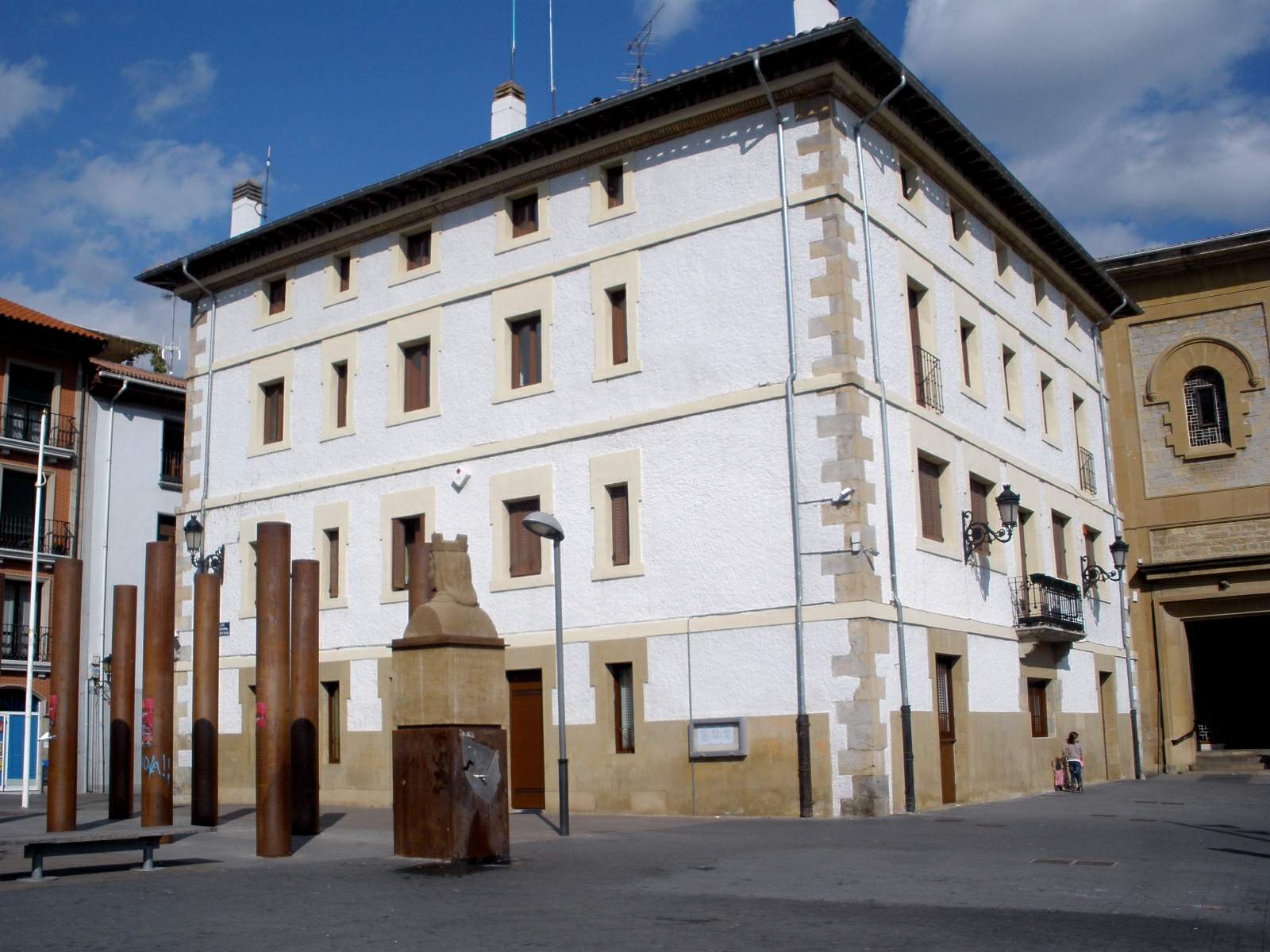
The palace itself is a compact stone building where the Gothic core meets Renaissance-era additions — look closely at the differences in wall texture and window detailing, which give away centuries of alterations. It's surrounded by a well-kept green space with a small lake, walking paths, and benches, making it a popular spot for locals to unwind. The interior isn't currently open to visitors: Pamplona's city council is in talks with the public company Nasuvinsa over the building's future use as a community and cultural space.
When's the best time to visit?
The grounds look their best in spring and summer, when the greenery around the lake is at its peak and the weather is ideal for a stroll. Weekdays tend to be quiet, while weekends bring more families making use of the park. Since the main attraction here is the setting rather than an indoor exhibit, a visit works at any time of year — though it's worth checking for updates in case the ongoing talks lead to the palace opening its doors to the public.
Frequently Asked Questions
Can you go inside the palace? Not at the moment — the building isn't open to visitors. Pamplona's city council is negotiating with the Nasuvinsa company over its future use for the neighborhood.
How old is the palace? Its origins go back to the Gothic period, predating Navarre's conquest in 1512, and it was rebuilt in Renaissance style during the 16th century.
Who owned the palace? It belonged to the Navarrese noble families of Larrasoaña, Liedena, and Velaz de Medrano, who held the title of viscounts of Azpa.
How do you reach it from central Pamplona? The quickest option is the city bus to Mendillorri, or a 20–25 minute walk or bike ride from the center.
Nearby places

Earn badges for the places you visit
Download NextOnTrip, discover new places and check off your trails.