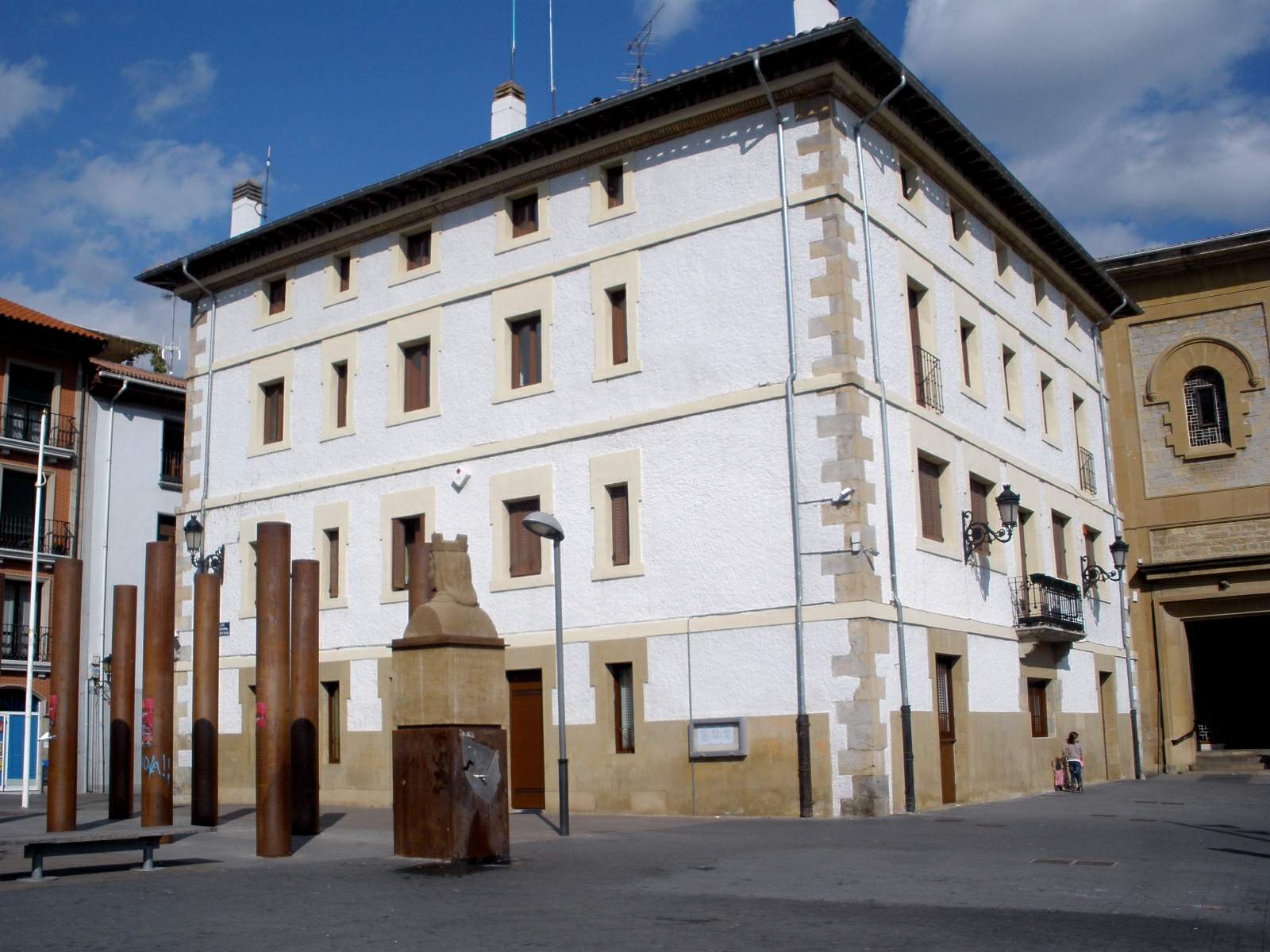
About this place
Villava/Atarrabia town hall sits on Calle Mayor in Villava/Atarrabia, a small town right next to Pamplona in northern Navarre. It serves as the seat of local government for the smallest municipality in all of Navarre by land area, yet one of the most densely populated.
Why does this building matter?
The town hall building forms part of a historic town center that took shape in the Middle Ages. Villava was founded in 1184, when King Sancho VI the Wise established a new settlement here — "Villa nova" — next to the existing village of Atarrabia, granting its residents the same privileges enjoyed by settlers of the New Borough of San Nicolás in Pamplona. Since then, the two names, Villava and Atarrabia, have run together, which is why the town and its institutions — including the town hall itself — carry the dual name today.
The building itself dates to the town's economic and demographic boom in the 16th century. That was the century when Villava, growing on the back of trade and craft production, saw the construction of its parish church, its main mill, and the town hall — three landmarks that still define the character of the old town center.
How was the town governed?
For centuries the town was run by a mayor and two officials elected by the municipal council. That changed after the conquest of Navarre in 1512: from then on, the Viceroy appointed the mayor, choosing one of three candidates put forward by the council. This system of governance, typical of Navarre's royal towns, remained in place well into the modern era and left a lasting imprint on the region's civic traditions.
What else should you know about Villava/Atarrabia?
The town covers just 1.06 km², making it the smallest municipality in Navarre. Despite its tiny footprint, its population density ranks among the highest in the region — a direct result of intense industrial and urban growth during the 19th and 20th centuries. Its closeness to Pamplona turned Villava/Atarrabia into a natural extension of the Navarrese capital, while the town has kept its own identity, with the historic center and its town hall standing as the symbolic anchor point.
How do you get there?
Villava/Atarrabia borders Pamplona directly, so getting there is straightforward — city buses run from the capital's center, or you can walk along the Camino de Santiago, which passes through the town on its way toward Pamplona. The town hall stands on Calle Mayor, the town's main street, right in the historic center and easy to reach from anywhere in Villava.
When is the best time to visit?
Spring and early autumn are the most comfortable seasons, with mild temperatures across Navarre and fewer crowds than at the height of summer. It's worth remembering that the Camino de Santiago pilgrim route runs straight through Villava — pilgrims pass the town hall and the historic center on their way west toward Santiago.
Frequently asked questions
What is Villava/Atarrabia town hall? It is the seat of local government for the municipality of Villava/Atarrabia, right next to Pamplona in Navarre, built during the town's economic boom in the 16th century.
Can visitors go inside the town hall? The building is a working administrative office, so tourist access is limited to opening hours and public-facing areas.
How do you reach Villava/Atarrabia from Pamplona? The easiest way is by city bus or on foot — the distance from Pamplona's center is short, and the town also sits directly on the Camino de Santiago route.
What makes Villava/Atarrabia stand out among Navarre's municipalities? It is the smallest municipality in the region by area (1.06 km²) but one of the most densely populated, a legacy of strong industrial and urban growth during the 19th and 20th centuries.
Nearby places

Earn badges for the places you visit
Download NextOnTrip, discover new places and check off your trails.