About this place
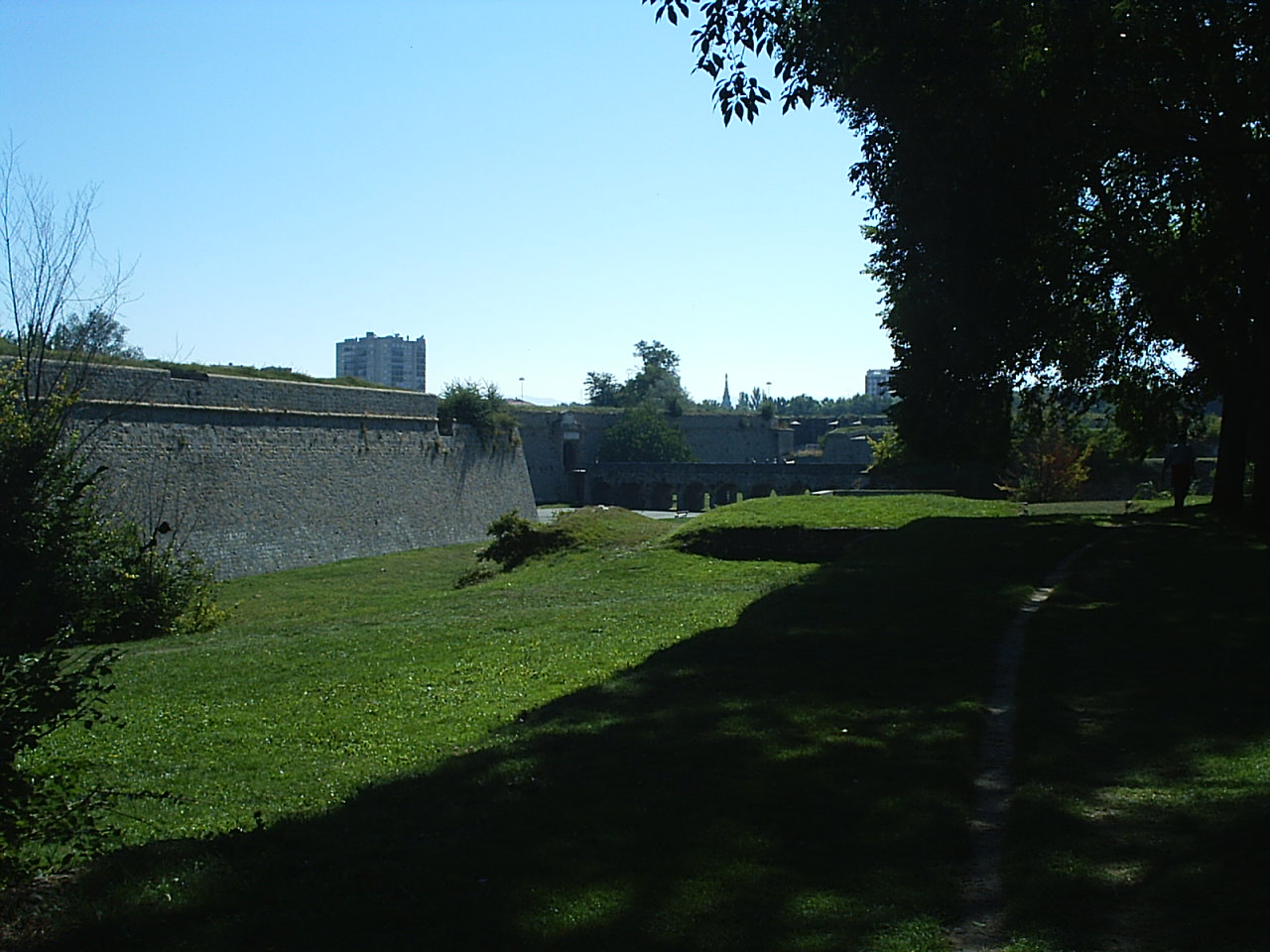
Gazteluko Ingurunearen parkea (Spanish: Vuelta del Castillo) is a large public park in Pamplona (Basque: Iruña), the capital of Navarre, wrapped around the old Ciudadela, a Renaissance-era fortress. It is the largest green space in the city and a favourite spot for locals out walking, jogging, or kicking a football around.
Where does the name come from and what is its history?
The park's name points directly to its location: it occupies the former glacis, the gently sloping defensive ground that once surrounded the moats and walls of the Ciudadela. The fortress itself was begun in 1571 on the orders of King Philip II, designed by the Italian military engineer Giovan Giacomo Paleari Fratino, known as "El Fratín". Its star-shaped, five-sided layout was built to shield the city from outside attack while also making it easier to keep an eye on any unrest from within.
For defensive reasons, the land surrounding the fortress had to stay free of buildings for centuries — no structure could be allowed to block sightlines or lines of fire. Even so, from the 17th century onward, the surrounding slopes were already being used by residents of Pamplona as a place to stroll. The historic complex was formally handed over to the city on 23 July 1966, opening the way for the area to be turned into a fully public park.
How big is the park, and what is there to see?
The park covers an area running into the tens of hectares and sits right next to the city centre, at the point where Avenida Pío XII meets Avenida del Ejército. On its other sides it borders the streets Gazteluko Ingurunea and Yanguas Miranda.
Its planting follows an English-style layout, dominated by broad lawns, tree-lined avenues, and winding pedestrian paths. Along the routes that loop around the whole area, visitors will come across benches, fountains, cobbled paths, and sculptures, including a couple of "wind rose" compass markers set into the ground. Walking through the park, it is still possible to make out stretches of the old defensive walls, the moats, the earthen bastions, and the fortified gates that once protected the city.
What is the park used for today?
Today Gazteluko Ingurunearen parkea functions mainly as a recreational space. Joggers use its paths, casual football matches take over its lawns, and walkers seek shade under its trees on hot days. The park sits directly alongside the former Ciudadela grounds, which have likewise been converted into a park — together the two form one of the largest and most valued areas of historic greenery in Pamplona.
The park plays a particular role during the annual San Fermín festivities: its open, sweeping lawns are one of the preferred spots for residents and visitors to watch the evening fireworks.
Frequently asked questions
What is the difference between Gazteluko Ingurunearen parkea (Vuelta del Castillo) and Parque de la Ciudadela? They are two adjoining but distinct green spaces. Parque de la Ciudadela lies inside the walls of the old five-sided fortress, while Gazteluko Ingurunearen parkea spreads out beyond it, on the former defensive slopes (glacis) that surround the fortifications.
Are any fortification remains still visible in the park? Yes — sections of the old walls, moats, earthen bastions, and fortified gates remain visible, reflecting the site's military past.
When did the park become open to the public? The land was formally handed over to the city on 23 July 1966, although the surrounding slopes had already been used by locals for walks since the 17th century.
What can visitors do in the park? Walk, jog, play football on the lawns, rest by the fountains and benches, and take in the sculptures scattered along the paths.
Is it a good spot during the San Fermín festival? Yes, the park's wide lawns are a popular place from which to watch the evening fireworks that accompany the festival.
Nearby places

Earn badges for the places you visit
Download NextOnTrip, discover new places and check off your trails.