About this place
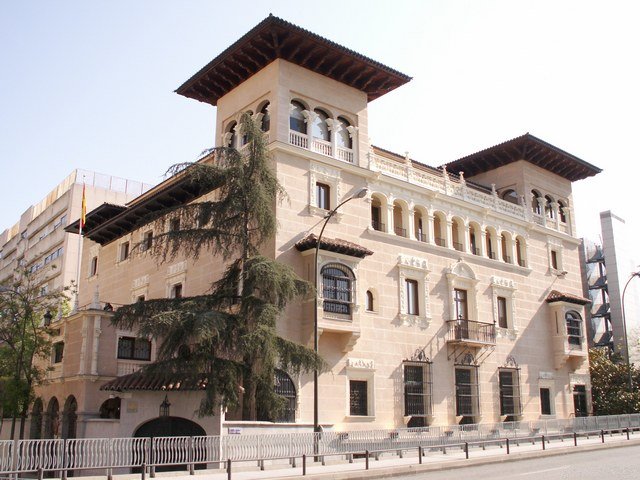
Palacio de Bermejillo is a neo-plateresque palace in Madrid, standing today at Calle de Eduardo Dato 31, on what used to be Paseo del Cisne. It was built between 1913 and 1916 for Marquis Javier Bermejillo del Rey, who purchased the plot in March 1912. Since 1983 the building has housed the Defensor del Pueblo, Spain's national ombudsman office, making it one of the few private aristocratic residences in Madrid that passed into public institutional use while keeping its original architectural character intact.
Who built the palace, and in what style?
The project was commissioned by Marquis Bermejillo del Rey, but the driving vision came from his wife, Julia Schmidtlein y García-Teruel — the couple met in Mexico, where both their families lived, and married in 1894. The marquise wanted a residence in the Spanish neo-Renaissance tradition. Authorship of the design is still debated among architectural historians: some sources credit architect Eladio Laredo, while others argue the German architect Franz Rank was the actual designer. Whoever held the pen, the result is a building in the neoplateresco style — a movement blending Spanish Renaissance motifs with dense stone ornamentation, fashionable in early 20th-century Madrid as part of a broader nationalist revival in architecture.
What should visitors look for in the architecture?
The most recognizable feature of the facade is a pair of turrets flanking the building. The stonework is dense with galleries, wrought-iron railings, heraldic motifs typical of the plateresque tradition, and gargoyles. This combination of details sets the palace apart from other Madrid mansions of the period — it isn't an eclectic townhouse but a building conceived as a coherent, monumental composition deliberately referencing Spanish Renaissance architecture.
Why does the palace matter culturally?
Palacio de Bermejillo stands out among Madrid's palaces because, in the first half of the 20th century, its rooms held some of the most significant private art collections in Spain. The Bermejillo family assembled works that later became a reference point for historians studying art collecting of that era. Because of its architectural and historical value, the building was declared a Bien de Interés Cultural (Asset of Cultural Interest) in 1992 — Spain's highest category of heritage protection.
How do you get there, and what should you know before visiting?
The palace sits at Calle de Eduardo Dato 31, in the Chamberí district, close to central Madrid — easily reached by metro (Rubén Darío or Alonso Martínez stations) or city bus. Because the building is the active headquarters of a public institution, it isn't a museum with regular tourist opening hours; access to the interior is limited and usually requires advance inquiry or coincides with organized heritage open days or events (such as Madrid Otra Mirada). The facade and exterior architecture, however, can be freely viewed from the street year-round.
Frequently asked questions
Can visitors go inside the palace? The interior isn't generally open to tourists, since the building serves as the headquarters of the Defensor del Pueblo. Visits are sometimes possible during special Madrid architectural heritage open days.
Who designed Palacio de Bermejillo? Authorship is disputed — architect Eladio Laredo is usually credited, though some sources point to the German architect Franz Rank as the true designer.
What architectural style is the palace built in? Neoplateresco, combining Spanish Renaissance motifs with rich stone decoration; its distinguishing features are the twin turrets, galleries, and gargoyles on the facade.
Why does the palace hold Bien de Interés Cultural status? Because of its architectural value and its history as home to one of Madrid's most important private art collections in the early 20th century; the status was granted in 1992.
Nearby places
-

Commemorative plaque to the Residencia de Señoritas, Madrid
Madryt
-
Palacete del duque de Plasencia, Madrid
Madryt
-
commemorative plaque to Victoria Kent
Madryt
-
Stolperstein dedicated to Eliane Sophie Browne Bartrolí
Madryt
-
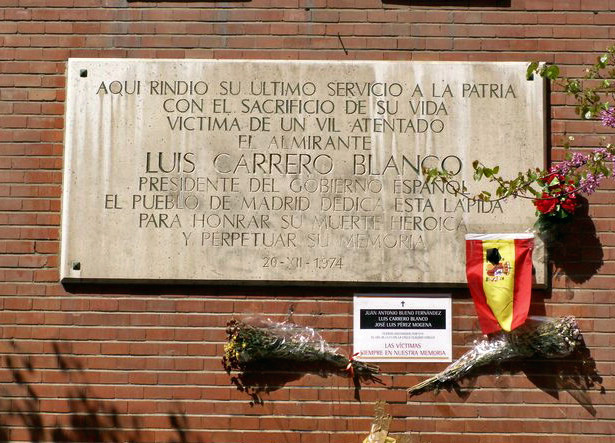
Assassination of Luis Carrero Blanco
Madryt
-
commemorative plaque to Domingo Ortega
Madryt
Earn badges for the places you visit
Download NextOnTrip, discover new places and check off your trails.