About this place
The commemorative plaque to Victoria Kent in Madrid marks a modest but meaningful façade in the Chamberí district, on Calle Marqués de Riscal. It honors one of the most notable figures of 20th-century Spanish public life — a lawyer and politician who broke ground for women in law, politics, and prison reform.
Where is the plaque located?
The plaque hangs on a building on Marqués de Riscal street, in Chamberí, one of central Madrid's quieter, well-built residential districts, a short walk from the Paseo de la Castellana. This was the address where Victoria Kent kept her law office in 1936, just before the outbreak of the Spanish Civil War. The street connects easily on foot with Chamberí's nearby squares and shopping streets, so a visit to the plaque fits naturally into a wider walk through the neighborhood.
Who was Victoria Kent?
Victoria Kent (1892–1987) was the first woman admitted to the Ilustre Colegio de Abogados de Madrid, the city's bar association, and the first woman to act as a defense lawyer before a military court in Spain. In 1931, during the early years of the Second Spanish Republic, she became one of the first women elected to the Spanish parliament, the Cortes — even though women themselves did not yet hold full voting rights at that point. She went on to serve as Director General of Prisons, pushing through reforms to the penitentiary system that led the press of the day to credit her with having "removed the shackles" from Spain's prisoners. After the Civil War she went into exile, first in Mexico and later in New York, where she co-edited an émigré magazine dedicated to the cause of a democratic Spain.
When and why was the plaque installed?
The plaque was unveiled in October 2017 on the initiative of Madrid's city council, as part of a wider municipal program to restore public memory of women who shaped the city's and the country's history. The unveiling ceremony was led by then-mayor Manuela Carmena. On the same day, Chamberí saw plaques unveiled to other prominent Spanish women of the era — the writer Ernestina de Champourcín, María Lejárraga, and the novelist Luisa Carnés. The choice of this particular district was deliberate: Chamberí was home to, or the workplace of, many women connected to Madrid's intellectual and artistic life in the first half of the 20th century.
What else is worth seeing nearby?
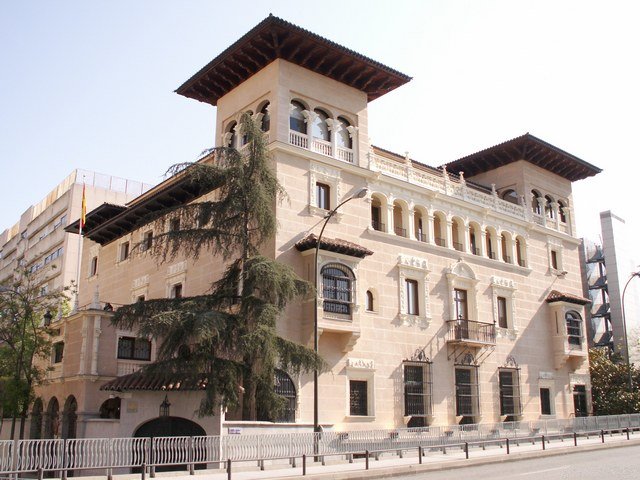
Beyond the plaque itself, a stroll along Marqués de Riscal and the surrounding Chamberí streets is a good opportunity to take in the district's characteristic bourgeois architecture from the turn of the 20th century. Chamberí is known for its intimate atmosphere, cafés and shops, offering a quieter contrast to busier arteries like the nearby Castellana. It's a rewarding stop for anyone interested in the social history of 20th-century Spain and the role women played in its public life.
Frequently asked questions
What does the plaque on Marqués de Riscal commemorate? It commemorates Victoria Kent, a lawyer and politician who kept her law office in this very building in 1936.
When was the plaque unveiled? It was unveiled in October 2017, at the initiative of Madrid's city council, as part of a broader program honoring the memory of notable women.
Why is Victoria Kent an important historical figure? She was the first woman admitted to the Madrid bar association, the first to defend a client before a military court, and one of the first women elected to the Spanish parliament, where she later led prison-system reforms.
Are there other similar plaques nearby? Yes — on the same day, Chamberí also saw plaques unveiled to other prominent Spanish women: Ernestina de Champourcín, María Lejárraga, and Luisa Carnés.
Nearby places

Earn badges for the places you visit
Download NextOnTrip, discover new places and check off your trails.