About this place
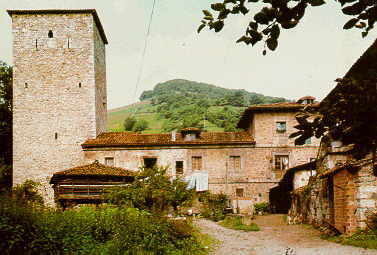
The Palace of Miranda-Valdecarzana stands at the heart of Grado (Grau), a small town in central Asturias on the banks of the Nalón river. Listed as a Historic-Artistic Monument, the building has medieval roots but owes its present appearance to a long string of alterations, from a possible 15th-century start through a major Baroque overhaul in the last third of the 17th century and further adjustments in the 19th.
Why does the palace carry two names?
The residence was built by the Miranda family, one of the region's leading noble houses. In 1642, King Felipe IV granted a member of the family the title of Marquis of Valdecarzana, which is where the second half of the palace's name comes from. Not long after, in the second half of the 17th century, the building underwent a substantial Baroque expansion that gave it much of the grand appearance it still shows today.
What is there to see inside and out?
The palace rises three storeys, with an entrance set at the centre of the façade that opens onto a monumental staircase, one of the building's most striking interior features. Beyond it lies a patio ringed by octagonal columns, around which the main rooms are arranged — a layout typical of Asturian palace architecture of the period, designed to bring light into the interior while organising circulation between floors.
Right next to the palace stands the Chapel of Sorrows (Capilla de los Dolores), an 18th-century structure so large it is often considered more of a church than a chapel. It now belongs to Grado's town council and serves as a multipurpose hall, hosting exhibitions, theatre performances, concerts and civil weddings. Together, the palace and chapel form a historic complex at what was once the entrance to walled Grado, near the old Puerta del Campo gate.
How is the palace used today?
Unlike many noble residences that fell into ruin or survive only as museum pieces, the Palace of Miranda-Valdecarzana remains an active public building. It currently houses Grado's public library, the so-called Aula de las Metáforas (a cultural and educational hall), a telecentre, and the town council's meeting chamber. That mix lets the monument function both as a heritage site and as a working hub of everyday local life.
How do you get there?
The palace sits in Grado's historic centre, roughly 25 km west of Oviedo, the Asturian regional capital. The easiest way in is by car along the AS-232 road or by regional bus from Oviedo, a trip of about 30–40 minutes. The building faces the town's main square, so once you reach the centre it is an easy, short walk to find, surrounded by other historic structures.
When is the best time to visit?
Because the interior now hosts a library and municipal offices, the practical time to see it is during regular weekday opening hours of those public services. It is worth checking ahead for events at the adjoining chapel, too — exhibitions, concerts and performances are scheduled seasonally and offer an extra chance to see part of the palace complex from the inside.
Frequently Asked Questions
Can visitors go inside the palace? Yes, partially. Since the building now serves public functions — library, council chamber, telecentre — its interior, including the columned patio and staircase, is accessible during those institutions' opening hours.
What is the difference between the palace and the chapel next to it? The palace is the 15th-century Miranda family residence, later remodelled in Baroque style, while the Chapel of Sorrows is a separate 18th-century religious building now owned by the town council and used as an event space.
Where does the name Valdecarzana come from? From the title of Marquis of Valdecarzana, granted to the Miranda family by King Felipe IV in 1642.
Is entry free? Access to the public areas — library and cultural hall — is free, as is entry to events held in the neighbouring chapel.
Nearby places

Earn badges for the places you visit
Download NextOnTrip, discover new places and check off your trails.