About this place
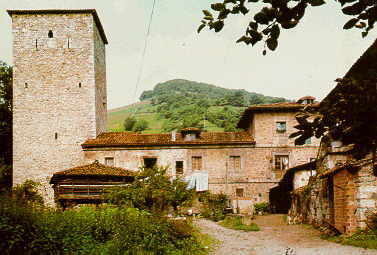
The Palace and Tower of Valdés-Salas stand at the historic heart of Salas, a small town in western Asturias, and together they form one of the region's most striking examples of noble architecture. The complex sits right next to the Collegiate Church of Santa María la Mayor, on a stretch of the Camino de Santiago that draws pilgrims and history lovers alike.
How do you get there?
Salas is located on the main road connecting Oviedo to Luarca, roughly a 40-minute drive from the Asturian capital. Regional buses also run to the town, and once you arrive, the complex sits right in the old quarter, an easy walk from the main square and the bus station. It's best to park on the edge of the old town and continue on foot, since the streets here follow a tight, winding medieval layout that isn't especially car-friendly.
What will you see there?
The complex actually blends two structures from different eras. The older one is the Tower of the Valdés family, raised in the 15th century as a defensive stronghold — some records even point to a tower and castle standing on this same spot as far back as the 12th century. The palace itself is younger, built in the first half of the 16th century in a sober Renaissance style, laid out around a closed courtyard in a U-shaped plan. Its southern facade is plain and unadorned, while a small chapel is attached to the eastern side. A bridge topped with a flattened semicircular arch links the tower and the palace, and the Valdés-Salas family coat of arms is carved right into that arch.
The palace is also the birthplace of Fernando Valdés Salas, a cleric, inquisitor and politician remembered above all as the founder of the University of Oviedo. He was later buried in the neighboring Collegiate Church of Santa María la Mayor, tying the whole historic ensemble together.
The complex holds the status of a Bien de Interés Cultural (Cultural Asset of National Interest) under the Monument category. Today its rooms serve several purposes at once: part of the building operates as a hotel and restaurant, another part houses the local tourism office, and the tower itself contains the Pre-Romanesque Museum of San Martín, displaying pre-Romanesque art from the region.
When should you visit?
Salas can be visited year-round, but spring and early autumn are the most comfortable seasons, letting you wander the old town without the crowds that show up in July and August. Winters tend to be rainy and cool, which doesn't stop you from seeing the interiors but does take some of the pleasure out of strolling the streets. It's worth checking the current opening hours for the tourism office and the museum before you go, since they shift with the season.
Frequently asked questions
Can you go inside the palace and the tower? Yes — the tower houses the Pre-Romanesque Museum of San Martín, open to visitors, while part of the palace is now a hotel and restaurant where you can eat a meal even without staying overnight.
Who was Fernando Valdés Salas? He was a cleric and politician born in this palace, best known as the founder of the University of Oviedo and as Spain's Inquisitor General during the 16th century.
How long does a visit take? Not long — you can walk around the complex itself in 30 to 45 minutes, though it's worth combining the visit with a stroll through Salas' old town and the nearby Collegiate Church of Santa María la Mayor.
Is there an entrance fee? Visiting the museum inside the tower usually involves a small fee, while admiring the complex's architecture from the outside and walking around it is free.
Nearby places

Earn badges for the places you visit
Download NextOnTrip, discover new places and check off your trails.